QiFi Journal
Coffee beans for cafés: whole or ground, machine or phin, which blend
Coffee beans for a café: when to buy whole beans and when to buy ground, which blend for the machine and for the phin, which bag size and how often to order.
QiFi··5 min read
Contents
Choosing coffee beans for a café is three linked decisions: whole beans or ground, whether the café brews by machine or by phin, and which blend for the best-selling drink. For a café selling both iced milk phin coffee and machine drinks, a blend like QiFi's GIAO HÒA, Đắk Lắk Robusta, Culi and Cầu Đất Arabica, works both ways: in a phin it gives a creamy concentrate that pairs with milk; on the machine a thick cup with dense crema.
This article goes through each decision. Choosing a blend for each drink on the menu and the cost per cup are in choosing coffee for a café by its menu; the kilos needed each month are in how many kg of coffee does a café need.
Whole beans or ground?
| Whole beans | Ground | |
|---|---|---|
| Keeps its aroma after opening | About 1–3 weeks | About 1–2 weeks |
| Needs a grinder at the café | Yes | No |
| Grind can be adjusted day to day | Yes | No, ground once at the roastery |
| Suits | Cafés with a machine, cafés selling many cups | Phin cafés, small cafés, coffee carts |
The keeping times follow the US National Coffee Association (NCA), for an opened bag moved to an airtight container at room temperature. Ground coffee loses its aroma faster because far more of it is exposed to air.
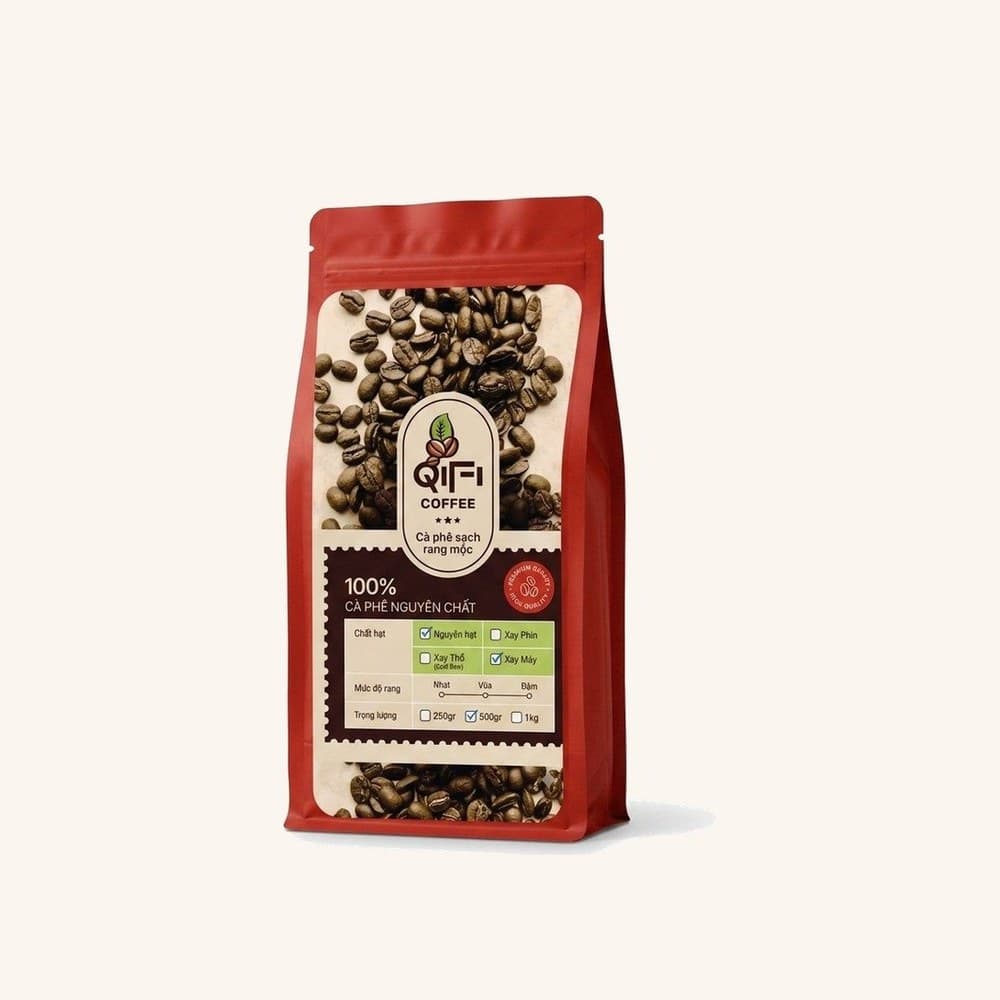
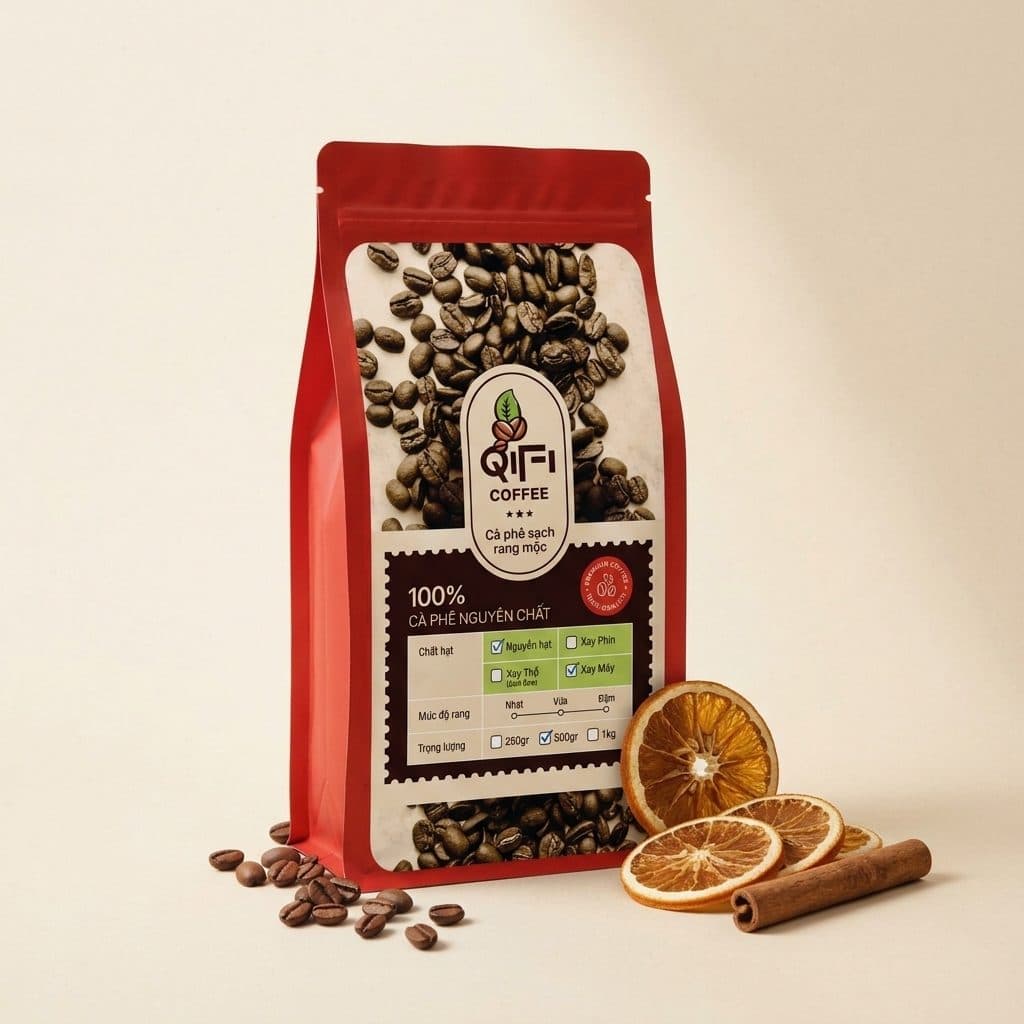
In short: a café with an espresso machine should buy whole beans and grind just before each shot, because the grind for a machine usually has to be adjusted when the batch of beans changes. A café that only brews by phin can buy phin-ground coffee, as long as it orders only what it needs and opens one bag at a time. Every QiFi blend comes three ways: whole beans, phin grind and machine grind.
Machine or phin: which blend?
| The café mostly brews | Best-selling drink | QiFi blend suggested |
|---|---|---|
| Phin | Iced black, needs a sharp bitterness | ĐẬM: 100% Robusta, deeply bitter, no sourness |
| Phin | Traditional iced black and iced milk | NGUYÊN BẢN: Robusta and Arabica, almost no sourness |
| Phin | Iced milk, bạc xỉu | GIAO HÒA: creamy, pairs with milk |
| Machine | Latte, cappuccino, latte art | ĐỘC TÔN: fragrant, smoothly bitter, dense crema |
| Machine | Americano, modern-style espresso | TỈNH: 100% Cầu Đất Arabica, bright acidity, fruity |
| Both | Vietnamese menu with a few machine drinks | GIAO HÒA or ĐÁNH THỨC |
A new café should usually start with one or two blends: one for the best-selling drink, and one for the machine if there is one. Too many blends make stock move slowly, leave opened bags standing, and make the taste hard to keep even between shifts. If you are not yet sure whether your customers prefer bitter or fragrant, Robusta or Arabica, which tastes better explains how the two beans differ in the cup.
How should beans for a café be roasted?
Beans for a café need three things: a steady taste between batches, a roast date on the bag, and ingredients that are only coffee. Beans roasted with butter, sugar or flavourings smell very fragrant when the bag is opened, but that smell comes from the coating, not from the beans. The difference between the two ways of roasting is in what is chuẩn mộc coffee. QiFi beans are naturally roasted, with no butter and no flavourings, and each blend states its proportions.
Before settling on a roaster, order a sample and brew it exactly as the café does: the same phin or the same machine, the same amount of milk, the same glass. Other criteria for comparing suppliers are in 7 criteria for choosing a wholesale coffee supplier.
Which bag size, and how often to order?
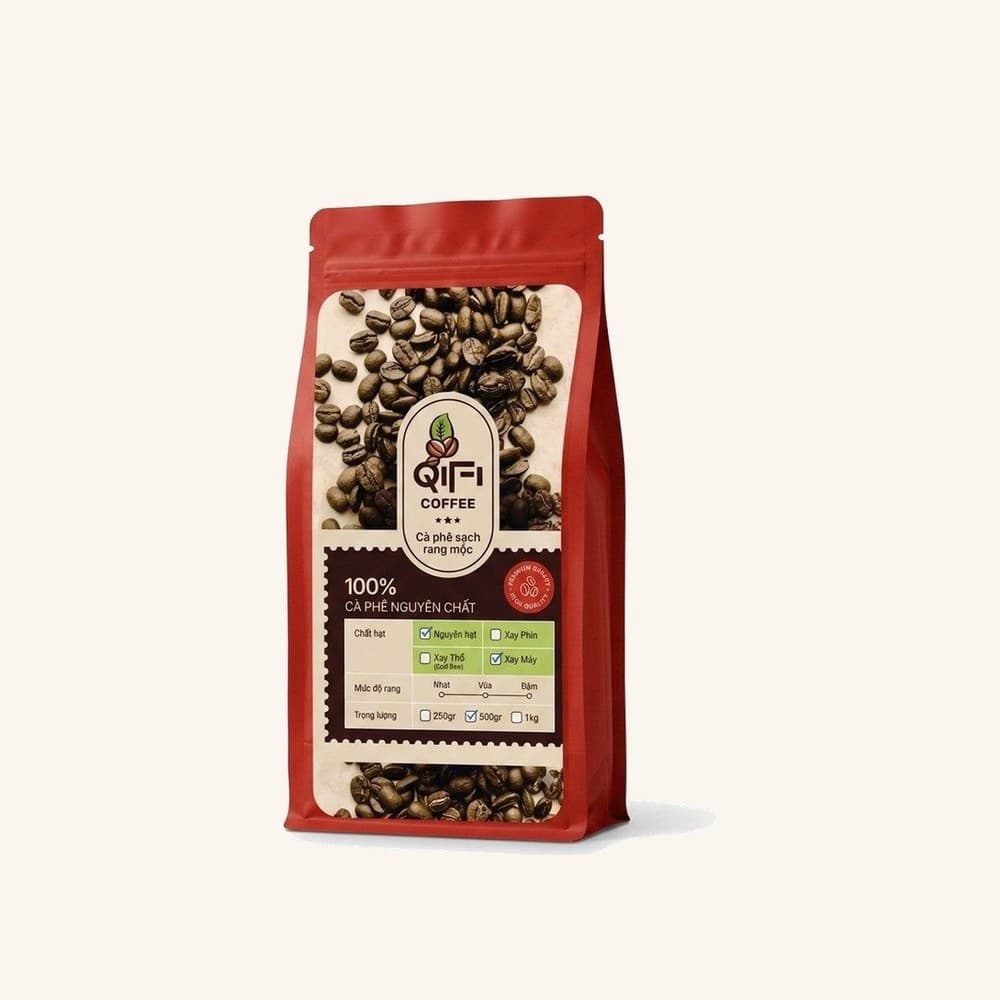
QiFi has 250g, 500g and 1kg bags, zip bags with a one-way valve. Wholesale orders come in 500g bags: one bag makes about 25 phin cups of 20g, so once opened it is used up in a few days and the grounds do not sit for long. A café should order weekly or fortnightly rather than a whole month at once, so every bag it opens is still within the keeping times in the table above. How to store unopened bags and the bag in use is in how to store coffee.
On price: orders from 5kg get 15% off the retail price; from 15kg, message us on Zalo for a special price; orders below 5kg are at the retail price. Prices include VAT. Details and sample orders are on the wholesale page.
Frequently asked questions
Does a small café need a grinder?
A café that only brews by phin does not yet: buy phin-ground coffee and order only what you need. A café with an espresso machine should have its own grinder and buy whole beans, because the grind decides whether a shot runs fast or slow, and pre-ground coffee cannot be adjusted.
Which coffee beans suit a machine?
For milk drinks such as latte and cappuccino, choose a blend with Robusta for enough bitterness and crema, such as ĐỘC TÔN or GIAO HÒA. For espresso and americano for customers who like a bright acidity, choose pure Arabica such as TỈNH.
How many kilos should I order each time?
Work out how many kilos the café uses in one to two weeks, and order exactly that. How to work it out from the number of cups is in how many kg of coffee does a café need; a café selling 40 phin cups and 20 machine cups a day needs about 36.5kg a month, or about 9kg a week.