Coffee & health
Coffee jitters and an upset stomach: 4 tips for sensitive people
Does coffee leave you with shaky hands, a racing heart or a gnawing stomach? Why you get coffee jitters, and 4 tips to keep enjoying coffee comfortably.
QiFi··4 min read
Contents
Some people drink three cups of coffee a day and still sleep well. Others get shaky hands, a pounding heart and a gnawing stomach after half a cup. If you are in the second group, you are not "weak": your body simply handles caffeine differently. This article explains why, with 4 tips so you can keep enjoying coffee.
This article is for general information and does not replace medical advice. If you have a health condition, are pregnant or take medication, ask your doctor.
If your symptoms are severe (chest tightness, shortness of breath, lasting stomach pain), see a doctor.
Why do some people get coffee jitters easily?
Caffeine is metabolised at different speeds
The liver breaks down caffeine mainly with one enzyme (CYP1A2). Because of genetics, some people metabolise it quickly and some slowly. Slow metabolisers keep caffeine in their blood for longer, so the same amount makes them more restless and more likely to sleep badly.
Drinking on an empty stomach
Caffeine is absorbed faster when the stomach is empty, and the stomach acid it triggers has no food to buffer it. Coffee stimulates acid, and heartburn is the symptom people report most often after drinking it. This is a common cause of both jitters and stomach pain.
Your cup is stronger than you think
Robusta has roughly twice the caffeine of Arabica. A strong, Robusta-heavy phin can contain much more caffeine than an ordinary cup of filter coffee.
Bean quality
Coffee that is burnt, coated in butter or bulked out with other seeds can upset many people's stomachs more. See also pure coffee or street-café coffee.
Tip 1: Choose a bean with less caffeine
Switching from Robusta to Arabica, or to an Arabica-heavy blend, is the quickest way to cut caffeine while keeping the habit. TỈNH, 100% Cầu Đất Arabica, is bright and fruity, far gentler than a Robusta phin. If you still want the familiar strong taste, GIAO HÒA is a softer step in between.
Tip 2: Eat first, drink after
Always drink coffee after eating, even if it is just a slice of bread. Food slows the absorption of caffeine and keeps acid from irritating the stomach. Do not have coffee instead of breakfast.
Tip 3: Try cold brew and lighter brews
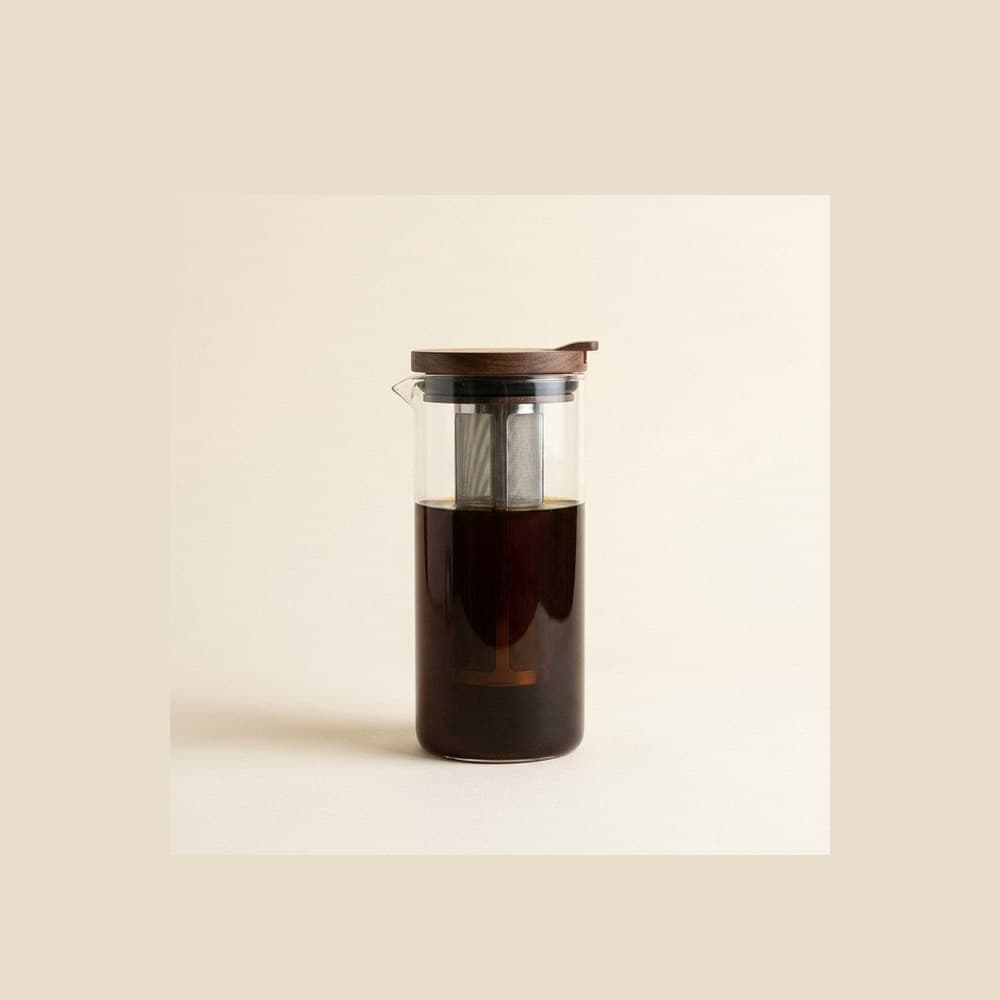
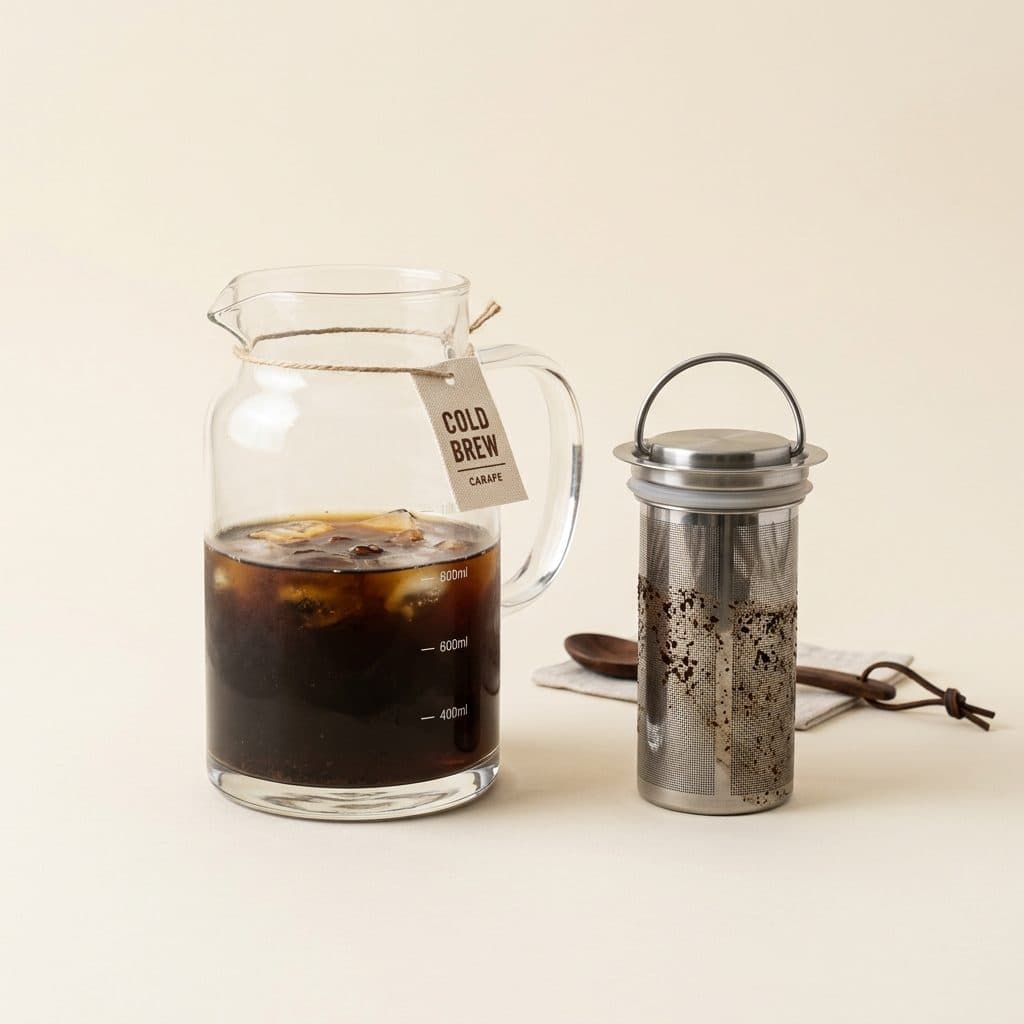
Cold brew is extracted with cool water over about 12 hours, giving a smooth cup with little harsh bitterness. Many people with sensitive stomachs find it more comfortable. Recipe: 100 g of coarsely ground coffee to 1 litre of water, steeped for 12 hours in the fridge, strained, then topped up with water or milk. The QiFi cold brew bottle makes this easy.
For hot coffee, use less ground coffee or add hot water after brewing. Do not steep it longer: that makes it harsher without making it lighter.
Tip 4: Drink slowly and split it up
- Sip over 20–30 minutes instead of in one go.
- Split it up: half a cup in the morning and half in the early afternoon, instead of one big cup.
- Drink water alongside so your body stays hydrated.
- Stop early: sensitive people should stop coffee from around 2–3 pm so it does not affect their sleep.
What to do if you have had too much
- Stop drinking coffee and any other caffeinated drinks.
- Drink water and eat something light (bread, a banana, rice).
- Breathe slowly and walk gently: the restlessness usually fades over a few hours.
- If your heart is racing, or you have chest pain or shortness of breath, see a doctor straight away.
Summary
| Problem | Tip to try |
|---|---|
| Shaky hands, racing heart | Switch to Arabica, use less ground coffee |
| Gnawing stomach | Eat before drinking, try cold brew |
| Trouble sleeping | Stop coffee before 2–3 pm |
| Still want a strong taste | An Arabica-heavier blend, a smaller cup |
Read more: the best times to drink coffee for your heart and stomach.
Frequently asked questions
Does adding milk help with stomach pain?
For some people, milk makes the cup gentler. But if you are lactose intolerant, milk can make your stomach worse. Try it and see.
Are coffee jitters dangerous?
For healthy people, mild jitters usually pass on their own within a few hours. However, taking too much caffeine in a short time can be dangerous, especially for people with heart disease.