Coffee & health
Pure coffee or street-café coffee: which is better for your health?
How pure coffee differs from cheap street-café coffee, what that means for your health, and the signs of coffee coated with butter or bulked out.
QiFi··Updated ·3 min read
Contents
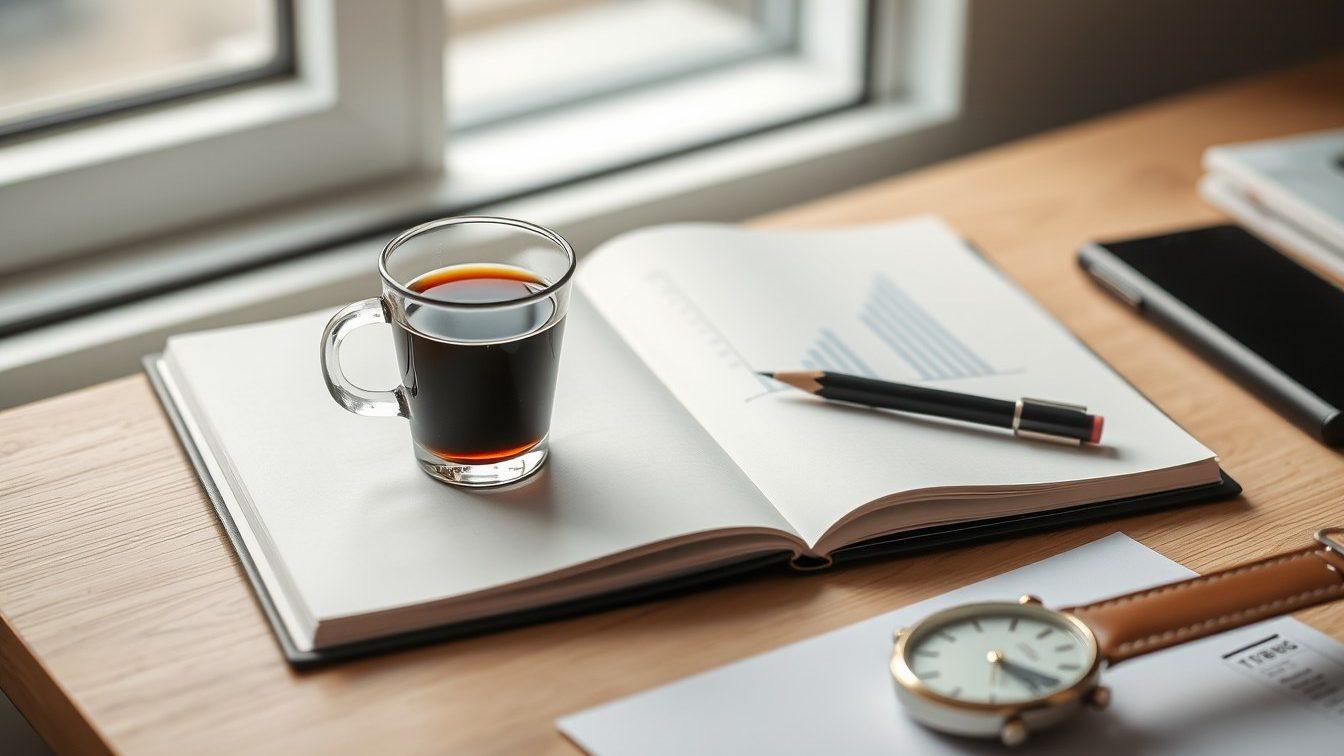
A cup of black coffee, thick and dark as ink, its smell filling the whole alley: a familiar sight at many Vietnamese pavement cafés. But that deep black colour and strong smell do not always come from the coffee bean. This article compares pure coffee with "street-café" coffee (cà phê pha phố), so you know what you are drinking every day.
This article is not aimed at any particular café or brand: many pavement cafés use good coffee.
This article is for general information and does not replace medical advice. If you have a health condition, are pregnant or take medication, ask your doctor.
What is pure coffee?
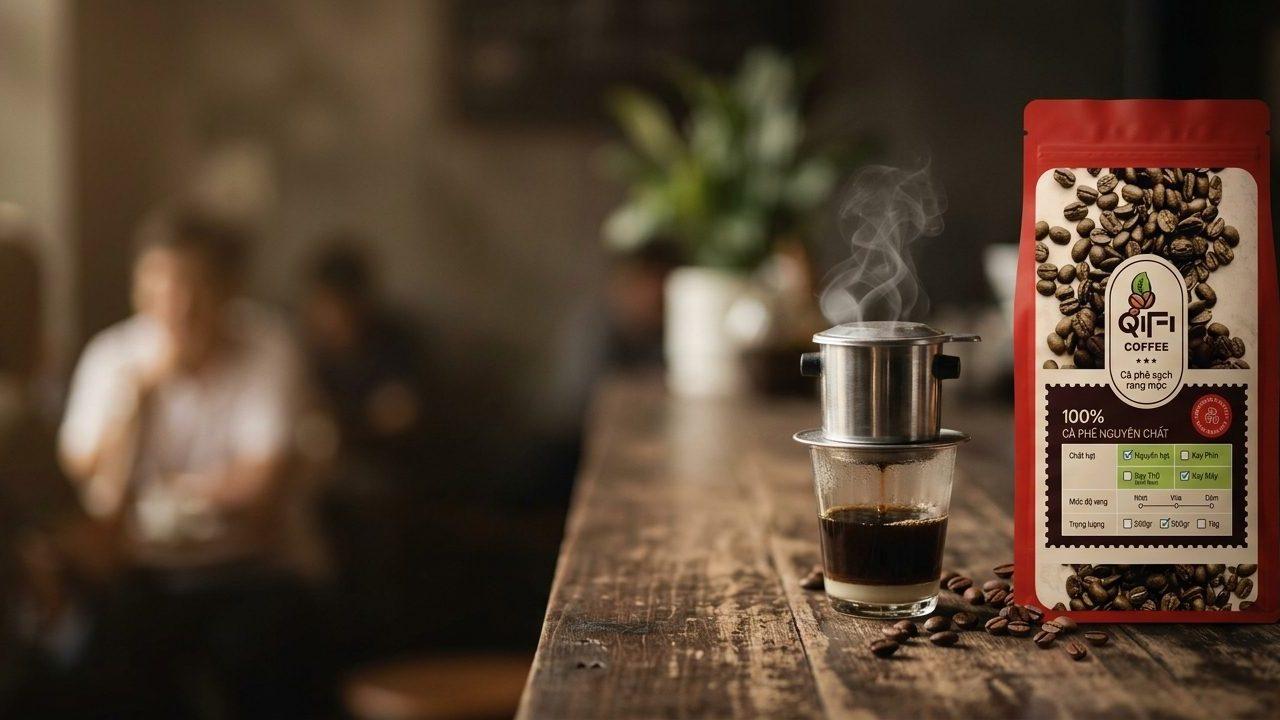
Pure coffee is made only of roasted coffee beans, with no other seeds mixed in and no butter, sugar, flavourings or colouring. When it is naturally roasted, the beans only meet heat: the taste and aroma come entirely from the bean itself.
What does "street-café coffee" often contain?
To cut costs and give an impression of "strong and fragrant", some cheap coffee is processed further:
- Other seeds as filler: soybeans, corn or black beans roasted dark to add weight and colour.
- Butter, sugar, fish sauce or salt during roasting: for a glossy coat and a rich taste, and to make poorer beans look "nicer".
- Synthetic flavourings: a strong, sharply sweet smell that drowns out the real one.
- Colouring and thickeners: a pitch-black, syrupy brew.
These are not necessarily harmful if they are permitted food additives, but they hide the quality of the beans and make it hard to know what you are really drinking.
A quick comparison
| Pure, naturally roasted coffee | Coated or bulked-out coffee | |
|---|---|---|
| Colour of the brew | Reddish brown, clear | Pitch black, like ink |
| Smell | Gentle, a natural roasted smell | Sharp, heavy, sometimes burnt |
| Taste | Clean bitterness, sweet finish, maybe a little acidity | Harsh, burnt, unusually rich and greasy |
| Foam | Brown foam that fades quickly | Lots of foam that lingers |
| Grounds | Loose, airy, light | Sticky, clumped, heavy |
The effect on your health
Knowing what you drink
The biggest benefit of pure coffee is transparency. You take in only coffee beans. For a daily habit, that matters more than you might think.
Less hidden sugar and fat
Coffee coated with butter and sugar during roasting already contains fat and sugar before you add any condensed milk. Drunk every day, it adds up.
The stomach: any coffee needs moderation
Any coffee, pure coffee included, can make reflux worse: according to Tuổi Trẻ, caffeine can stimulate the stomach to produce acid, and coffee's acidity can irritate the oesophagus. We have not found a study showing that pure coffee is gentler on the stomach than coated coffee; some people feel it is, but that is a personal impression. See also tips for people whose stomach hurts after coffee.
Test your coffee at home
The comparison above gives you the signs you can see. For a closer check there are five simple tests: look at the beans, look at the grounds, drop the grounds in cold water, taste the cup and read the label. We put all five, with how to read each result, in what natural-roast coffee is and how to recognise it.
Why does QiFi make only pure coffee?
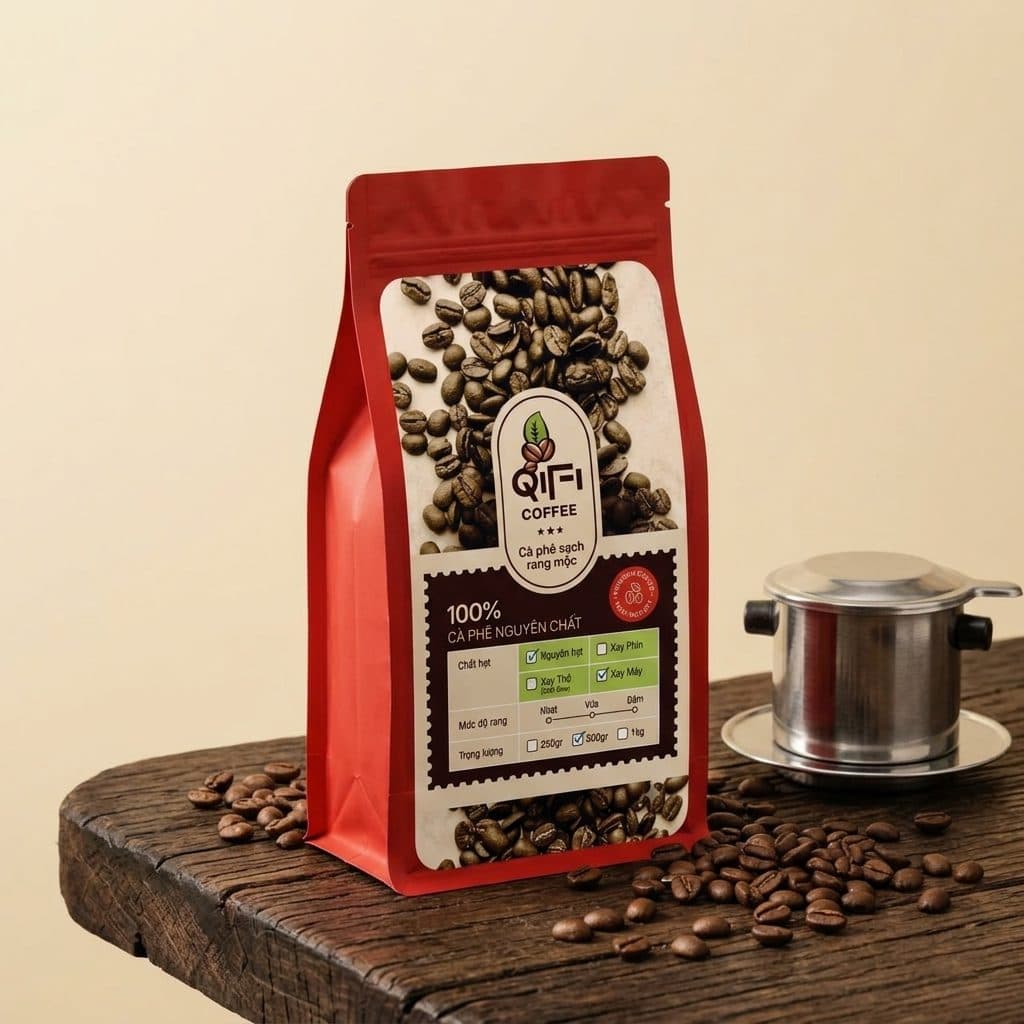
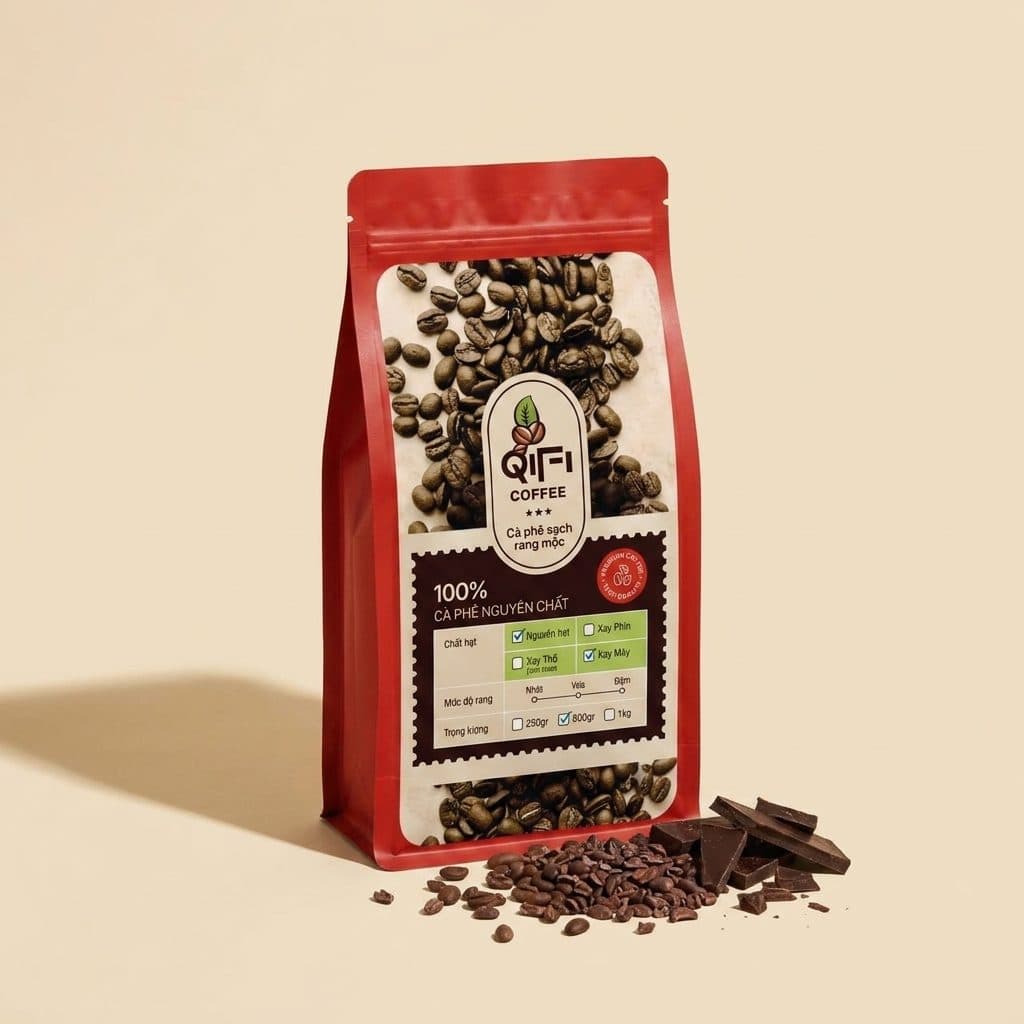
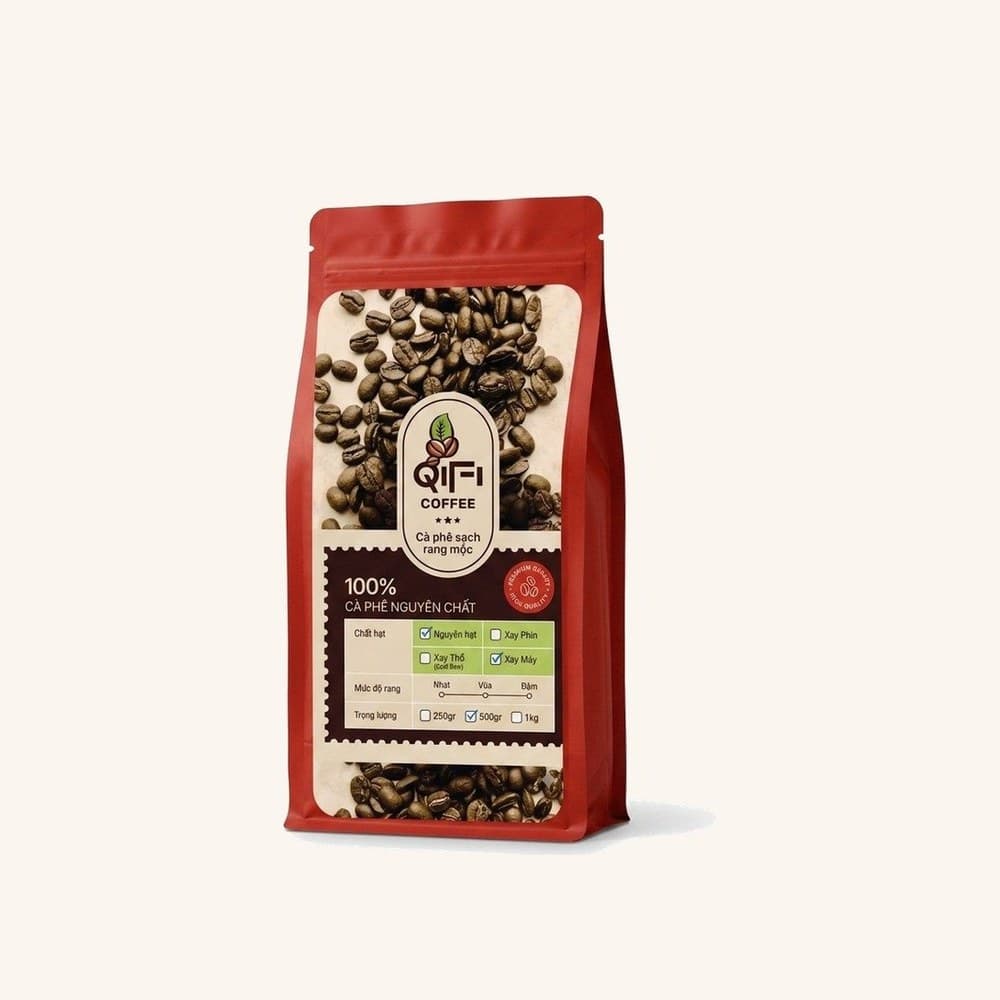
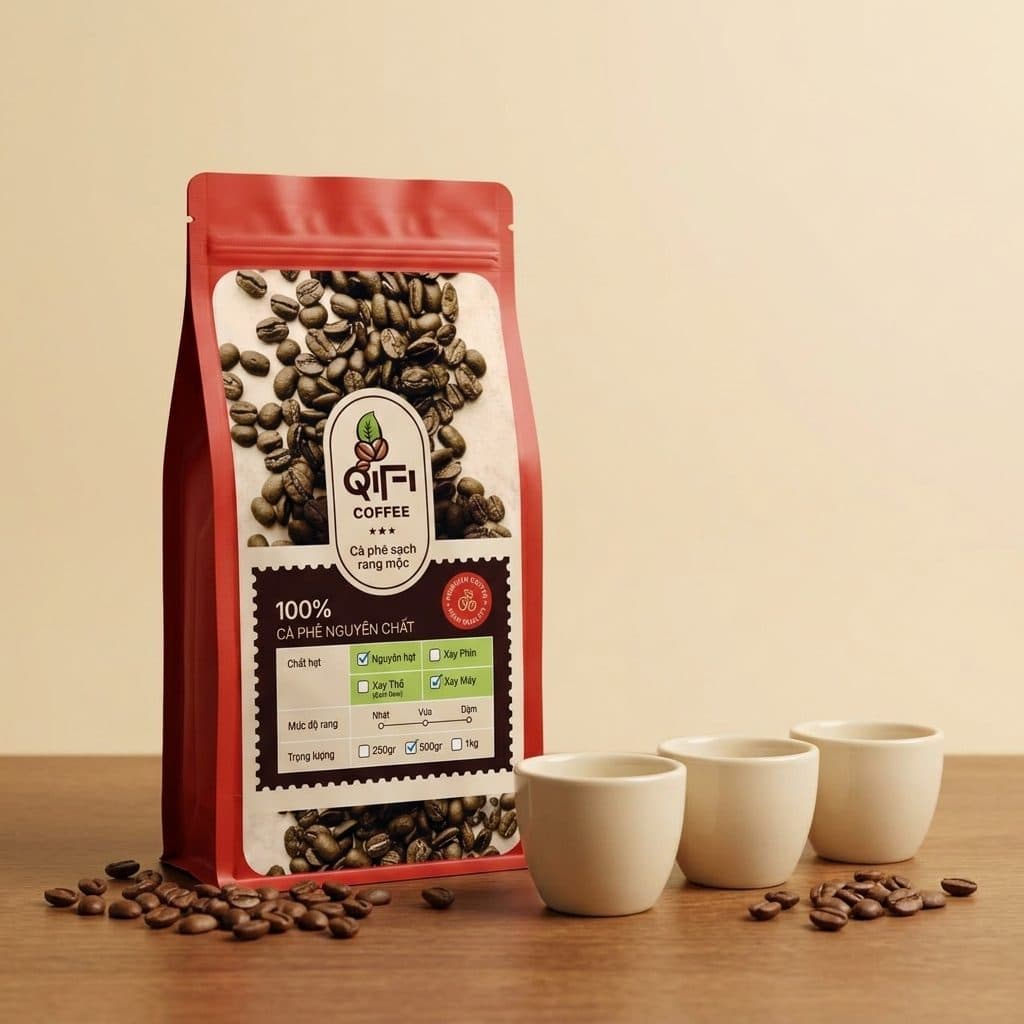
The mother of QiFi's founder ran a small pavement café in Saigon for many years. We grew up among street-café cups, and we understand why many places have to use coated or bulked-out coffee to keep prices down. QiFi chose another path: 100% pure coffee, 100% naturally roasted, from beans grown on the family farm in Eahleo, Đắk Lắk. Read more in QiFi's story and our natural-roast philosophy.
QiFi coffee is produced under food safety standards: see our HACCP, ISO 22000:2018 and food safety certificates.
Frequently asked questions
Is pure coffee more bitter?
Pure Robusta is bitter, but it is a clean bitterness with a sweet finish. Harsh, burnt bitterness usually comes from over-roasting or from fillers.
Why is pure coffee lighter in colour?
Naturally roasted coffee gives a reddish-brown brew. A pitch-black colour usually comes from over-roasting, fillers or colouring.