QiFi Journal
What is the EUDR? The EU deforestation law and tracing Vietnamese coffee
From 30 December 2026, coffee sold in the EU must prove it is not from land deforested after 2020. What the EUDR demands, and why knowing the farm matters.
QiFi··5 min read
Contents
If you have followed coffee news in recent years, you have probably heard the word EUDR. It is the European Union's regulation on deforestation-free products, and coffee is on its list. From the end of this year, a sack of coffee sold into the EU must come with the coordinates of the plot that grew it. This article explains what the EUDR requires, its timeline, and why the question "which farm did these beans come from?" is becoming a question for the whole industry.
What is the EUDR?
The EUDR is Regulation (EU) 2023/1115 on deforestation-free products, adopted by the EU in 2023. According to the European Commission, the main driver of deforestation is the expansion of farmland for commodities such as cattle, wood, cocoa, soy, palm oil, coffee and rubber. The EUDR requires anyone who places these commodities on the EU market, or exports them from the EU, to prove they do not come from recently deforested land.
The regulation sets three conditions for a shipment:
- Deforestation-free: grown on land that was not deforested after 31 December 2020.
- Legal: produced in line with the laws of the country where it was grown.
- Covered by a due diligence statement.
Coordinates for every plot: the hardest requirement
The due diligence statement must give the geolocation of every plot of land that produced the commodity. The regulation spells out what that means: latitude and longitude with at least 6 decimal places. For plots over 4 hectares, the boundary (a polygon) must be drawn, not just a single point.
Six decimal places is a precision of around ten centimetres. In other words, a buyer in Europe needs to know exactly which plot a sack of coffee came from, not just "from Dak Lak" or "from the Central Highlands".
This is where it gets hard for Vietnamese coffee. Most of Vietnam's coffee comes from smallholders, and beans often pass through several layers of traders, pooled from many farms before they reach an exporter. A sack mixed from hundreds of farms that nobody recorded cannot be given coordinates.
The timeline
The regulation has been amended twice, in December 2024 and December 2025, and its application date pushed back. The current dates, according to the European Commission:
| Date | What happens |
|---|---|
| 31 Dec 2020 | Cut-off date: goods grown on land deforested after this date cannot be sold into the EU |
| 30 Dec 2026 | Applies to large and medium-sized companies |
| 30 Jun 2027 | Applies to small and micro companies |
| 30 Dec 2027 | Instant coffee brought into scope (Delegated Regulation 2026/2102) |
The last date matters for Vietnam, because Robusta is the main raw material for instant coffee.
Which risk category is Vietnam in?
The EU sorts countries into three deforestation risk groups: low, standard and high. In Implementing Regulation 2025/1093, Vietnam is on the low-risk list. The high-risk list has only four countries: Belarus, North Korea, Myanmar and Russia.
Low risk does not mean exempt. Under Article 13 of the regulation, goods from low-risk countries qualify for simplified due diligence: companies do not have to assess and mitigate risk for each shipment themselves. But they still have to collect the information, including the plot coordinates, and still have to assess the risk of the goods being mixed with beans of unknown origin or from another country. If there are signs of a breach, the full obligations return.
So for Vietnamese coffee, the main question is not "does Vietnam deforest?" but "can this sack of beans tell you where it came from?"
Traceability is more than paperwork
The EUDR is EU law and applies to goods sold into the EU. Coffee sold within Vietnam is not subject to it. But the idea beneath it, that drinkers have a right to know where their beans come from, is not only a European concern. Young drinkers in Vietnam are asking the same question, as we wrote in the coffee tastes of Gen Z and Millennials.
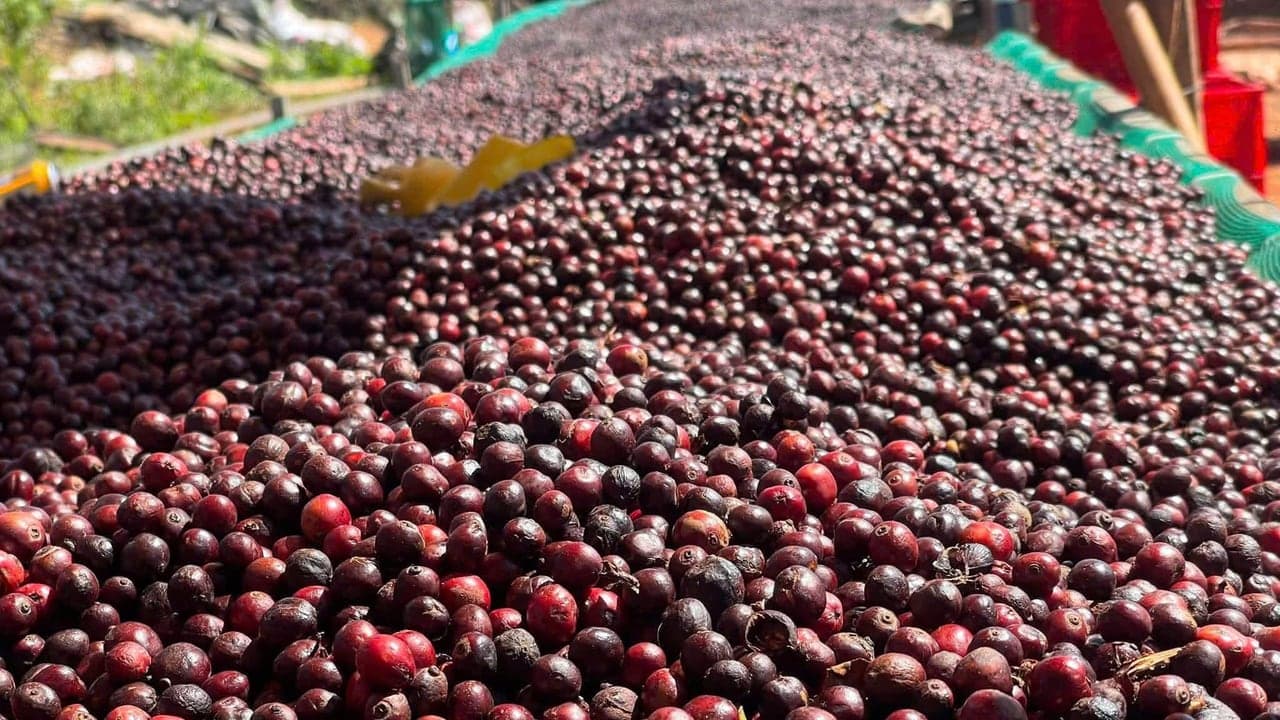
Knowing where beans come from also means knowing how they were picked and dried. A sack pooled from hundreds of different farms mixes ripe and green cherries, carefully dried batches and rushed ones. That affects the taste of your cup more than any number on the commodity exchange, as we described in the 2026 Dak Lak coffee harvest.
Where does QiFi fit in?
To be straightforward: QiFi sells roasted coffee in Vietnam and does not export beans to the EU, so the EUDR does not apply to us, and we do not claim any EUDR certification.
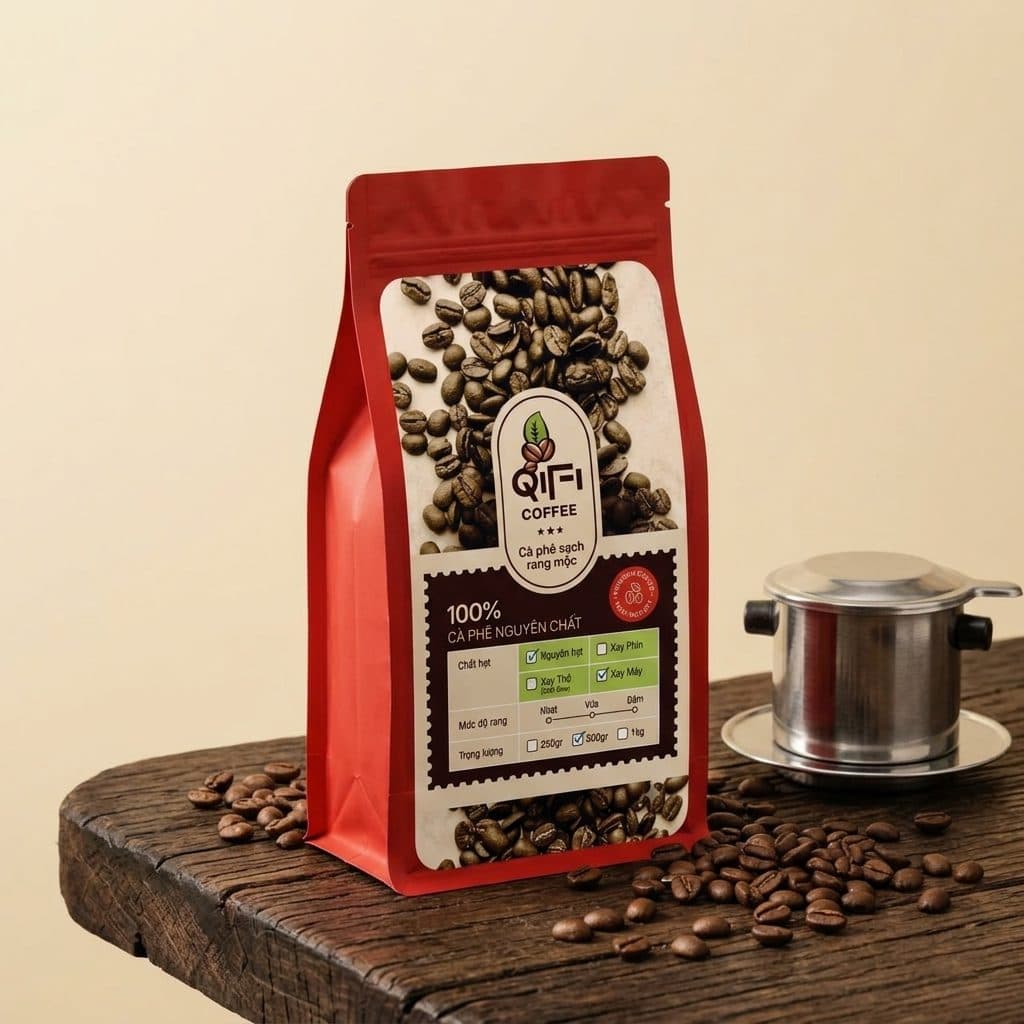
What we can do is tell you clearly what we know. We have tended our own coffee farm in Eahleo, Dak Lak since 2020, so we know how our Robusta is picked and dried. On every bag we print which beans it holds, Robusta, Culi or Arabica, and we publish our HACCP, ISO 22000:2018 and food safety certificates. The story of the family farm is in QiFi's natural coffee philosophy.
Traceability and natural roasting point the same way: both are about letting drinkers know what is in their cup.
Regulatory information as of October 2026, from the European Commission's website and the texts on EUR-Lex. The regulation has been amended several times and may change again.
Frequently asked questions
Does the EUDR apply to coffee sold in Vietnam?
No. The EUDR applies to goods placed on the EU market or exported from the EU. Coffee grown and sold within Vietnam is not subject to it.
Why is the cut-off date 31 December 2020?
It is the date the regulation chose. Land deforested before it does not count; goods grown on land deforested after it cannot be sold into the EU, even if they were grown legally.
If Vietnam is low risk, do exporters still need farm coordinates?
Yes. Low risk only removes the risk assessment and mitigation steps. Information on the location of the plots must still be collected.
Is instant coffee affected?
Yes, from 30 December 2027. Instant coffee was brought into the EUDR's scope by a supplementary regulation in 2026, with a year for companies to prepare.