Flavour journey
The art of natural roasting: how heat shapes the aroma of QiFi coffee
Green coffee beans barely smell of anything; the heat of the roaster creates the aroma. The stages of a roast, and why natural roasting needs tight control.
QiFi··Updated ·4 min read
Contents
Smell a handful of green coffee beans and you will find dry grass and beans, almost nothing like coffee. All of the familiar aroma is created in the roaster, by heat alone. For natural-roast coffee, heat is the only tool. This article explains what happens inside the bean during a roast, and why controlling the heat decides the flavour.
What is natural roasting?
Natural roasting (rang mộc) means roasting coffee beans with heat alone: no butter, no sugar, no fish sauce, no flavourings, no additives. The flavour in the cup comes entirely from the bean and the way it is roasted. Read the full definition in what is natural-roast coffee?
The stages of a roast
A roast usually lasts about 10–15 minutes and goes through the main stages below. The figures are general industry ranges, not QiFi's own settings: every machine and every bean needs its own roast profile.
1. Drying
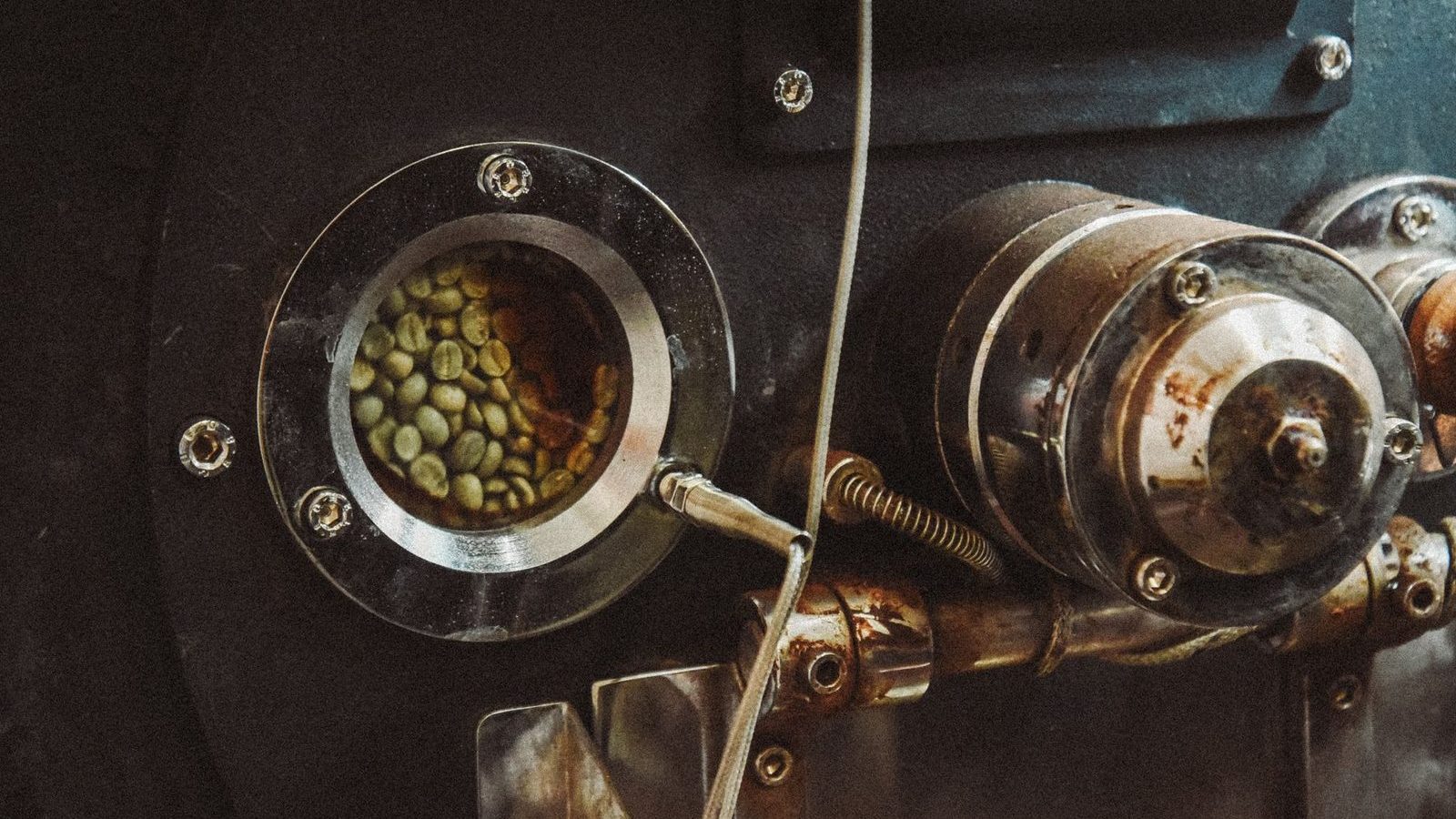
Green beans hold about 10–12% water. In the first stage the heat drives the water off and the beans turn from green to pale yellow, smelling of hay and bread. Dry them too fast and the surface burns while the core stays raw.
2. The Maillard reaction and caramelisation
At about 150–170 °C, the Maillard reaction begins: sugars and amino acids react to create hundreds of aromatic compounds and the brown colour. Then the sugars begin to caramelise, giving sweetness and notes of caramel and roasted nuts. This stage decides most of the aroma.
3. First crack
At around 200–203 °C the heat makes the bean swell until it cracks like popcorn; the water left in the bean sets the pressure inside and when it cracks. The bean turns light brown and loses about 5% of its weight as water evaporates (Scientific Reports, 2026). From here it is "cooked" and can be stopped at a light roast.
4. Development
The time after first crack is when the roaster balances acidity, sweetness and bitterness. Stopping early keeps more acidity and fruity aromas; going longer increases the bitterness, the body and the chocolate notes.
5. Second crack
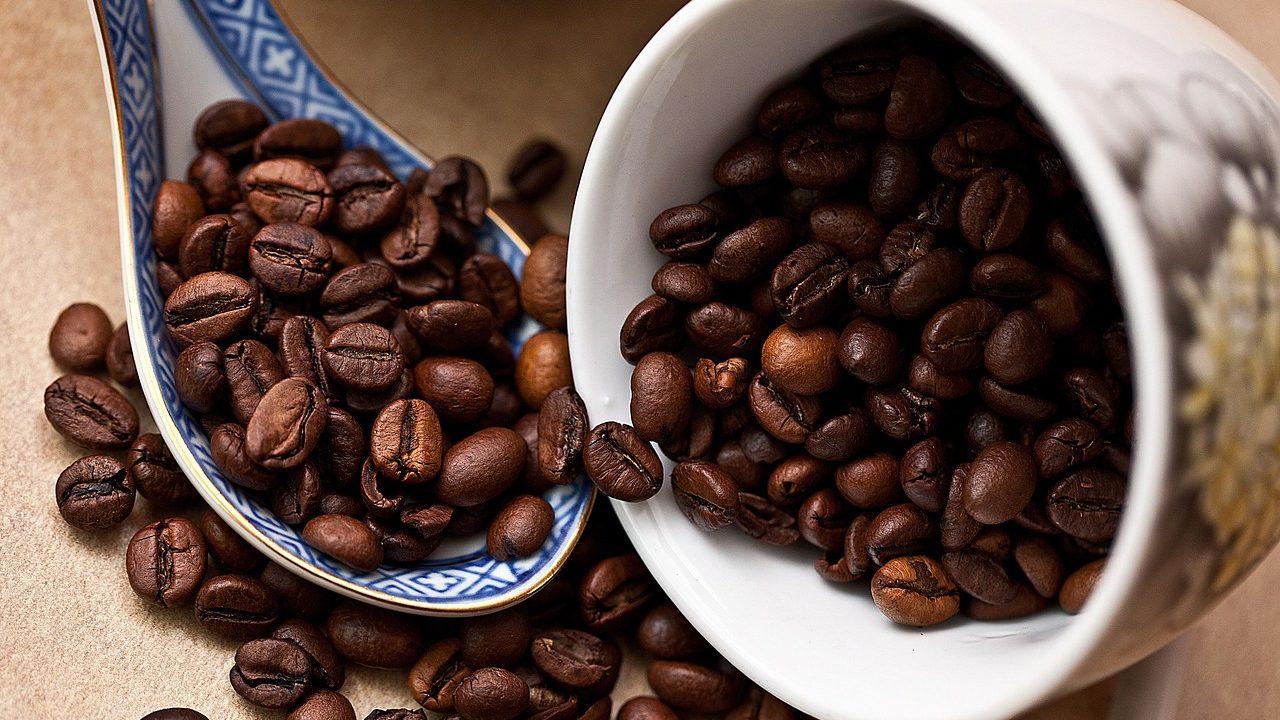
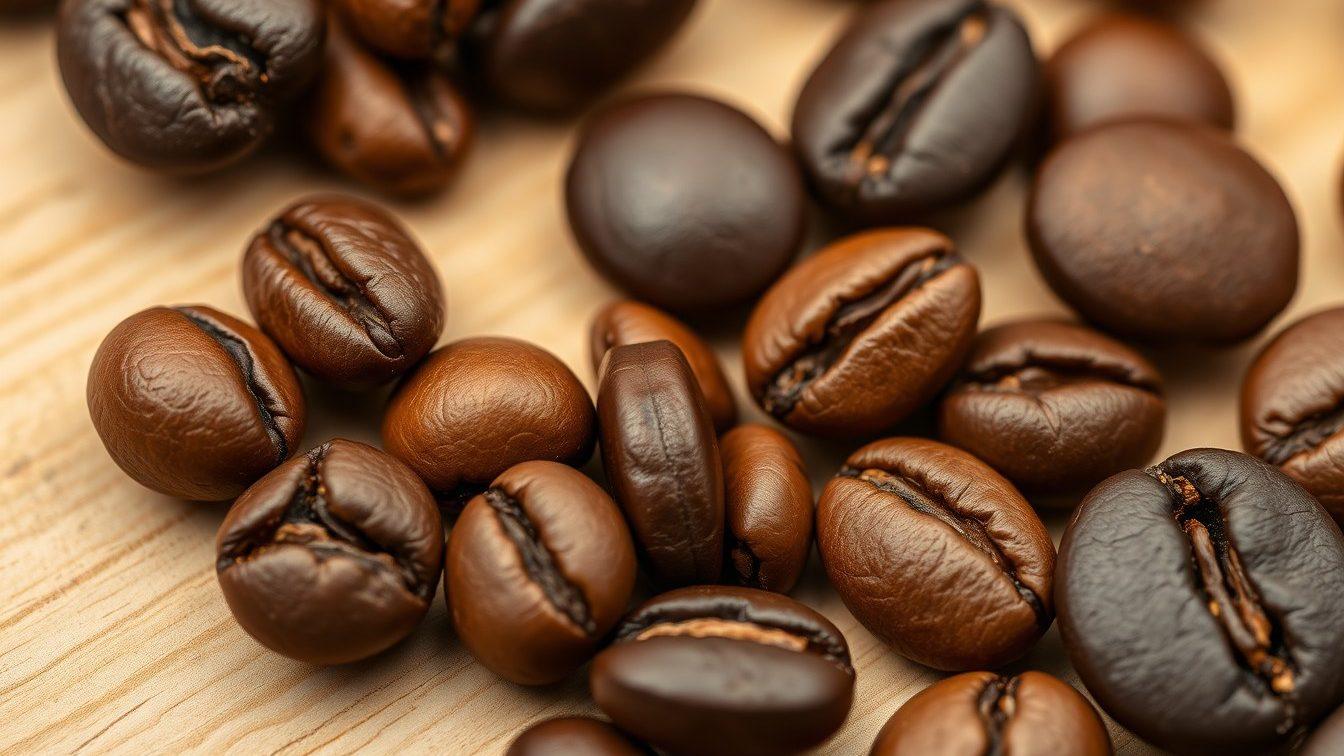
At around 230 °C comes the second crack: the bean turns dark brown, almost black, and oil from inside migrates to the surface and makes it shine. Roasting past this point is a very dark roast; go further still and the aroma burns away, leaving only a burnt taste.
Roast levels at a glance
| Roast level | Where it stops | Taste |
|---|---|---|
| Light | Just after first crack | Bright acidity, fruity and floral aromas |
| Medium | Between first and second crack | Balanced, sweet, caramel |
| Dark | Near or at second crack | Strong bitterness, full body, chocolate |
Why does temperature preserve aroma?
Coffee's aroma is made of volatile compounds. Heat creates them, but too much heat, or heat for too long, also destroys them. So:
- Too little heat, too long a roast: the beans are baked rather than roasted, and taste flat, thin and papery.
- Too much heat, too fast a roast: the surface burns and the core is undercooked, both burnt and sharply sour.
- Just enough control: the beans cook evenly from the inside out, and the aroma is created and kept.
With coated coffee, butter and flavourings can hide some roasting faults. With natural roasting there is nothing to hide behind: every heat mistake shows in the cup.
Cooling: the underrated step
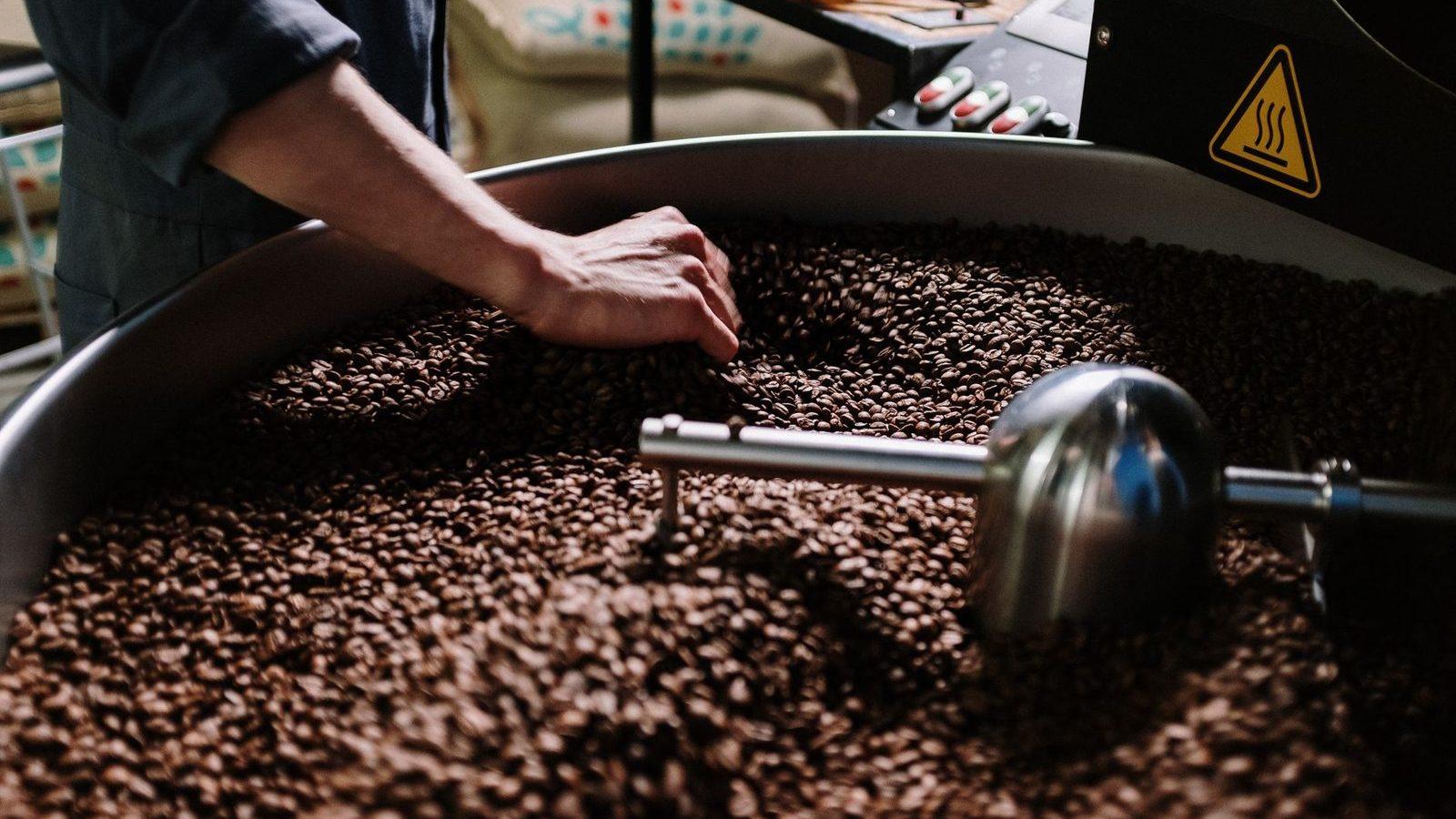
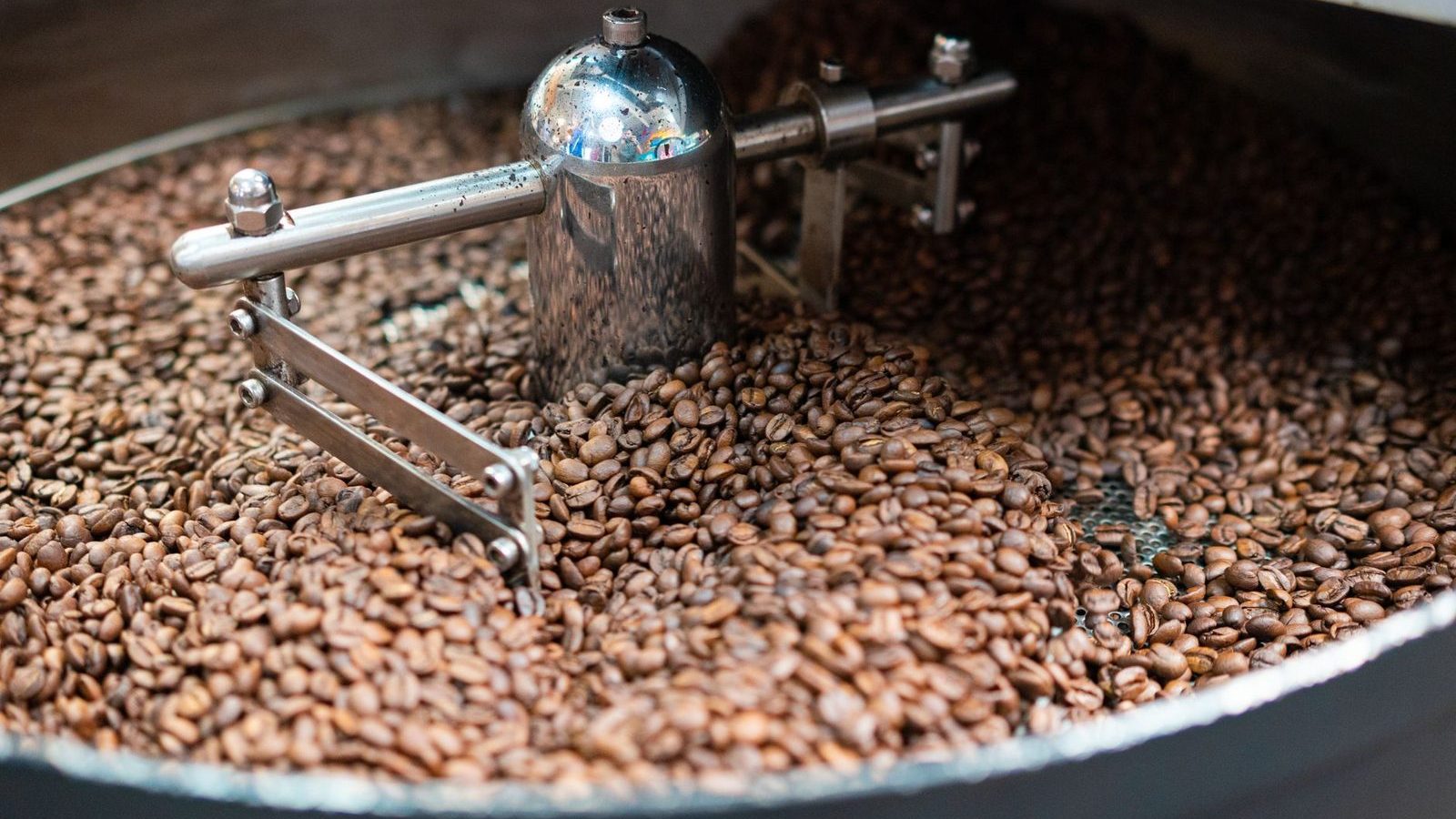
Once the beans reach the chosen roast level they must be cooled at once. Beans fresh out of the drum are still very hot and keep "roasting themselves" unless they are brought down. A cooling tray with stirring arms and a fan drawing air through it cools the beans in a few minutes, locking in the chosen roast.
How QiFi roasts
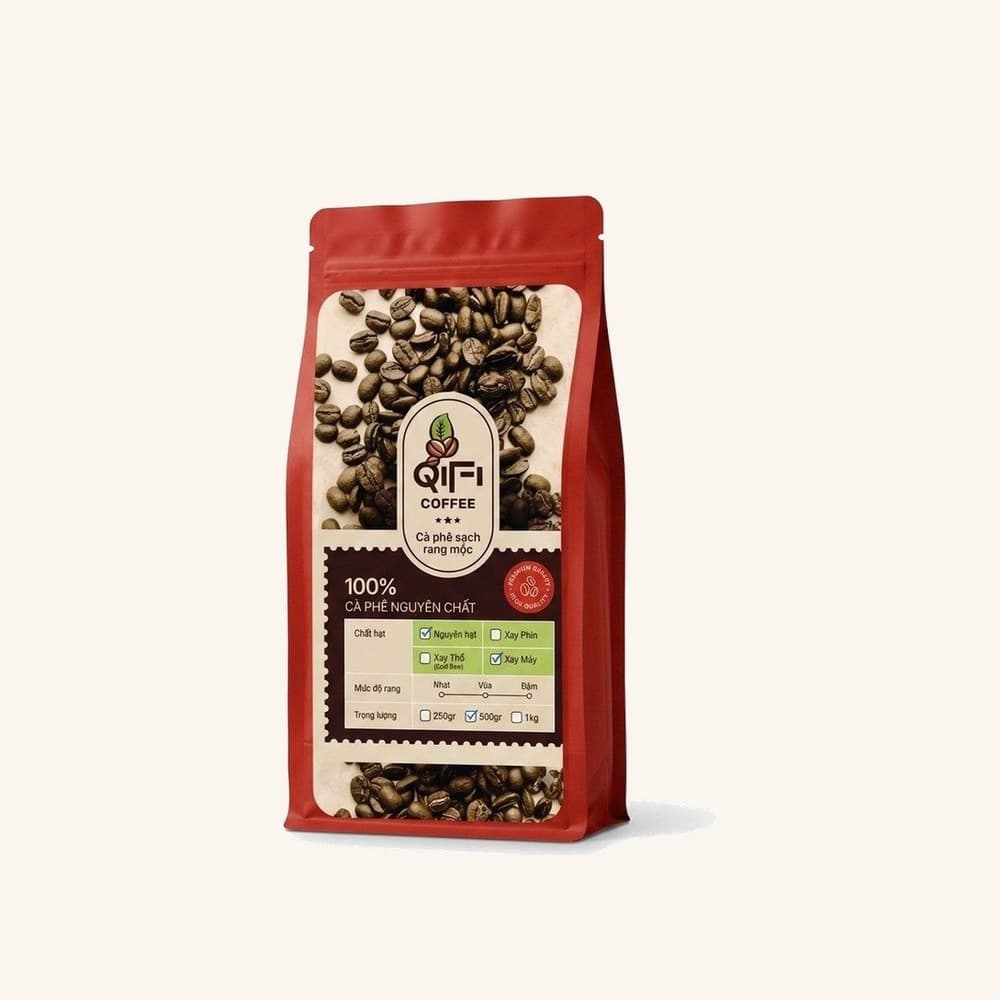
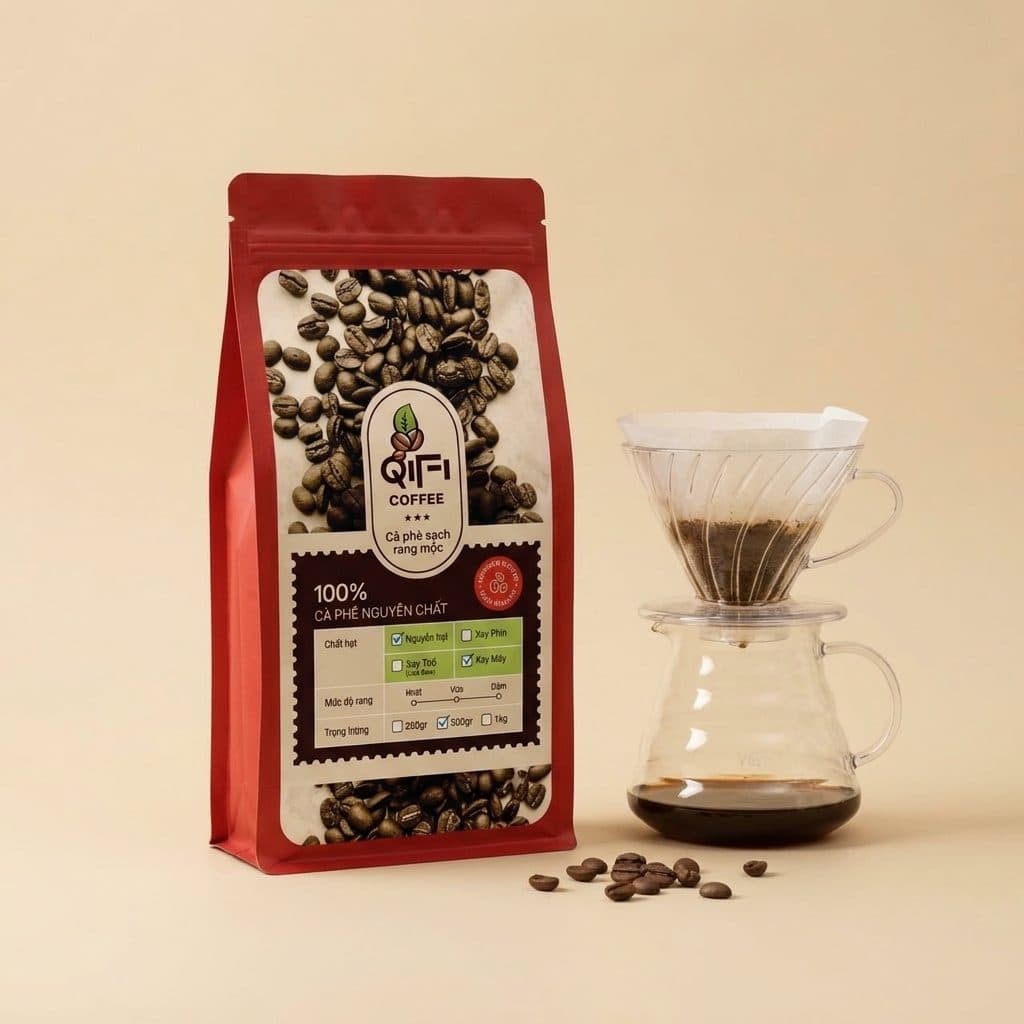
QiFi's coffee is roasted by machine, on a 60kg roaster at an ISO 22000 and HACCP certified factory, to QiFi's own roast profiles. The machine keeps the heat and airflow steady from batch to batch, so a bag of NGUYÊN BẢN this month tastes like last month's. Each bean (Dak Lak Robusta, Culi, Cau Dat Arabica) has its own roast profile, and only then is it blended to each product's recipe, such as ĐÁNH THỨC or TỈNH, 100% Arabica.
After roasting, coffee needs a few days of rest for some of the CO₂ to escape before it brews at its best. The beans are packed airtight to keep their aroma.
Read about the whole journey from farm to cup: the flavour journey from the growing region to your cup.
Frequently asked questions
Does a dark roast have more caffeine?
Not noticeably. Caffeine stands up well to heat; the difference between roast levels is mainly in taste, not in caffeine. The variety (Robusta or Arabica) matters far more.
Why does freshly roasted coffee need to "rest"?
Freshly roasted beans still hold a lot of CO₂. Brewed straight away, the gas makes the extraction uneven and the taste a little harsh. After a few days the coffee usually tastes rounder.