Home brewing
The 5 hand-brewing coffee tools baristas swear by
Phin, pour-over dripper, gooseneck kettle, burr grinder and scale: the 5 hand-brewing coffee tools most worth buying, how to use them and how to choose.
QiFi··6 min read
Contents
Walk into any specialty café and you will see a bar full of equipment: drippers, kettles, scales, grinders, glass servers. But to brew a good cup of coffee by hand at home, you do not need all of it. The five items below are what baristas consider essential, with the reasons why and what research says about each.
The five tools in one table
| Tool | What it controls | Needed for | Stand-in if you do not have one |
|---|---|---|---|
| Phin | Drip rate, strength | Everyday Vietnamese coffee | No true substitute |
| Pour-over dripper | Clarity, layers of aroma | Arabica, drunk black | A phin (a stronger, heavier cup) |
| Gooseneck kettle | Water flow, evenness | Pour-over | An ordinary kettle, poured very slowly |
| Burr grinder | Freshness and evenness of the grounds | Every method | Small bags of ground coffee, used quickly |
| Digital scale | Ratio, time | Every method | A level tablespoon (about 6–7g) |
1. The phin, the icon of Vietnamese coffee
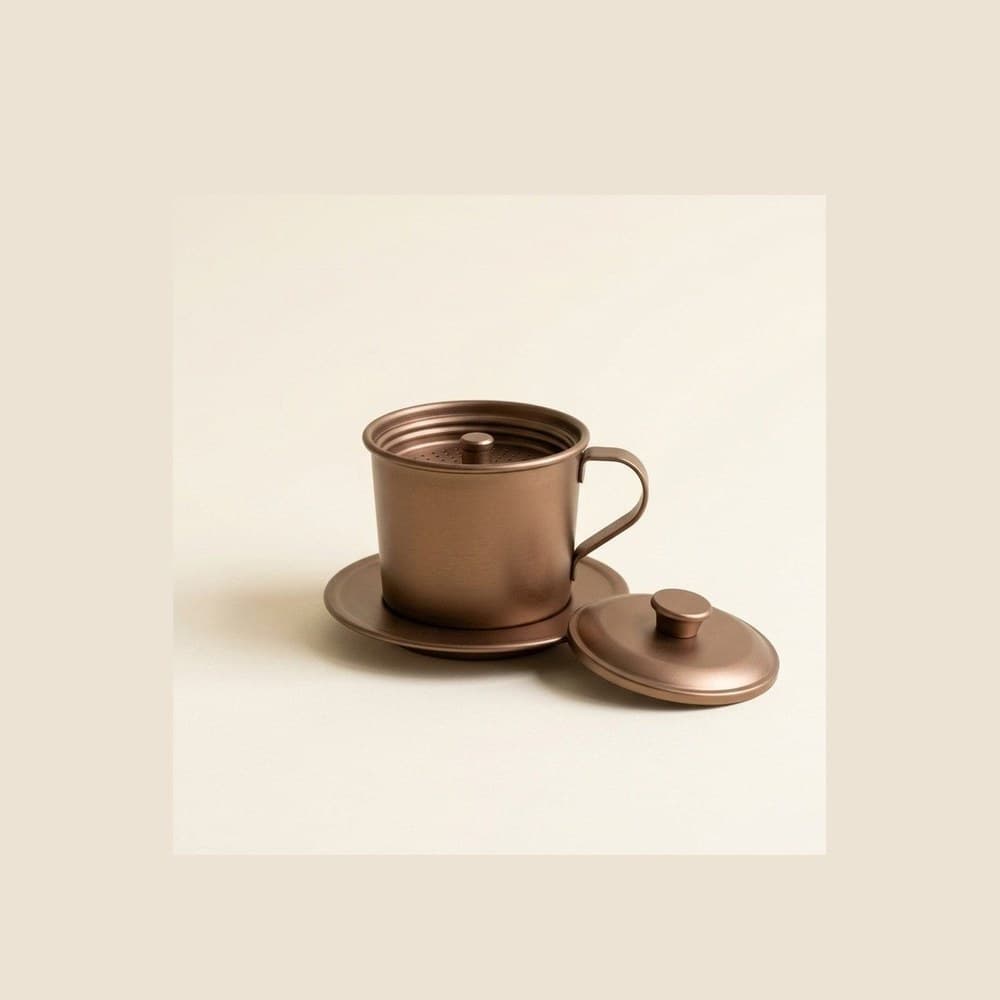
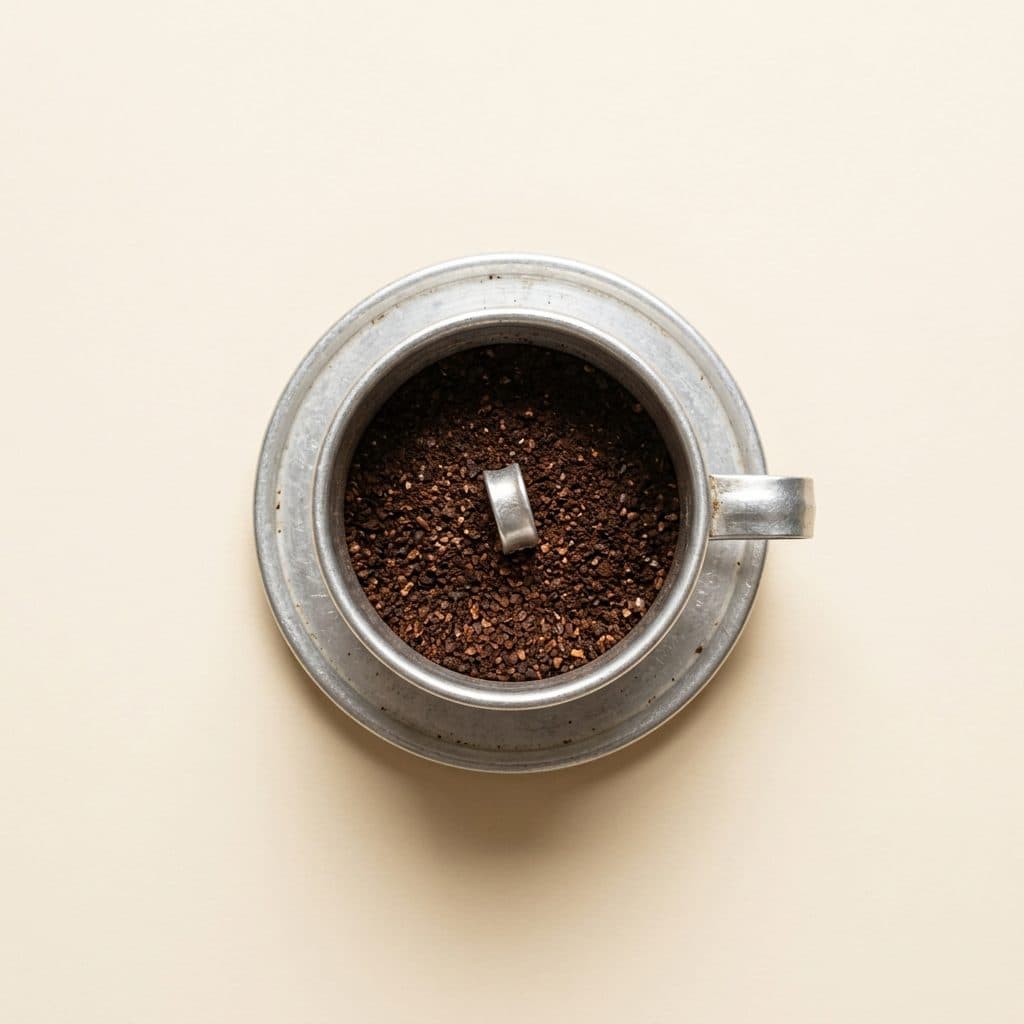
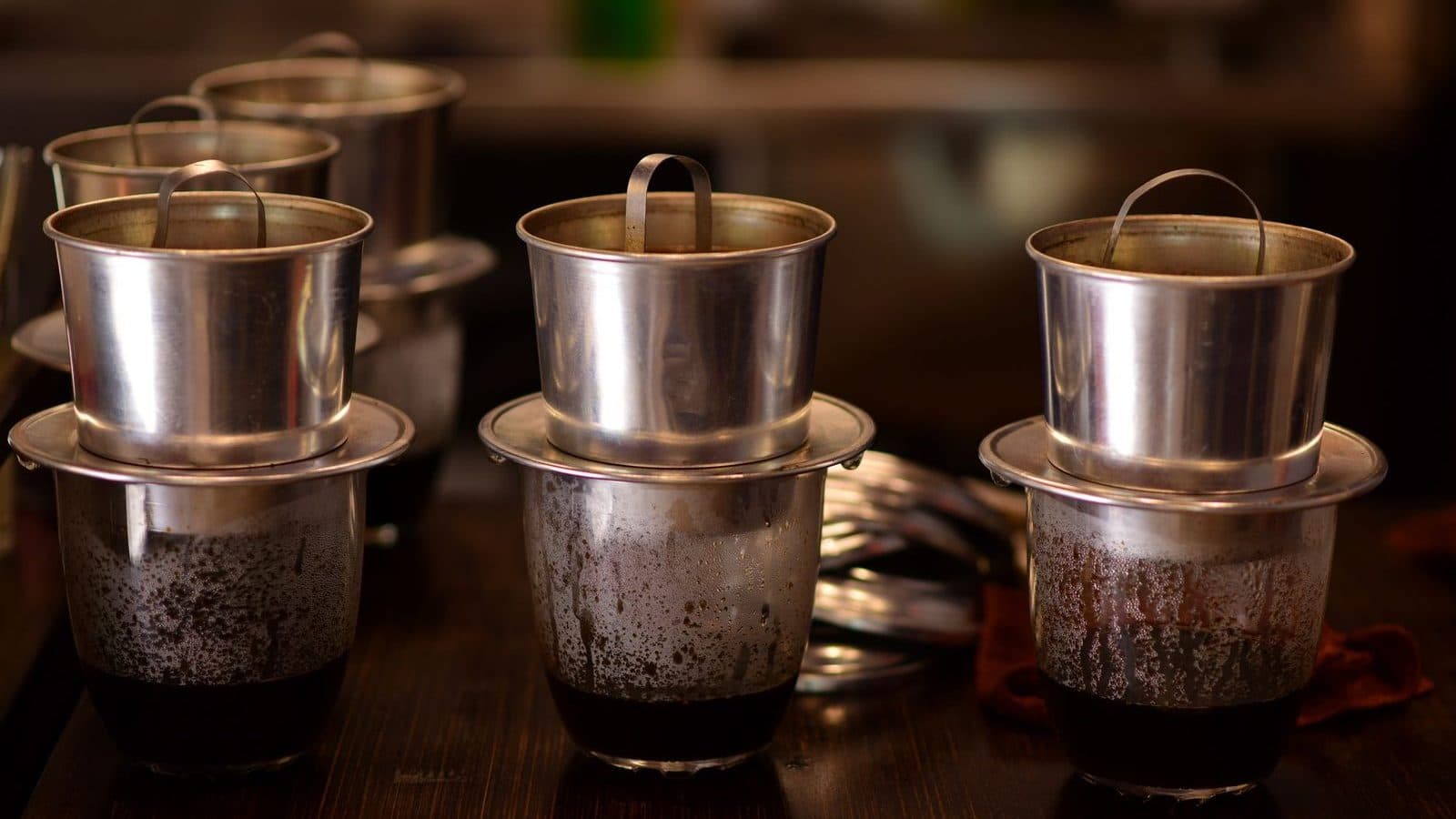
The phin is the cheapest, most durable and most "Vietnamese" hand-brewing tool. It extracts by gravity and gives a strong, full-bodied cup that suits Robusta and Robusta-heavy blends. A phin cup uses about 20g of coffee to 80ml of water, many times stronger than a pour-over, because it is made to be drunk with ice or milk.
How to choose a phin:
- Even, small enough holes, so the drip is steady and no grounds get through.
- A well-fitting press disc to tamp the grounds evenly. A loose disc lets the grounds rise when you pour, and the water runs down one side.
- Material: aluminium is light, holds heat well and is inexpensive; stainless steel is durable and easy to clean.
The QiFi aluminium phin has evenly made holes for a steady drip from one brew to the next. When the drip rate does not change, you know for sure whether a bitter cup came from the grind or your press, not from the phin.
2. The pour-over dripper, to taste the coffee clearly
A pour-over dripper (V60, Kalita Wave, ceramic or glass) uses a paper filter that holds back fine sediment and most of the coffee oil, giving a cup that is clear, clean and full of layered aroma. It is the method specialty coffee prefers for tasting Arabica.
How "clean" is a paper-filtered cup? A 2017 study in Food Research International traced cafestol, a compound found in coffee oil, through the brewing of paper-filtered coffee. Of all the cafestol in the grounds, 87.45% stayed in the spent grounds, 12.41% stuck to the paper filter, and only 0.15% reached the cup. The oil barely dissolves in hot water, and the paper holds back a further share. That is why a pour-over has a lighter body and is much clearer than a French press or a phin.
Which to choose:
- V60 (large hole, spiral ribs): fast flow, needs pouring technique, gives a bright cup.
- Flat-bottomed (Kalita): easier for beginners to keep consistent.
- Material: plastic holds heat well and is cheap; ceramic and glass look good but need pre-heating.
The best beans for a dripper are light-roasted Arabica such as TỈNH, 100% Cau Dat Arabica: its bright acidity and fruity aroma come through clearly when extracted cleanly through paper.
3. The gooseneck kettle, to control the water
For pour-over, the flow of water matters almost as much as the beans. A gooseneck kettle has a long, thin spout that lets you pour slowly, evenly and exactly where you want, so the water soaks through all the grounds instead of boring a hole in the middle.
Is an electric kettle with precise temperature control worth it? Convenient, but not essential. A 2020 University of California, Davis study had tasters try coffee brewed at 87°C, 90°C and 93°C and found that, when strength and extraction were held equal, temperature made almost no difference to the taste. Boiling the water and resting it for 30–60 seconds is enough. Spend on the spout first and the thermostat later.
No gooseneck kettle? An ordinary kettle still works for a phin, but with pour-over you will find it hard to control and the extraction easily turns uneven.
4. The burr grinder, the best investment
Baristas often say: "Better a cheap brewer and a good grinder than the other way round." There are two reasons.
Ground coffee loses its aroma very fast. A 2024 study from Brno University of Technology stored ground roasted coffee for 30 days, opening the package repeatedly as people do at home. The coffee lost 35–45% of its aroma compounds whatever the packaging, and more than 80% in a paper sachet. With a grinder, you buy whole beans and grind only what each cup needs.
A burr grinder gives an even particle size. A blade grinder chops the beans unevenly: the fine bits over-extract (bitter) while the large bits under-extract (sour), in the same cup. You get a cup that is both sour and bitter, and no ratio will fix it.
A hand burr grinder is reasonably priced, compact and good enough for both phin and pour-over.
5. A digital scale with a timer
The cheapest item on the list, but the one that lets you repeat a good cup. Weigh the coffee, weigh the water, time the brew: those three numbers are your "recipe". A spoonful of dark-roasted beans weighs less than one of light-roasted beans, so measuring by the spoon gives a different cup every day. How to use those three numbers is in the coffee-to-water ratio guide.
Two "bonus" items worth considering
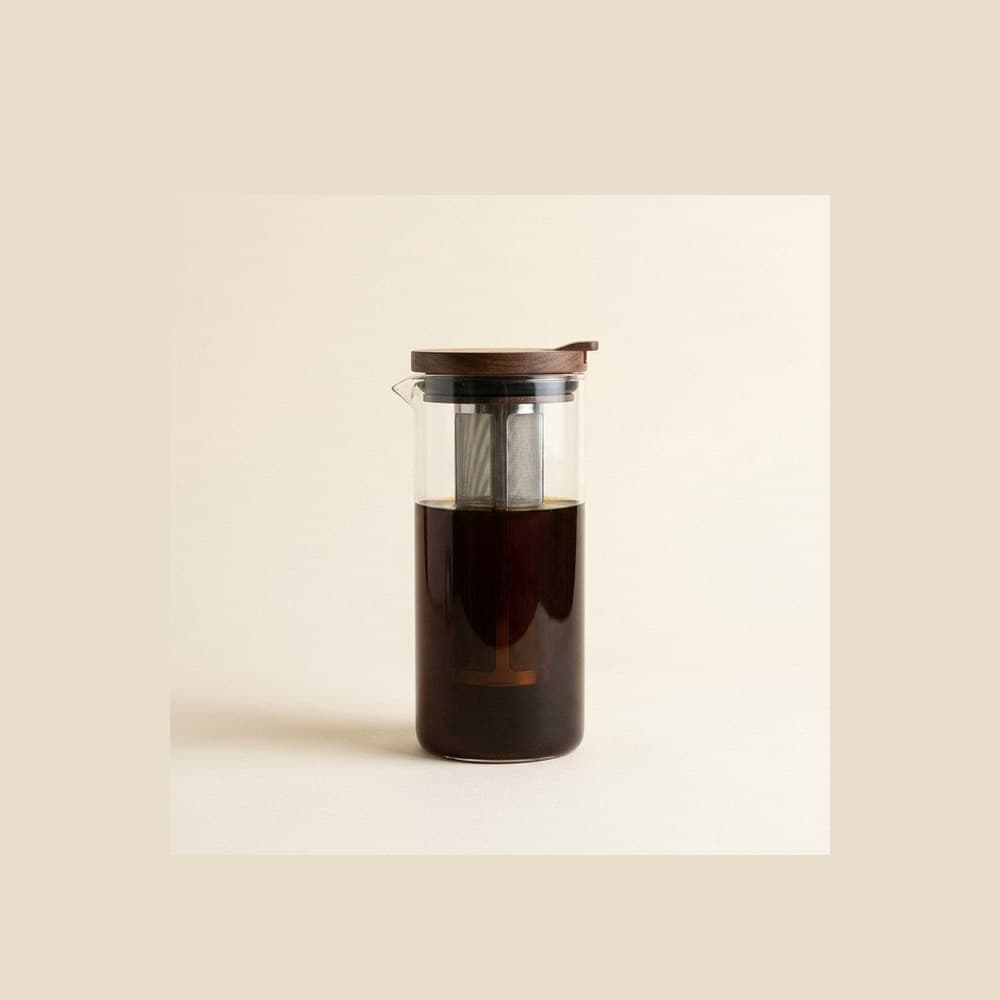
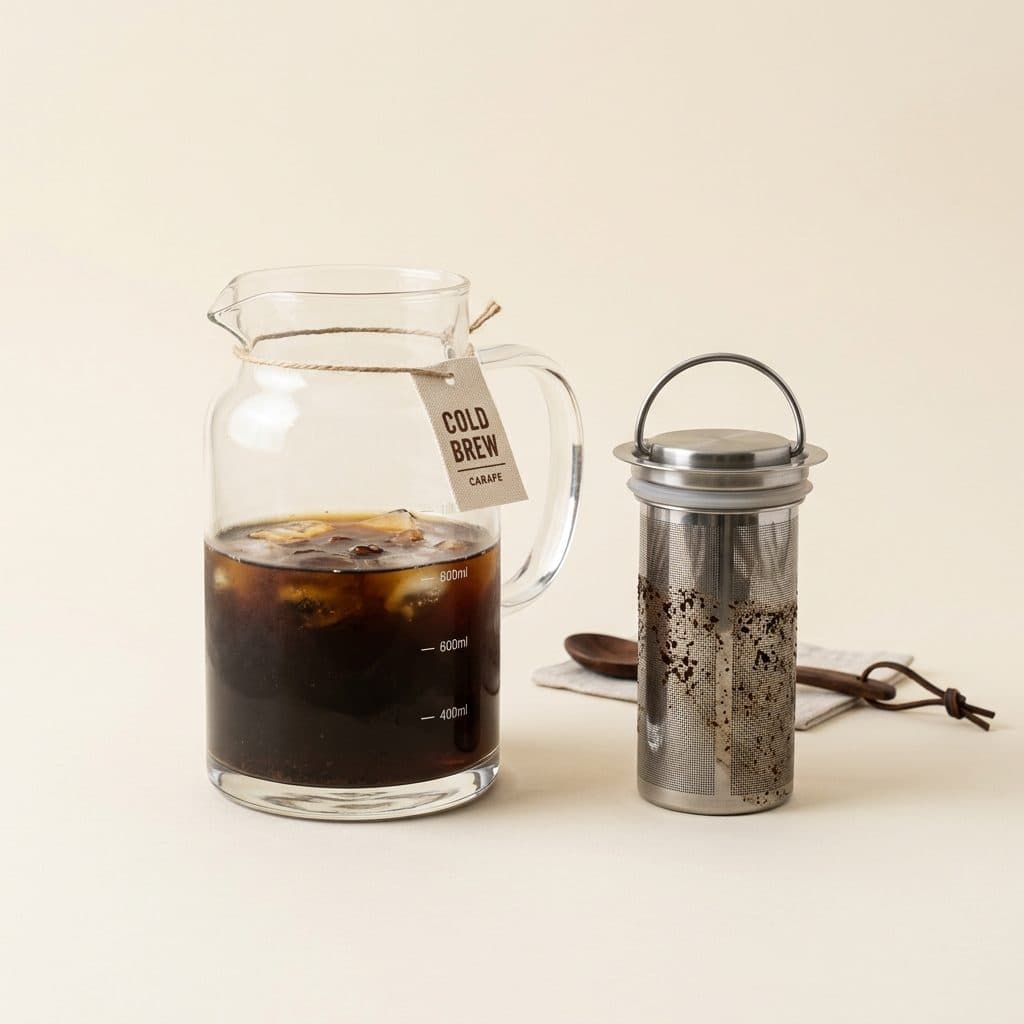
A cold brew bottle. If you like cold coffee that is smooth and low in bitterness, a cold brew bottle with a built-in filter makes steeping simple: 100g of coarsely ground coffee to 1 litre of water, steeped for about 12 hours. The QiFi cold brew bottle is designed for exactly this recipe.
A thick ceramic cup. A thick ceramic cup holds heat for longer, so hot coffee does not cool quickly and the taste stays consistent from the first sip to the last. Rinse the cup with hot water before pouring so it does not draw the heat out of the coffee.
What to buy first?
On a limited budget, this is the suggested order:
- A phin: enough to brew good coffee every day.
- A digital scale: for consistent brewing.
- A burr grinder: so you can buy whole beans and grind fresh.
- A pour-over dripper and a gooseneck kettle: when you want to explore Arabica and its layers of aroma. Why so many people love this method is in why hand drip is so loved.
Good tools help you avoid many mistakes, but technique still matters. Read 5 mistakes when brewing coffee by hand so you do not waste good beans, and how to brew coffee by hand like a barista at home to put the tools together into one routine.
Frequently asked questions
Is an aluminium phin safe?
Food-grade aluminium phins are widely used in Vietnam. Wash them in warm water, avoid abrasive scrubbers and do not soak them for long in strong cleaners.
Do I need an espresso machine to make good coffee at home?
No. Both a phin and a pour-over make an excellent cup if you control the ratio, temperature, grind and time.
Are white or brown paper filters better?
Both hold back sediment and oil. Brown (unbleached) paper is more likely to leave a papery taste, so rinse it well with hot water before adding the coffee.