Home brewing
Why coffee lovers swear by hand drip: the specialty trend explained
Hand drip (pour-over) gives a clear, clean cup with layers of aroma. Why do coffee lovers and the specialty wave choose this slow way of brewing?
QiFi··6 min read
Contents
Ten years ago in Vietnam, "brewing coffee" almost always meant a phin. Today, in specialty cafés from Saigon to Da Lat, you will see baristas holding gooseneck kettles, pouring slow circles of water through a paper filter. That is hand drip, or pour-over. Why has such a slow, careful way of brewing won over coffee lovers?
What is hand drip?
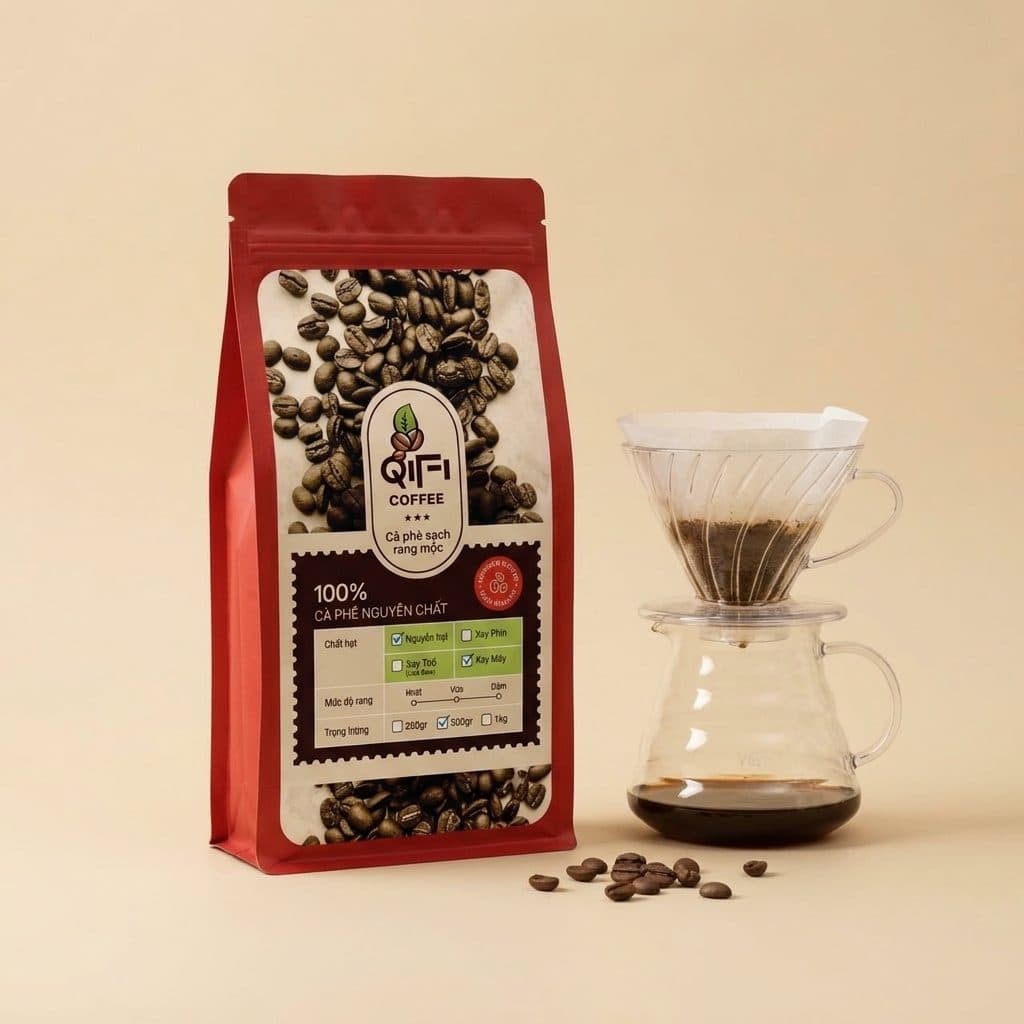
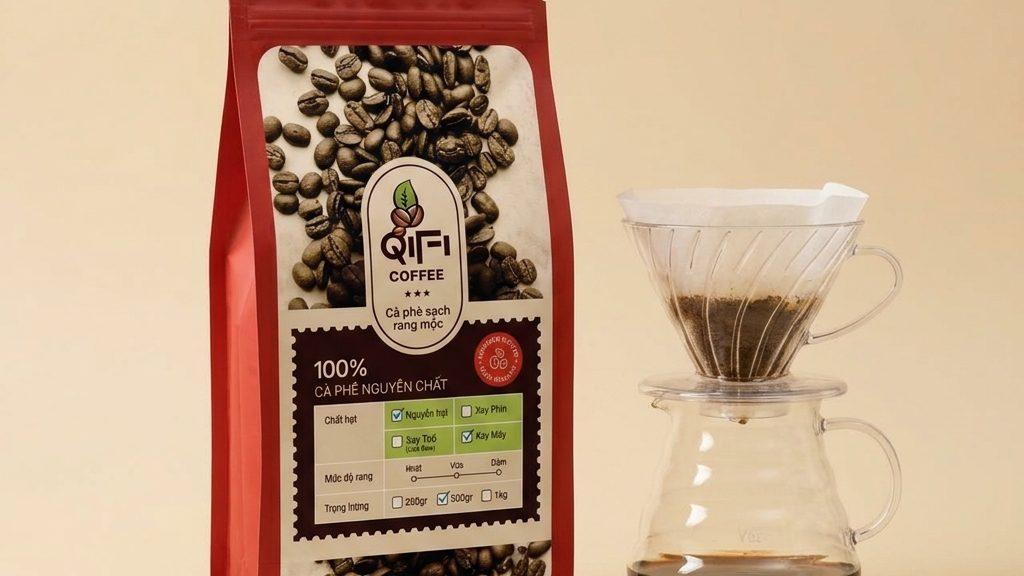
Hand drip means pouring hot water by hand over ground coffee in a dripper lined with a paper filter. The water passes through the grounds once, extracts, and drains into the server below. Unlike a phin, the brewer fully controls the pouring speed, the amount of water and the time.
Common tools: the V60, Kalita Wave and Chemex drippers, plus a gooseneck kettle and a scale. Which to choose and in what order to buy them is in the 5 hand-brewing coffee tools.
How do hand drip and a phin differ?
| Phin | Hand drip | |
|---|---|---|
| Filters through | A perforated metal plate | Paper |
| Usual ratio | About 1:4 (20g / 80ml) | 1:15–1:17 (15g / 240ml) |
| Time | 4–5 minutes | About 3 minutes |
| The cup | Strong, heavy body, with oil and fine sediment | Clear, light, clean |
| Best beans | Robusta and Robusta-heavy blends | Light to medium-roasted Arabica |
| How it is drunk | With ice, with milk | Black, no sugar |
The two methods do not compete. They are two ends of the same scale: the phin pushes strength to the maximum, hand drip pushes clarity to the maximum.
Reason 1: A clear, clean cup
The paper filter holds back fine sediment and most of the coffee oil. That cleanliness has been measured. A 2017 study in Food Research International traced cafestol, a compound in coffee oil, through the brewing of paper-filtered coffee: 87.45% stayed in the spent grounds, 12.41% stuck to the paper, and only 0.15% reached the cup.
The result is a cup that is clear, light and clean. No sediment at the bottom, no "heavy" feeling in the mouth. For people who like black coffee without sugar, the difference is very noticeable.
Reason 2: The layers of aroma come through
When bitterness and body step back, subtler flavours appear: bright, fruit-like acidity, honey sweetness, floral notes. This is exactly what specialty coffee looks for: every growing region and every processing method gives its own flavour "signature". To learn to recognise these layers, read the guide to tasting the layers of coffee aroma.
Reason 3: Every variable is under your control
Hand drip invites experiment: change the grind, the pour, the ratio, and taste the difference straight away. Baristas can even measure the result: according to a 2020 University of California, Davis study, the "ideal" box for filter coffee on the Brewing Control Chart is a strength (TDS) of 1.15–1.35% and an extraction of 18–22%. The same study found that between 87°C and 93°C, temperature made almost no difference to the taste when strength and extraction were equal, so beginners need not watch every degree.
For coffee lovers, this is both a skill and a pleasure. Every cup teaches you a little more about the beans you are drinking. How to read your cup and know which dial to turn is in the coffee-to-water ratio guide.
Reason 4: A slow ritual in a fast life
Three minutes of pouring water, smelling the grounds bloom, watching the coffee drip down: for many people it is a rare quiet moment in the day. Slow brewing becomes a small meditation, a way of looking after yourself, in the same spirit as a taste for natural coffee and a healthy lifestyle.
Hand drip and the specialty wave
Specialty coffee is coffee of high quality at every step: growing, picking ripe cherries, processing and roasting. This wave values the original flavour of the bean, so it favours moderate roasts and "transparent" methods such as hand drip: no sugar, no milk, nothing to hide behind.
Interestingly, this spirit is very close to natural roasting: no butter, no flavourings, letting the bean speak for itself. A hand drip is the most honest test of a bean: every off-smell and every burnt note shows. Read more: what is natural-roast coffee?
Which beans suit hand drip?
- Light to medium-roasted Arabica is the classic choice: bright, aromatic, with many layers of flavour. TỈNH, 100% Cau Dat Arabica, is an example: its fruity aroma and gentle acidity come through clearly through paper.
- Blends with Arabica such as GIAO HÒA (Robusta, Culi and Arabica) give a stronger hand drip, good for people used to Robusta who want to try a new method.
- 100% Robusta can be brewed as a hand drip, but its bitterness and heavy body usually suit a phin better. How the two species differ is in Vietnamese Robusta and Arabica compared with the world.
A basic hand-drip recipe
15g of medium-ground coffee, 240ml of water at 93°C.
- Rinse the paper filter and discard the rinse water.
- Add the coffee, shake it level, tare the scale.
- Bloom: pour 30–40ml of water and wait 30–45 seconds.
- Pour in circles from the centre outwards, in 2–3 pours, up to 240ml.
- The total time is about 3 minutes. Much faster, grind finer; much slower, grind coarser.
The step-by-step guide is in how to brew coffee by hand like a barista at home.
Does hand drip replace the phin?
It does not need to. The phin and hand drip are two different ways to enjoy coffee: the phin is strong and heavy, right for a morning iced milk coffee; hand drip is clear and light, right for an afternoon cup of black. Many coffee lovers use both, depending on the beans and the mood.
Frequently asked questions
Does hand drip have less caffeine than a phin?
Usually, yes. Caffeine depends mainly on the bean and the amount of coffee. According to a 2021 review in the journal Foods, Robusta beans contain about 1.6–2.4% caffeine and Arabica about 0.9–1.2%. A phin cup uses 20g of coffee, usually Robusta-heavy; a hand drip uses 15g of Arabica. If the phin cup is pure Robusta, the caffeine in its grounds alone is about two and a half times that of the hand drip.
Can I use ordinary paper instead of a coffee filter?
Better not. Coffee filters have the right thickness and flow rate; ordinary paper can drain far too slowly and leave a papery taste.
Does hand drip need freshly roasted beans?
More than a phin does. Because a hand drip is clear and light, aroma is most of the experience, and ground coffee loses its aroma very fast. Ideally, grind just before brewing.