Home brewing
How to brew coffee by hand like a barista at home: from pour-over to phin
Barista-quality hand-brewed coffee at home needs no expensive machine, just the right ratio, water temperature, grind and brew time, from pour-over to phin.
QiFi··7 min read

Contents
A cup in a specialty café and a cup rushed out at home can use the same beans and still taste completely different. The difference rarely lies in a machine costing thousands. It lies in four variables every barista controls: the coffee-to-water ratio, the water temperature, the grind and the brew time.
This article shows how to brew coffee by hand at home with that mindset, using the two most popular methods in Vietnam: pour-over (pouring by hand through a paper dripper) and the traditional phin.
The four variables behind a good cup
Brewing coffee is really extraction: hot water dissolves the compounds in the grounds that create flavour. Too little extraction and the cup is sharply sour, thin and lacking sweetness. Too much and it is bitter, harsh and drying. The four variables below are the "dials" you turn.
Baristas do not only taste, they measure. According to a University of California, Davis study published in Scientific Reports in 2020, the "ideal" box for filter coffee on the Brewing Control Chart, a chart the coffee industry has used since the 1950s, is a strength (TDS) of 1.15–1.35% and an extraction of 18–22%. You do not need a meter at home, but remember the main idea: the ratio decides strength, while grind, temperature and time decide extraction.
1. The coffee-to-water ratio
The ratio decides strength. Pour-over usually uses about 1:15 to 1:17 (1g of coffee to 15–17ml of water). The Vietnamese phin is much stronger, about 1:4: for example 20g of coffee to 80ml of water. The details are in the coffee-to-water ratio guide.
2. Water temperature
Water at 100°C easily "scorches" the grounds and pulls out bitterness. Baristas usually use water at 92–96°C, which means boiling it and letting it rest for about 30–60 seconds. The darker the roast, the slightly cooler the water should be; light roasts take it hotter.
Do not worry too much about every degree. The same UC Davis study had tasters try coffee brewed at 87°C, 90°C and 93°C and found that, when strength and extraction were equal, temperature made almost no difference to the taste. Temperature mainly changes how fast coffee extracts; avoiding water at a rolling boil is enough.
3. The grind
The grind decides how fast water flows through the coffee:
- Pour-over: medium, like granulated sugar.
- Phin: medium-coarse, a little coarser than espresso and never as fine as flour; too fine and the phin clogs.
- Cold brew: coarse, like rock salt.
A burr grinder gives a far more even grind than a blade grinder. If you invest in only one item, make it the grinder: a 2024 study from Brno University of Technology found that ground roasted coffee lost 35–45% of its aroma compounds after 30 days of repeated opening, whatever the packaging. Which grinder is worth buying is in the 5 hand-brewing coffee tools.
4. Brew time
A single pour-over takes about 2:30–3:30 minutes. A phin takes about 4–5 minutes. Too fast: grind finer. Too slow: grind coarser.
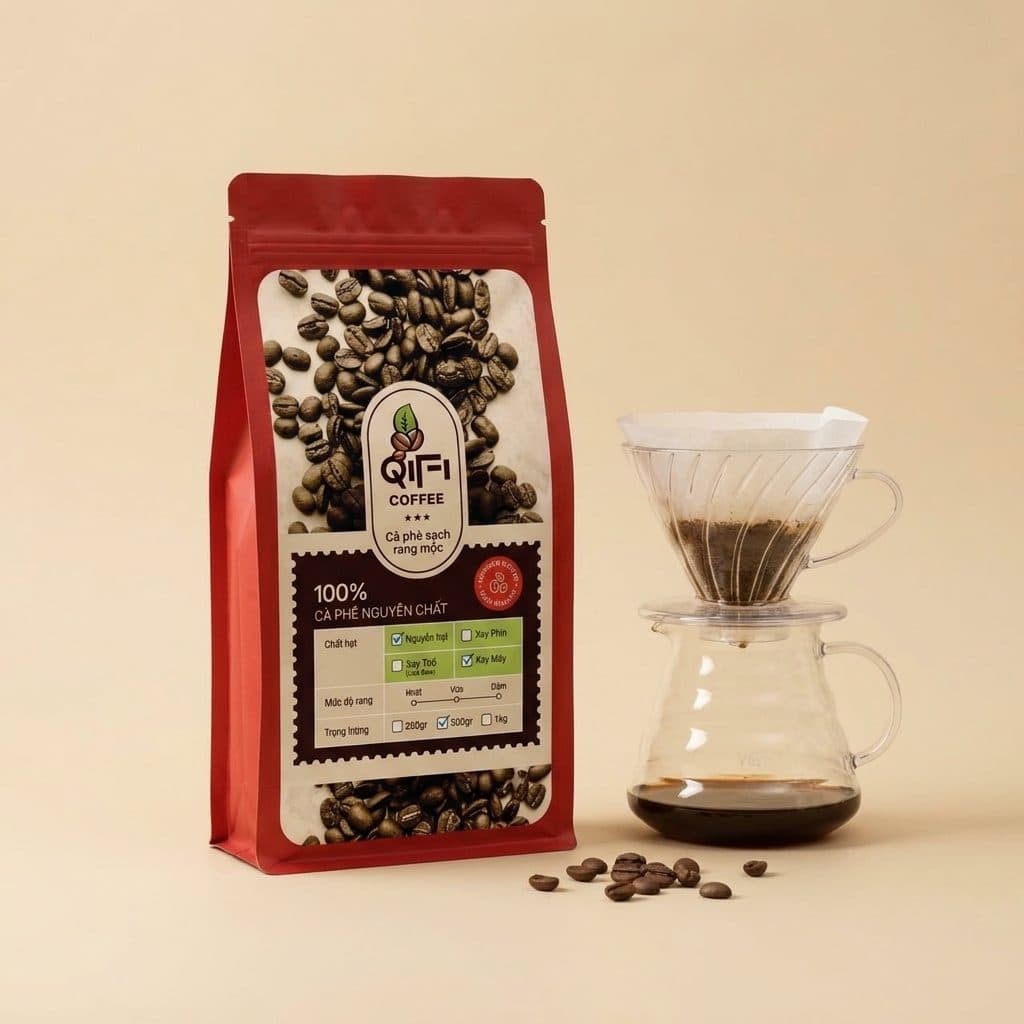
A barista-style pour-over
What you need
- A dripper (V60, Kalita or ceramic) and paper filters
- A gooseneck kettle to control the flow
- A digital scale with a timer
- A server or cup
The basic recipe for one cup
15g of coffee, 240ml of water at 93°C, medium grind.
- Rinse the paper filter with hot water to remove the papery taste and warm the dripper, then discard the rinse water.
- Add the coffee and shake gently to level it, place it on the scale and tare.
- Bloom: pour about 30–40ml of water, just enough to wet all the grounds. Wait 30–45 seconds. The grounds swell as CO₂ escapes; the fresher the roast, the more they rise.
- Main pour: pour slowly in circles from the centre outwards, avoiding the paper walls. Split it into 2–3 pours, up to 240ml.
- Let it drain completely. The total time should be about 3 minutes.
Light-roasted beans such as TỈNH, 100% Cau Dat Arabica, suit pour-over very well: their bright acidity and fruity aroma come through clearly when extracted cleanly through paper. Why specialty coffee loves this method is in why coffee lovers swear by hand drip.
A phin, the barista way
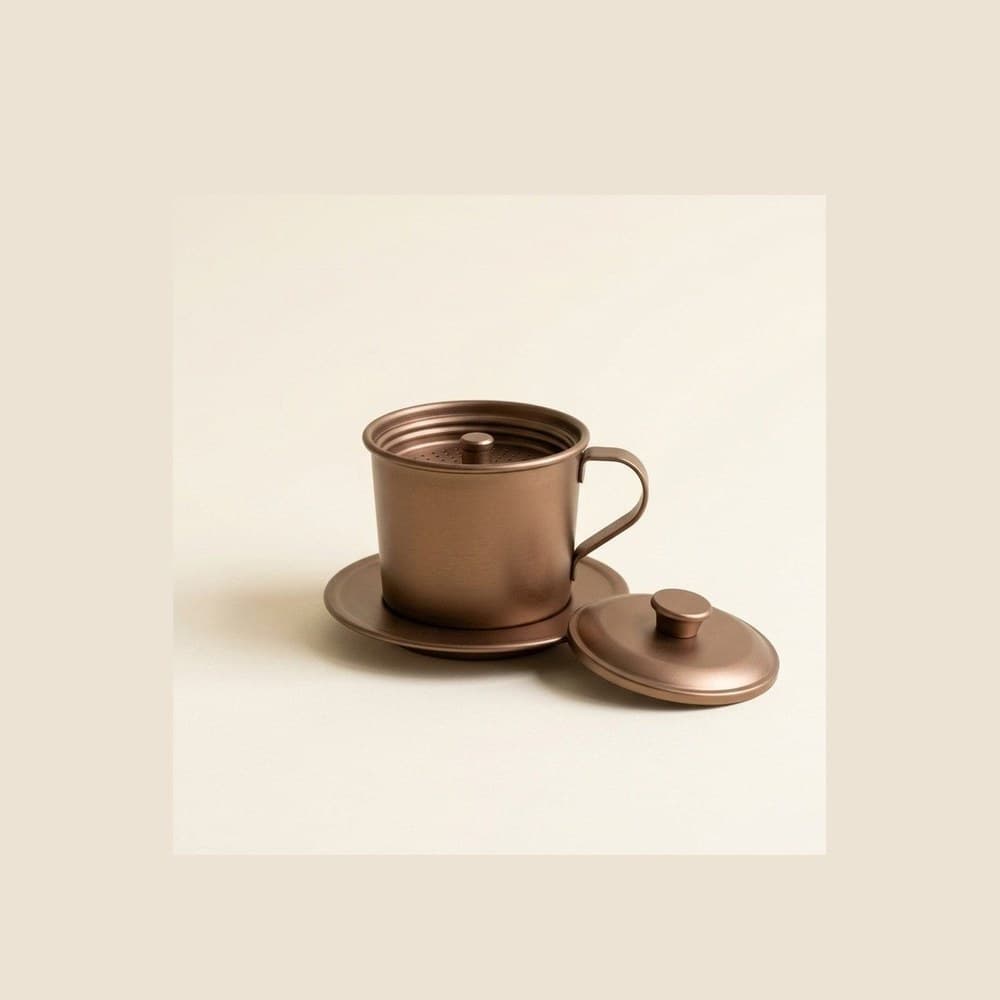
The phin extracts drop by drop by gravity and gives a strong, full-bodied cup, exactly the Vietnamese taste. Bring a barista's mindset to it and you will get a consistent phin every morning.
The recipe for one phin
20g of coffee, about 80ml of water at 92–96°C.
- Rinse the phin and the cup with hot water to keep the heat in.
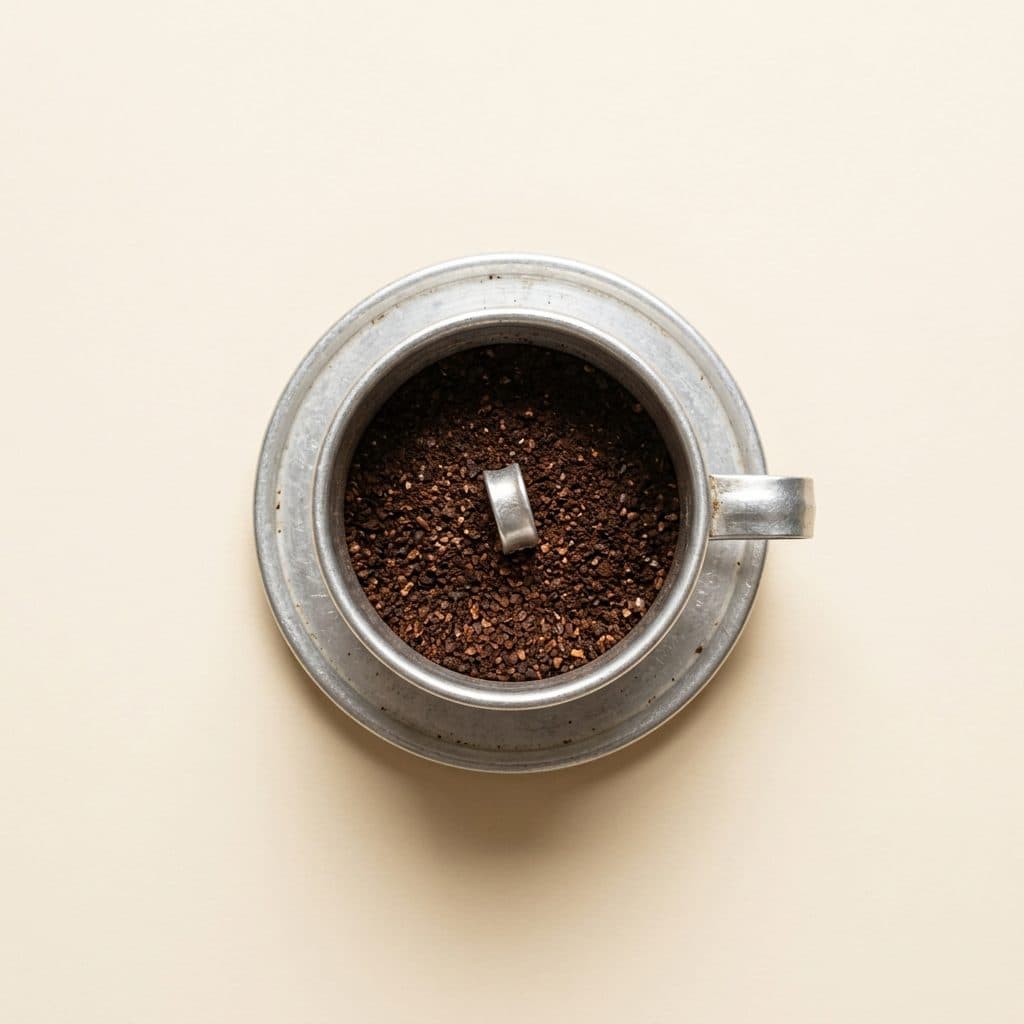
- Add the coffee to the phin and shake it level. Put the press disc on and press lightly; press too hard and the water will not flow.
- Bloom: pour about 20ml of water and wait 2 minutes for the grounds to swell.
- Fill the phin, put the lid on and wait. A steady drip, about one drop every 1–2 seconds, is ideal.
- The drip time is about 4–5 minutes. Stir before drinking, and add ice or milk to taste.
The QiFi aluminium phin has evenly made holes, so the drip stays steady from one brew to the next. In a phin, Robusta blends such as NGUYÊN BẢN (Robusta and Arabica) give a strong cup with a clean bitterness and a sweet finish.
Cold brew for the whole week
Cold brew is the easiest of the three: no kettle, no timing the pour.
- Put 100g of coarsely ground coffee in a bottle and pour in 1 litre of cool filtered water.
- Stir gently so all the grounds are wet, and close the lid.
- Steep in the fridge for about 12 hours, then strain off the grounds.
- Keep the concentrate in the fridge, and dilute it 1:1 with water, ice or milk to taste when you drink it.
Because cool water extracts slowly, cold brew has very little harsh bitterness and suits both Arabica and Robusta-heavy blends. The QiFi cold brew bottle has a built-in filter for exactly this recipe. Cold brew concentrate is also a good base for a quick morning salt coffee.
Quick comparison table
| Method | Ratio | Temperature | Grind | Time |
|---|---|---|---|---|
| Pour-over | 1:16 | 92–96°C | Medium | 2:30–3:30 |
| Phin | about 1:4 | 92–96°C | Medium-coarse | 4–5 minutes |
| Cold brew | 100g/1 litre | Cool water | Coarse | 12 hours |
Cup not right? Adjust by taste
| What you taste | Usual cause | What to change first |
|---|---|---|
| Weak, thin | Too little coffee for the water | Add 1–2g of coffee, keep the water |
| Sharply sour, lacking sweetness | Under-extracted | Grind one step finer |
| Harsh, drying bitterness | Over-extracted | Grind one step coarser |
| Both sour and bitter | Uneven grind | Switch to a burr grinder |
| Little aroma, flat bitterness | Coffee kept too long after opening | Grind just before brewing |
How to read a cup on the two axes, "strong–weak" and "under–over-extracted", is explained in detail in the coffee-to-water ratio guide.
Keep notes like a barista
A barista's biggest secret is not a beautiful pour but note-taking. Each time you brew, write down the coffee, the water, the temperature, the grind and how it tasted. Change only one variable at a time. After a week, you will know exactly which recipe suits you best.
To avoid the common mistakes that ruin a cup, read 5 mistakes when brewing coffee by hand.
Frequently asked questions
How do I brew without a scale?
You can estimate: a level tablespoon holds about 6–7g of ground coffee. Still, a scale is the cheapest item that improves your cup the most.
What water should I use?
Clean, odourless filtered water. Very hard water (rich in minerals) makes coffee taste heavy; fully distilled water makes it taste flat.
How long after roasting is coffee best?
Coffee should rest a few days after roasting to release some gas, and is best around 2–4 weeks after roasting when stored airtight.