Home brewing
How to make moka pot coffee at home: step by step, common mistakes and choosing a coffee
How to brew coffee in a moka pot at home: water, coffee and heat step by step, why moka is not espresso, how to fix a burnt cup and which coffee to use.
QiFi··10 min read
Contents
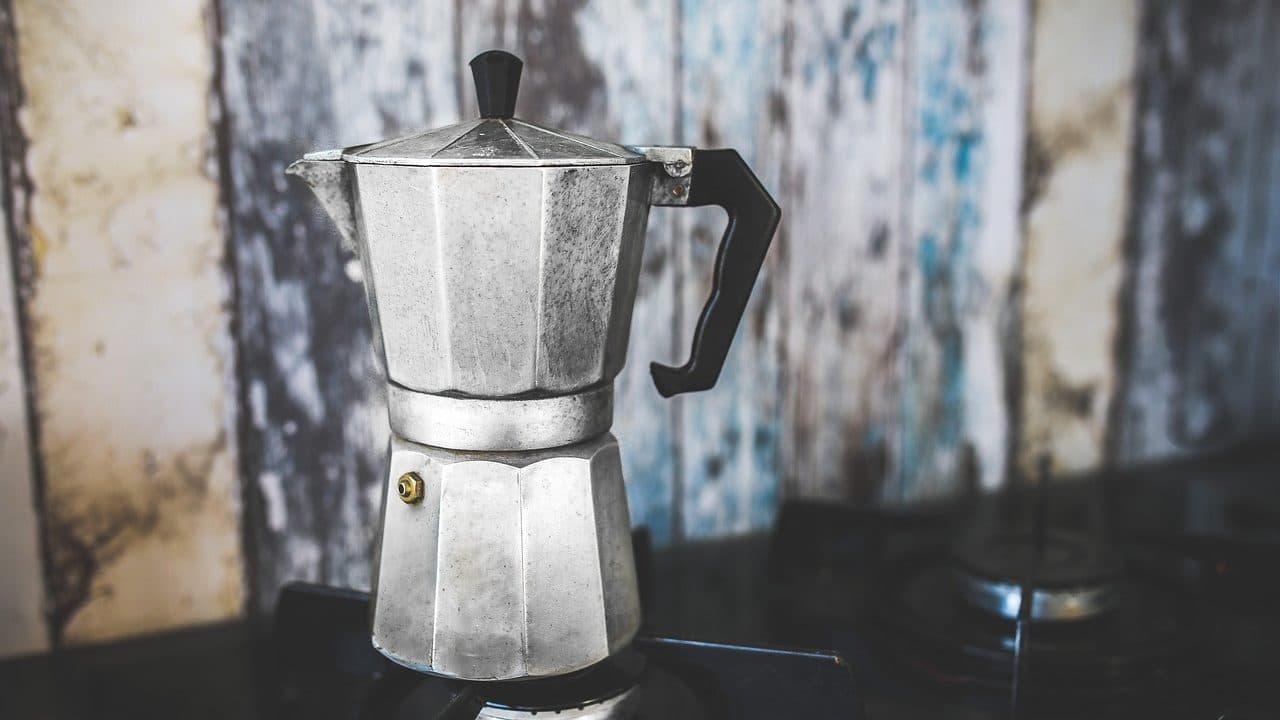
An eight-sided aluminium pot on a gas flame that gurgles after a few minutes and fills the kitchen with the smell of coffee: that is the moka pot, a fixture of Italian kitchens for nearly a century. In Vietnam it is the choice of people who want a cup as strong as phin coffee, but faster, without buying an espresso machine. This guide walks through the moka pot step by step with QiFi's NGUYÊN BẢN, ground for the phin, and the science behind each step.
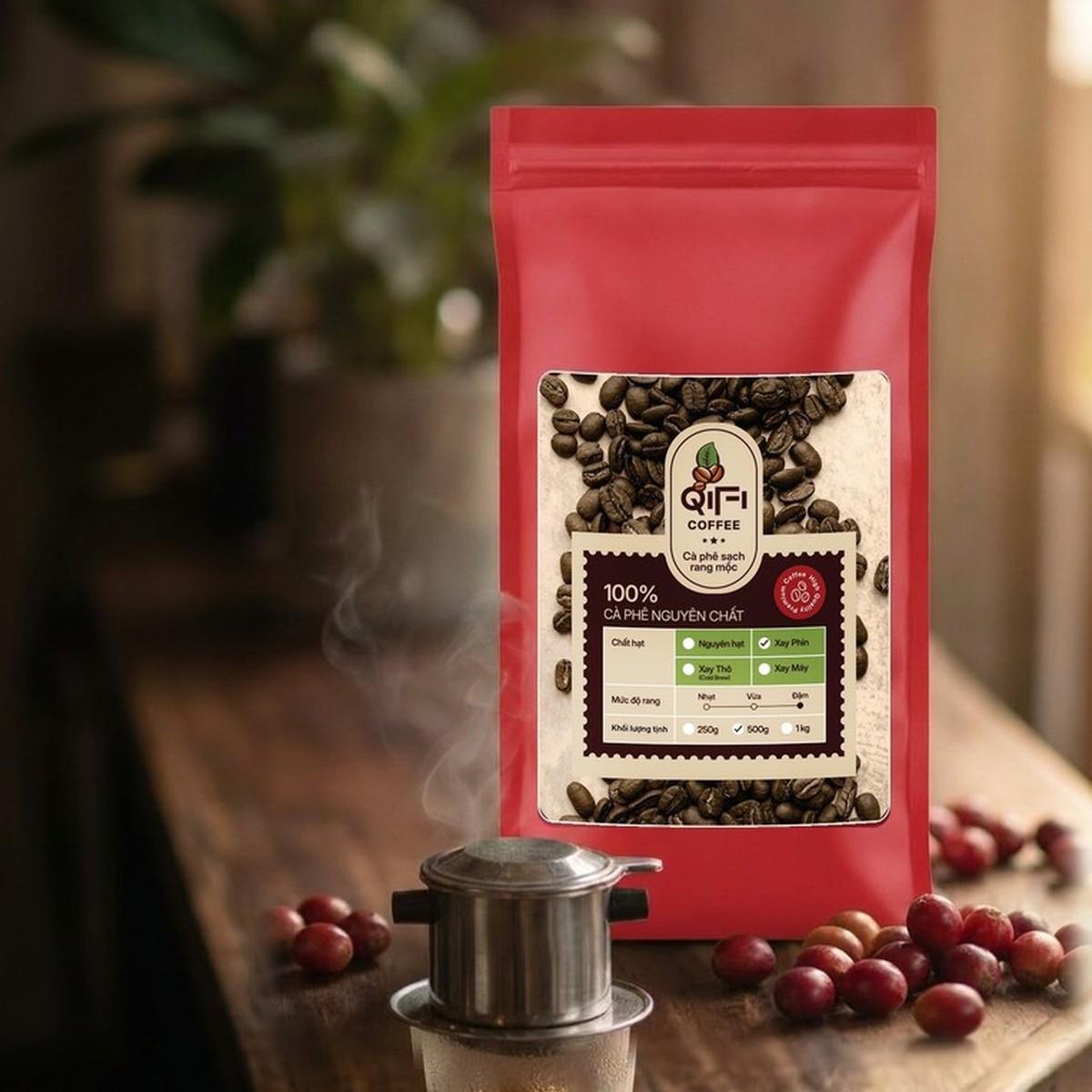
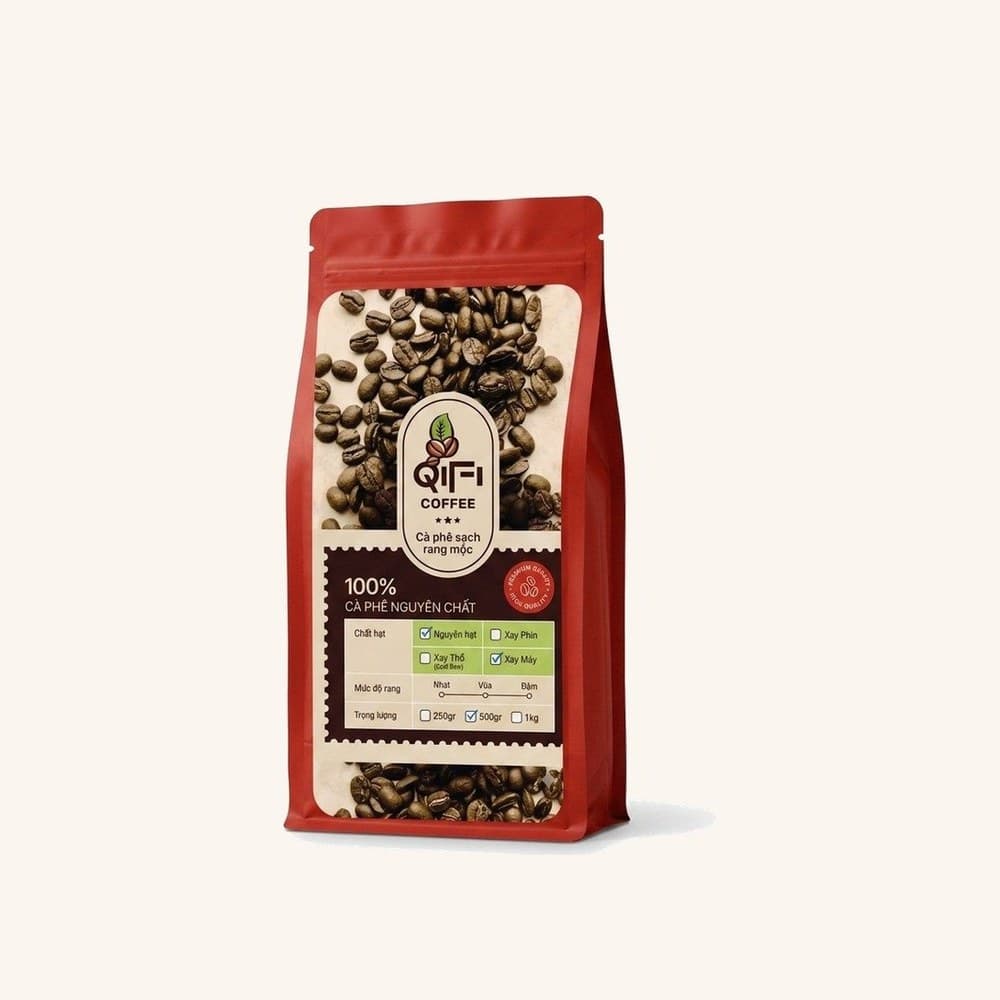
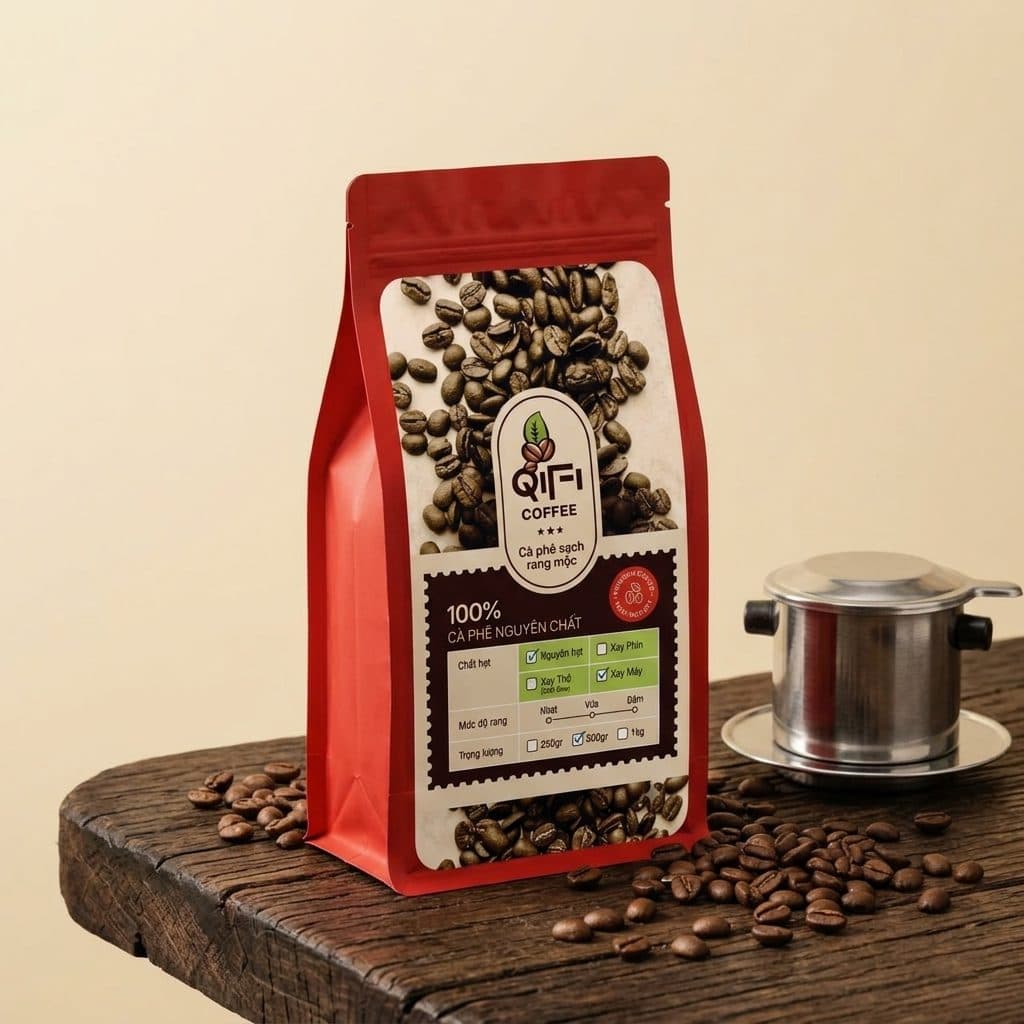
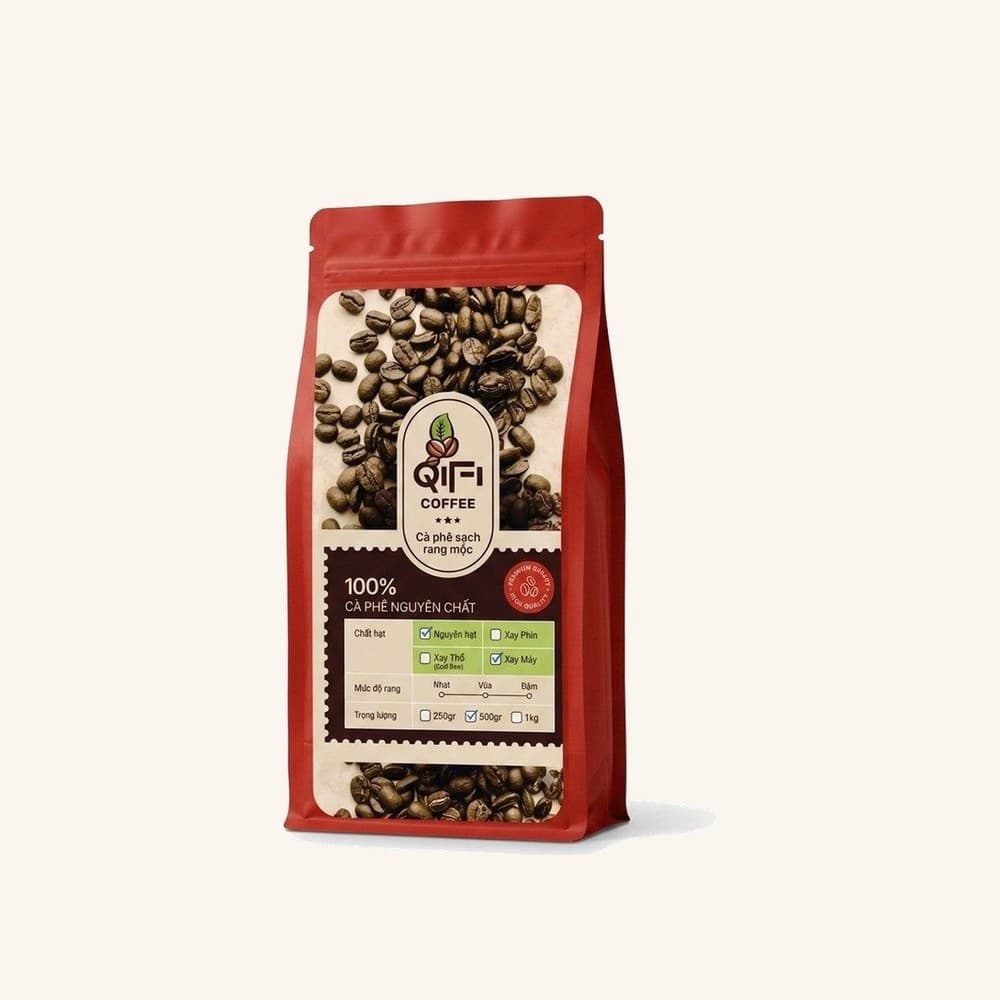
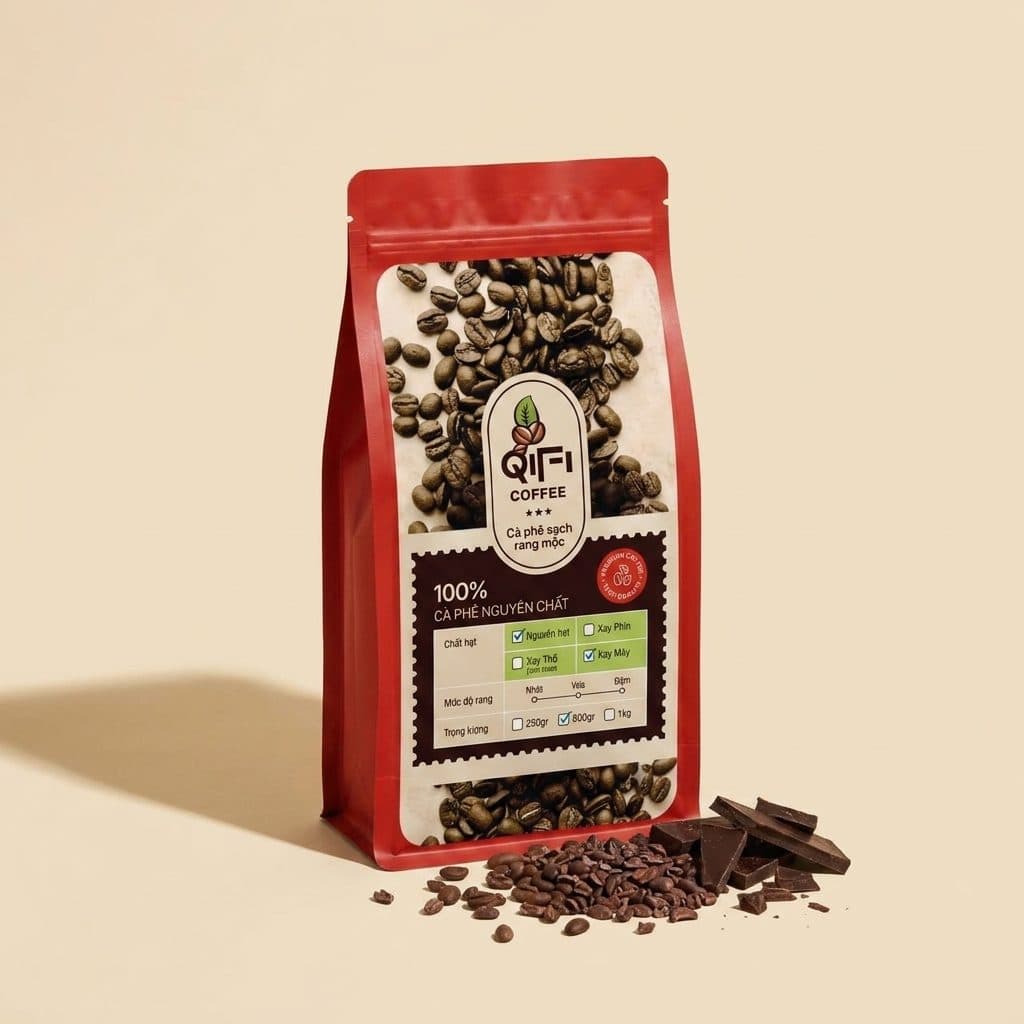
The coffee in this guide: NGUYÊN BẢN, ground for the phin (Robusta from Dak Lak and Arabica from Cau Dat). A moka pot extracts hard, so a blend that is boldly bitter but barely acidic gives a round cup rather than a harsh one. The alternatives are in the section on choosing a coffee at the end.
How does a moka pot work?
According to Open Culture, the Moka Express was created around 1933 at the Italian company Bialetti. The pot has three parts: the base, which holds the water; the funnel in the middle, which holds the coffee; and the top chamber, which collects the brew.
As the base heats up, steam builds in the space above the water and pushes hot water up through the coffee, then up the central column into the top chamber. The physicist Concetto Gianino described and measured this process with the law of flow through a porous bed (Darcy's law) and the vapour curve of water, in a paper in the American Journal of Physics.
Something few people know: the water starts passing through the coffee before it is hot enough. King's 2008 study found that when you start from cool water, half of the coffee is extracted below 70°C, while the ideal extraction temperature is 90–95°C. That is why the method in this guide uses water that has been heated first.
Is moka coffee espresso?
Not quite. The moka pot is often called "stovetop espresso", but a 2013 study in Eur Food Res Technol that compared nine brewing methods using the same coffee found clear differences:
- Strength: the moka coffee contained 2.13% dissolved solids, while every espresso was above 4%. The authors noted that the moka's water-to-coffee ratio (110ml of water for 7.5g of coffee) is closer to a lungo than to an espresso.
- Crema: the moka coffee had no crema.
- Extraction yield: the moka pulled the most dissolved solids out of each gram of coffee of all nine methods, most likely because of its higher extraction temperature.
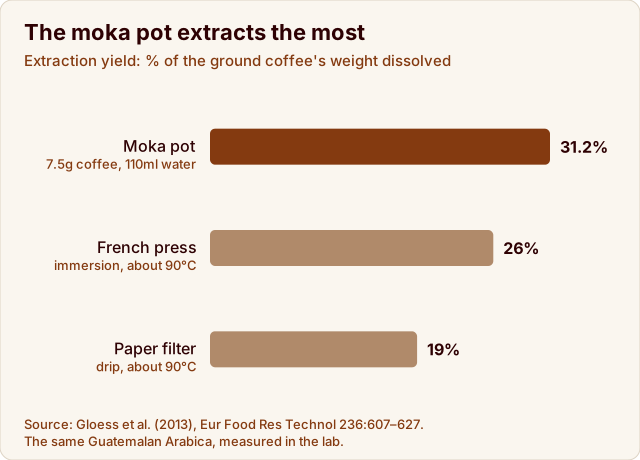
Hard extraction has a price: the same study found the moka coffee much more bitter than its caffeine and chlorogenic acid content would suggest, and the authors attributed the bitterness to other compounds. At the same time, the moka scored highest for perceived acidity, even though by pH it was the least acidic cup. In short: a moka pot gives an aromatic, full-flavoured cup, but it turns harsh very easily if the flame is too high or the pot stays on the stove too long.
| Moka pot | Phin | Espresso (machine) | |
|---|---|---|---|
| How water passes through the coffee | Pushed up by steam in the base | Drips down by gravity | Forced by a pump, 9 bar |
| Time | About 3.5–4 minutes (224 seconds) | 4–5 minutes | About 30 seconds |
| Strength | 2.13% dissolved solids | A strong concentrate, about 1:4 | Above 4% dissolved solids |
| Crema | No | No | Yes |
| Needs electricity | No, just a stove | No | Yes |
Moka and espresso figures: Gloess et al. (2013). Phin figures: QiFi's phin coffee guide.
What you need
| Item | Notes |
|---|---|
| A moka pot | The 3-cup pot is the size used in the Gloess study: 7.5g of coffee for about 110ml of brew |
| NGUYÊN BẢN, ground for the phin | Fill the funnel and level it. Each pot size's funnel sets the dose for you |
| Water | Heated to about 70°C (steaming, not boiling) |
| A gas or electric stove | Pick a burner smaller than the base of the pot |
| A dry towel | To hold the hot base while screwing the pot together |
Grind: a moka pot needs a grind finer than filter coffee but coarser than espresso. Too fine and it clogs the funnel, the water struggles through and the coffee turns bitter and astringent. QiFi's phin grind sits between the two, so it works in a moka pot as it is. Do not choose the machine grind (made for espresso) for a moka pot.
Which bag size: at 7.5g per 3-cup pot, one 500g bag ground for the phin makes about 60 pots. A moka pot uses ground coffee, and ground coffee loses its aroma faster than beans, so a 500g bag you finish in a few weeks is the sensible size. How to keep it fresh once opened: see how to store coffee.
How to make moka pot coffee, step by step
Step 1: Pour hot water into the base
Pour water at about 70°C into the base, just below the safety valve, never above it. The valve is the small screw on the side of the base: it releases steam if the pressure inside gets too high, and it cannot do that under water.
Pre-heated water shortens the time the pot spends on the stove, so most of the coffee is extracted near the ideal temperature instead of gradually, starting from cool water (King, 2008).
Step 2: Fill the funnel, level it, do not tamp
Fill the funnel with NGUYÊN BẢN ground for the phin and level the top with a finger or the handle of a spoon. Do not tamp as you would for espresso: a moka pot does not have the force to push water through tightly packed coffee. Wipe any grounds off the funnel rim so the pot seals when you screw it together. These steps follow a Bialetti user guide from a retailer.
Step 3: Screw the pot together tightly
Put the funnel into the base and screw the top chamber on firmly. The base is already hot from the water, so hold it with a towel. Turn the pot by its body, not by the handle, which can loosen or break.
Step 4: Put it on a medium flame
Put the pot on a medium flame, with the lid open if you want to watch. The flame must not spread beyond the base of the pot: flames licking up the sides heat the handle and push the coffee through too hard.
After a few minutes, coffee starts to flow from the central column in a dark brown stream. Once the flow is steady, turn the flame down low.
Step 5: Take the pot off the heat when it gurgles
When the top chamber is nearly full and the coffee turns a pale golden brown, the pot starts to gurgle: that is steam starting to blow through the coffee. Take the pot off the heat at once. What comes out after the gurgle is over-extracted and tastes burnt and bitter.
To stop the extraction completely, run the base under cold water for a few seconds. The cooled base makes the steam contract, and the coffee stops rising.
Step 6: Stir and pour
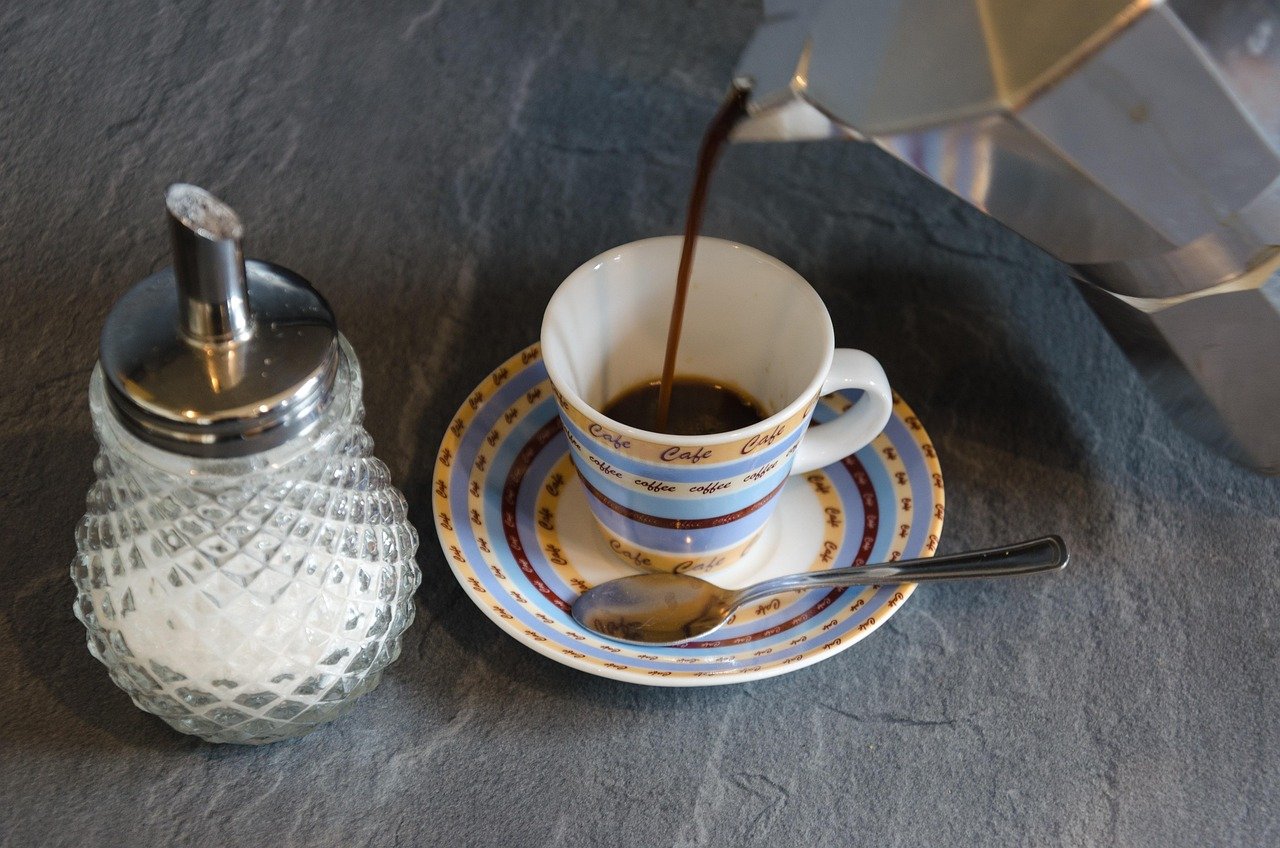
The first coffee out is stronger than the last, so give the top chamber a gentle stir before pouring. Drink it black straight away, or use it as the base for the milk drinks below.
Cleaning: let the pot cool, take it apart, empty the grounds and rinse it in warm water. No soap, no dishwasher. Dry each part before putting it back together. A new pot needs 2–3 brews thrown away before you drink from it.
Is your moka coffee bitter, weak or not rising?
Pick the problem you have to see the cause and what to change next time:
- Why
- The pot sat on the heat too long or on too strong a flame: the last of the coffee is pushed through by overheated steam.
- Next time
- Medium heat, and the flame no wider than the base. Take the pot off once the top chamber is nearly full and it starts to gurgle, then cool the base under cold water to stop the extraction.
Change only one thing at a time (the flame, the amount of coffee or the water temperature), taste again, and only then change the next. The rule holds for every brewing method; see more in hand-brewing coffee mistakes.
Drinking moka coffee the Vietnamese way
Moka coffee is stronger than filter coffee but lighter than a phin concentrate, so use less milk for Vietnamese-style milk drinks:
- Moka iced milk coffee: stir about 60ml of moka coffee with condensed milk to taste and pour it over a glass full of ice. Adjust the condensed milk to your liking, as in Vietnamese iced milk coffee.
- Moka bạc xỉu: a little coffee and plenty of milk: condensed milk thinned with hot water the old Saigon way, or condensed with fresh milk, following the two recipes in Saigon bạc xỉu.
- Hot black moka: drink it right after stirring, with nothing added. This is the easiest way to taste the difference between coffees.
If you are still deciding between a moka pot, a phin, pour over or a French press, hand-brewing coffee tools compares each one.
Which QiFi coffee suits a moka pot?
A moka pot extracts hard and turns bitter easily, so the coffee that suits it is strong but not harsh: enough body that the cup is not thin, but not too bitter, because the moka pot already draws bitterness out.
| QiFi coffee | Beans | Good for moka? |
|---|---|---|
| NGUYÊN BẢN | Robusta and Arabica | The best fit. Boldly bitter, barely acidic, with a deep sweet finish. Round black or with milk |
| ĐẬM | 100% Robusta | Good for moka iced milk coffee. Very bitter black, so lower the flame and take the pot off early |
| GIAO HÒA | Robusta, Culi and Arabica | Good for bạc xỉu and moka with milk: rich, thick, made for milk |
| TỈNH | 100% Arabica from Cau Dat | Good for light black moka: bright acidity, fruity aroma. The moka pot brings acidity forward, so it suits Arabica lovers |
Why NGUYÊN BẢN comes first: Robusta from Dak Lak gives the moka cup its body and a clean bitterness, and Arabica from Cau Dat adds aroma and a sweet finish. The blend is barely acidic, so when the moka pot draws bitterness out, the cup stays balanced instead of harsh. The beans are naturally roasted, with no butter and no flavouring, so the smell that rises as the pot boils is the coffee itself.
To understand why Robusta and Arabica taste so different, read Robusta or Arabica: which tastes better.
Frequently asked questions
Should I tamp the coffee in a moka pot?
No. Just fill the funnel and level it. Tamped coffee makes it hard for water to pass, so the coffee rises slowly, tastes bitter and astringent, or does not rise at all.
Why use hot water instead of cold?
Because the water starts passing through the coffee before it is hot enough. According to King (2008), starting from cool water means half of the coffee is extracted below 70°C, far below the ideal 90–95°C. Pre-heated water lets most of the coffee extract at a higher temperature.
Can I use phin-ground coffee in a moka pot?
Yes. The phin grind is finer than a filter grind and coarser than espresso, which is the range a moka pot needs. Just avoid coffee ground for an espresso machine, which is fine enough to clog the funnel.
Is moka coffee stronger than phin coffee?
It is hard to compare directly, since it depends on the amounts of coffee and water. A moka pot uses more water per gram than a phin concentrate (about 110ml for 7.5g of coffee, against 80ml for 20g in a phin), so moka coffee is usually lighter than a phin concentrate but stronger than filter coffee. To see how the ratio sets the strength, read the coffee-to-water ratio for hand brewing.