Home brewing
How to brew phin coffee properly: how much coffee, the water temperature, the timing, and what to do when the phin drips too fast or clogs
A proper phin at home: how many grams of coffee, how hot the water, how many minutes it should drip, and what to adjust when the phin runs too fast or clogs.
QiFi··8 min read
Contents
Yesterday's phin was just right; today's is harsh and bitter. Some days the water rushes through in a minute, other days the phin clogs and is still dripping after ten. The phin is the simplest way to brew coffee, but also the most hit-and-miss, because everything happens inside a small metal cup you cannot see into.
The good news is that a cup of phin coffee depends on only four numbers: the amount of coffee, the water temperature, the grind and the drip time. Keep those four steady and the cup will taste the same every morning. This article goes through each number, a step-by-step recipe, and what to do when the phin drips too fast or clogs.
The four numbers of a phin
| Hot or iced black | Iced milk coffee | |
|---|---|---|
| Ground coffee | 20g | 20g |
| Water | about 80ml | about 80ml |
| Water temperature | 92–96°C | 92–96°C |
| Grind | medium-coarse (phin grind) | medium-coarse (phin grind) |
| Drip time | 4–5 minutes | 4–5 minutes |
A ratio of about 1g of coffee to 4ml of water is far stronger than pour-over. That is on purpose: a phin brew is meant to meet ice or milk, so it has to be strong enough not to go thin. Why each method has its own ratio, and how to adjust it to your taste, is in the ratios for brewing coffee by hand.
The coffee: weigh it, do not use a spoon
A "heaped" teaspoon can be 6g or 10g depending on who scoops and on the grind. Being 4g off in a 20g cup changes the strength by 20%. A small digital scale is the cheapest tool with the biggest effect on a phin; the rest of the kit is in tools for brewing coffee by hand.
The water: boil it, then let it rest
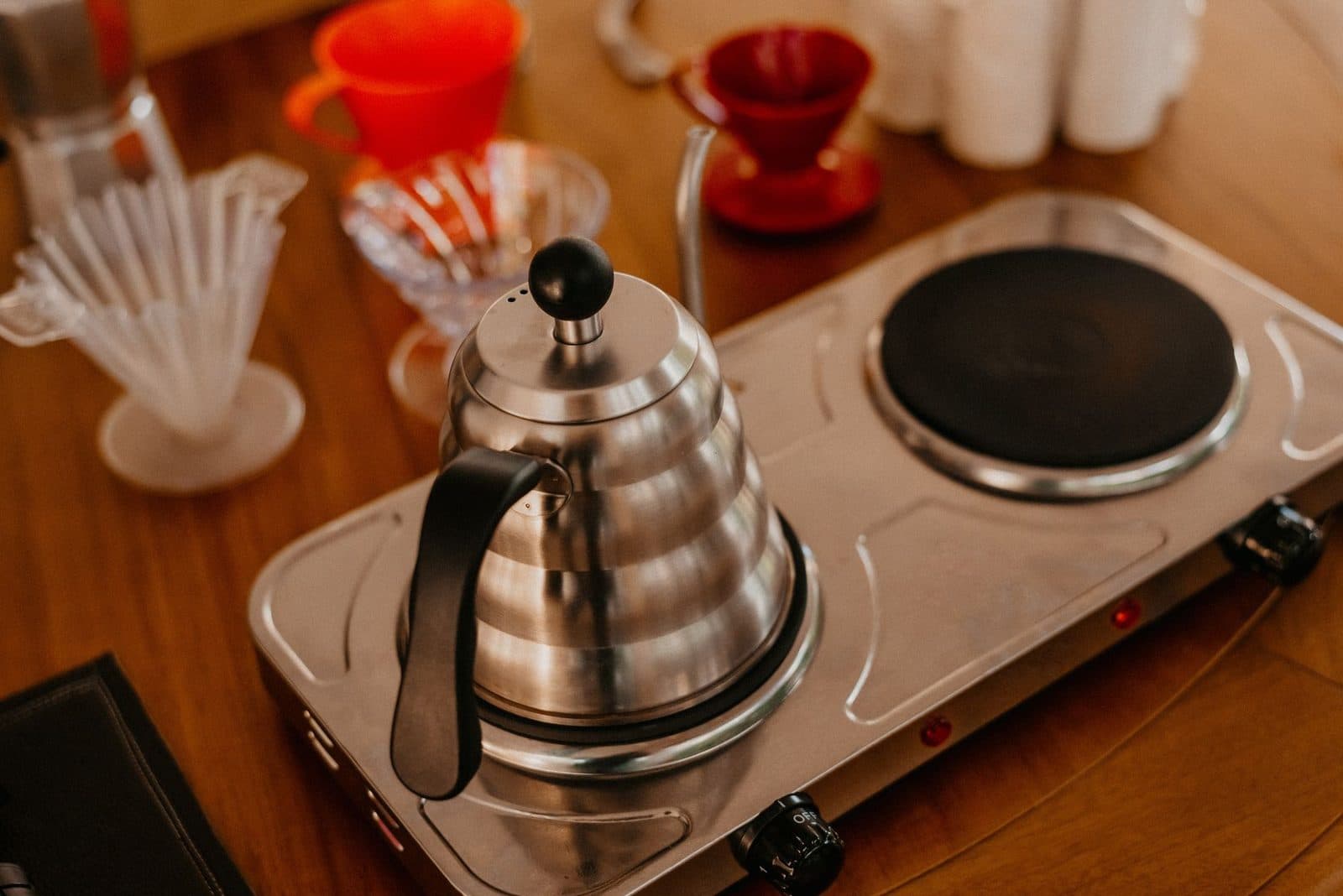
The Specialty Coffee Association (SCA) recommends brewing water at 92–96°C, according to Batali et al. (2020). No thermometer needed: QiFi brings it to the boil, opens the kettle lid, lets it rest about 30–60 seconds, then pours. The same study found that at equal extraction, brewing at 87°C, 90°C or 93°C tasted almost the same. So do not worry about a few degrees: the grind and the drip time below matter more to the taste.
The grind: medium-coarse
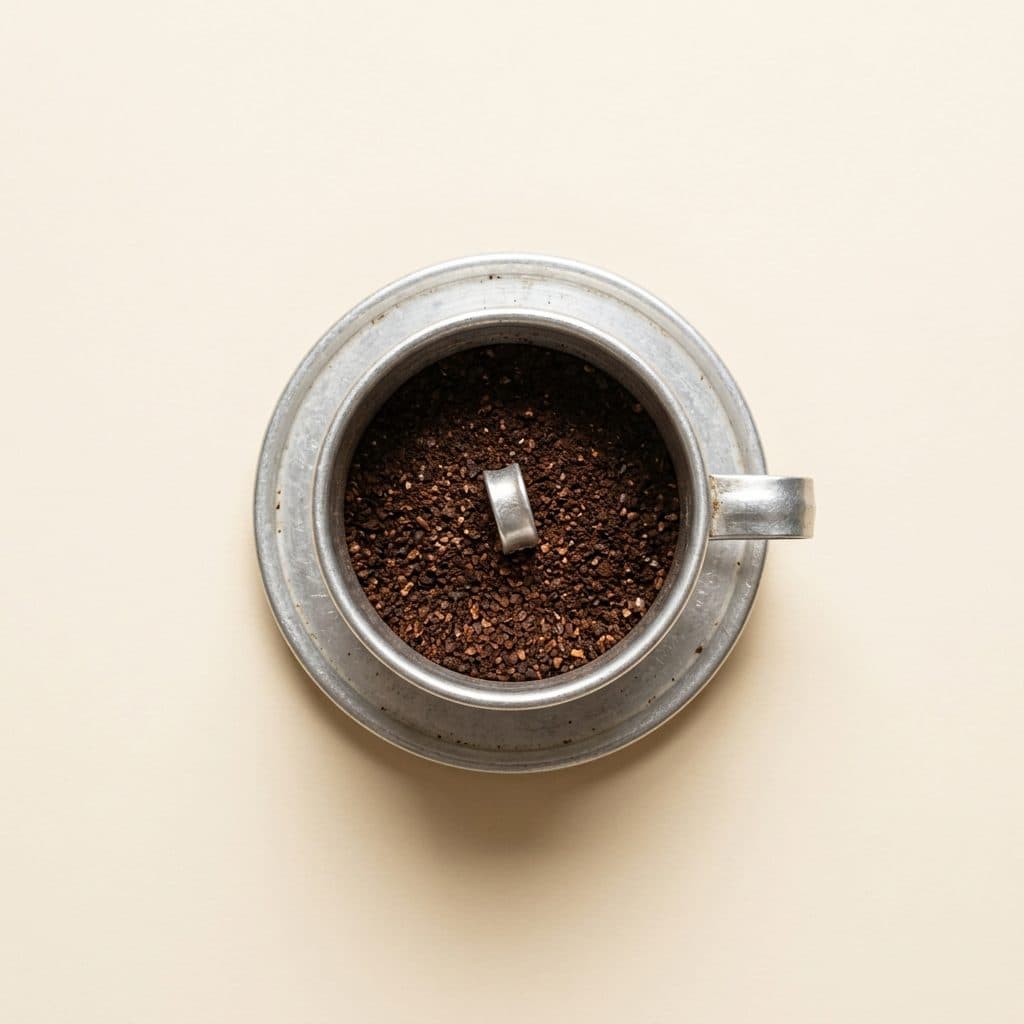
Phin grounds are coarser than espresso grounds but finer than cold brew grounds; between your fingers they feel distinctly grainy, like fine sand, not smooth like flour. Too fine and the phin clogs; too coarse and the water rushes through before it can take up the flavour. If you buy QiFi coffee, choose the phin grind: it comes already ground to this size.
The drip time: 4–5 minutes
From the moment the phin is full to the last drop. This is the most useful number for diagnosis, because it tells you whether your grind and your press are right.
The recipe, step by step
20g of phin-ground coffee, about 80ml of water at 92–96°C.
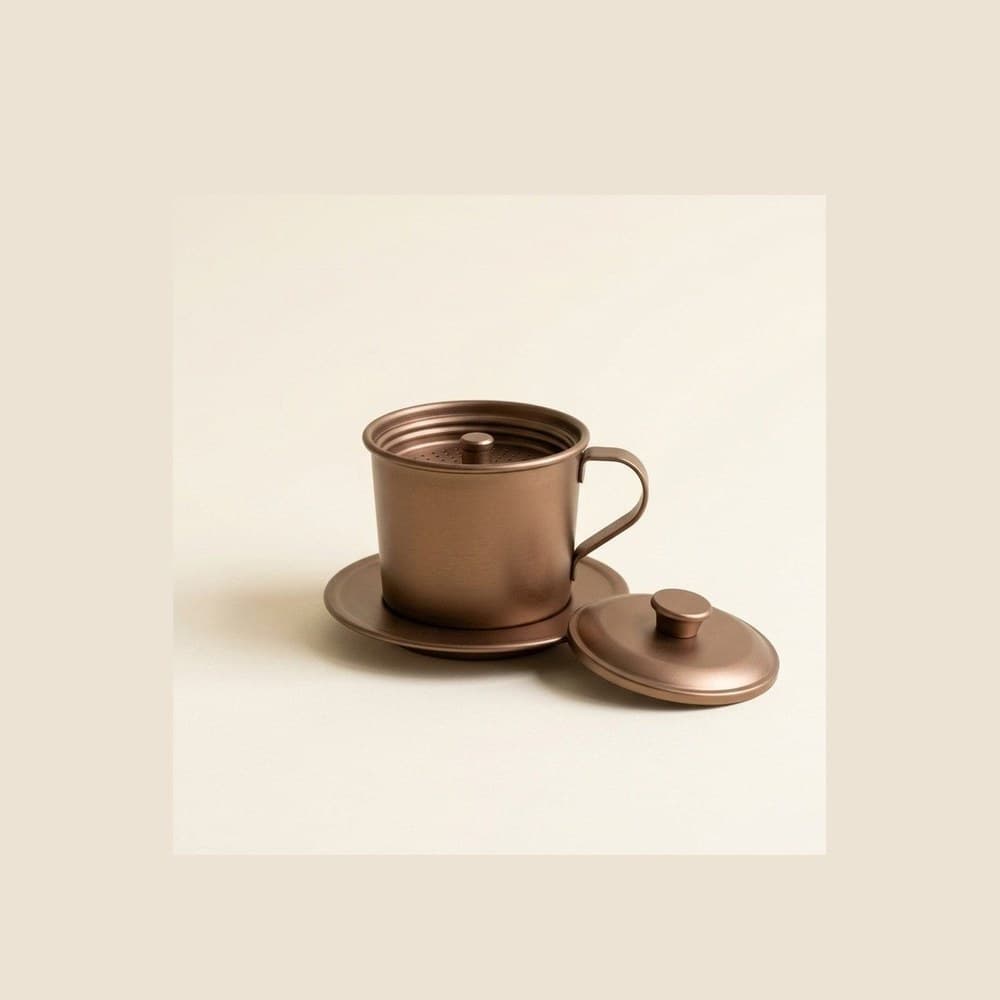
- Rinse the phin and the glass with hot water. A cold metal phin soaks up the heat of the first water, and the coffee comes out cool and thin.
- Put the coffee in the phin and shake it gently to level it. An uneven bed sends the water to one side, where it runs through fast.
- Set the press on top and press lightly. Just lay it down and press once, gently: no twisting, no pushing hard.
- Bloom the grounds: pour in about 20ml of water and wait 2 minutes. The grounds swell and release gas; the fresher the roast, the more they swell.
- Fill the phin, put the lid on and wait. An even drip, about one drop every 1–2 seconds, is what you want.
- Stir before drinking. The first drops are stronger and more bitter than the last, so the cup is only balanced once stirred.
For iced black coffee, pour the brew straight over a glass full of ice. For iced milk coffee, put 15–20ml of condensed milk in the glass before you set the phin on it, stir it in, then add the ice. The milk for several glasses, and how to keep the glass from going thin as the ice melts, are in how to make Vietnamese iced milk coffee; for less coffee and more milk, see how to make bạc xỉu.
The phin drips too fast or clogs: what to change first?
Change one thing at a time, from easiest to hardest: the press, the amount of coffee, and only then the grind. Change two at once and you will not know which one worked.
| Symptom | How the coffee tastes | Usual cause | What to do |
|---|---|---|---|
| All through in under 3 minutes | Thin, sour, light | Grind too coarse, press too loose, too little coffee | Press a little firmer; use the full 20g; still fast, grind finer |
| Water runs in a stream | Thin, with sediment | Uneven bed, holes too big or bent | Level the grounds; check the phin's holes |
| Over 7 minutes | Harsh, dry in the throat | Grind too fine, press too tight, too much coffee | Press more lightly; use 2–3g less; still slow, grind coarser |
| Clogged, no drops at all | No coffee comes out | Flour-fine grounds, a hard press, swollen grounds blocking the holes | See how to rescue a clogged phin below |
Next time you brew, time it with your phone: 2 minutes for the bloom, then from the moment the phin is full to the last drop, and read the result against the table above.
When the phin drips too fast
A fast phin is usually a press only resting loosely on the grounds, or grounds that are too coarse. The water passes through too quickly to dissolve the sweetness and body, so the coffee is thin and a little sour. Press a little firmer first, and only then grind finer. If the water runs in a stream rather than drops, look at the bottom of the phin: holes that have widened or bent after years of use mean it is time for a new one.
When the phin clogs
A clog usually comes from three things together: grounds too fine, a press too tight, and swelling grounds packed hard against the press. To rescue the cup you are brewing:
- Loosen the press: lift it gently with a spoon by about 1–2mm, so the grounds have room to swell.
- Tap the side of the phin a few times to help the water find its way.
- Do not poke the grounds with a spoon: it stirs the fine particles down into the holes and blocks them even more.
Next time, press more lightly and use 2–3g less coffee. If it still clogs, the grounds are too fine for your phin. A phin with uneven holes also changes the drip speed from one brew to the next; the QiFi aluminium phin is punched evenly for a steady drip, so you know for sure whether the problem is the grind or the press. Other common mistakes, such as pre-ground coffee kept too long or water at 100°C, are in common mistakes when brewing coffee by hand.
Which coffee to brew in a phin
A phin extracts by gravity and gives a strong, full-bodied cup, so it suits Robusta and Robusta-heavy blends best.
- NGUYÊN BẢN (Robusta and Arabica): boldly bitter, almost no acidity, a deep sweet finish. Practically made for traditional iced black and iced milk coffee.
- ĐẬM (100% Đắk Lắk Robusta): boldly bitter, not acidic, the most caffeine of QiFi's lines. Its full body stands up to condensed milk and ice.
- ĐỘC TÔN (Robusta, Culi and Arabica): fragrant and creamy, made for milk, good for iced milk coffee, bạc xỉu and salt coffee.
A light-roast Arabica like TỈNH is better not brewed in a traditional phin if you are wary of acidity; it suits pour-over or cold brew better. To understand the difference between the two in depth, read Robusta or Arabica: which tastes better.
This phin brew is the base of almost every drink in the types of Vietnamese coffee: from egg coffee and coconut coffee to coffee yoghurt. The Italian side is the same brew with warmed fresh milk and fine foam, in phin latte.
Frequently asked questions
How many grams of coffee for a phin?
About 20g of grounds to 80ml of water, for a hot black, iced black or iced milk coffee. Weigh it rather than spooning it, so the cup is the same every time.
Can I brew a phin with boiling water at 100°C?
Yes. The SCA recommends 92–96°C (Batali 2020), so QiFi boils the water and lets it rest 30–60 seconds before pouring. But a phin's taste depends more on the grind and the drip time than on a few degrees.
How long should a phin take?
About 4–5 minutes from a full phin to the last drop. Faster than 3 minutes usually gives a thin cup; slower than 7 minutes usually a harsh one.
Why does my phin keep clogging?
Usually because the grounds are too fine, the press is too tight, or there is too much coffee. Press more lightly and use 2–3g less first; if it still clogs, grind coarser.