Home brewing
Saigon sock coffee (cà phê vợt): how to brew it with a cloth filter at home, and the story of Cheo Leo café since 1938
Sock coffee is filtered through a cloth bag dipped in boiling water, an old Saigon way of brewing. How to brew it at home, and the story of Cheo Leo café.
QiFi··5 min read
Contents
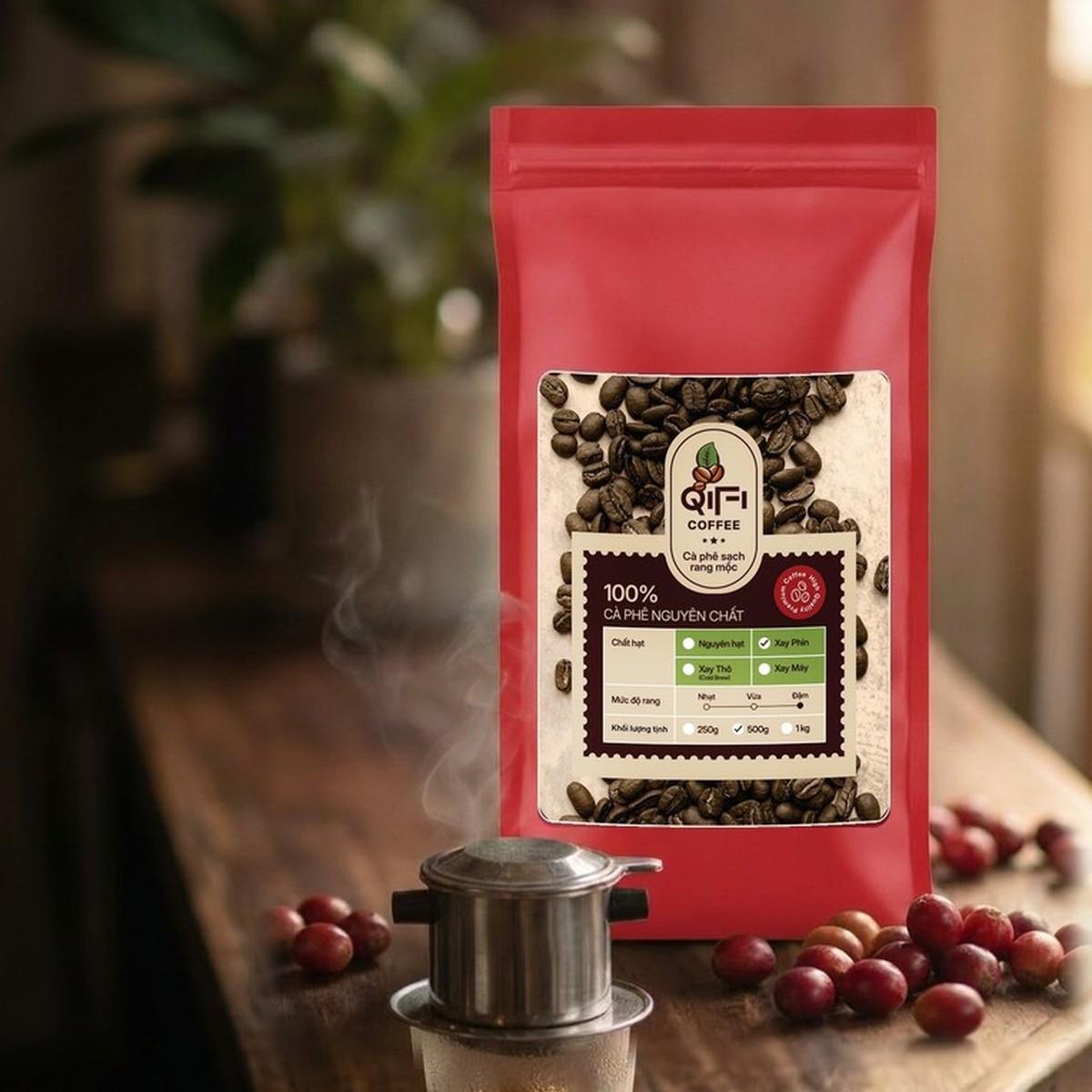
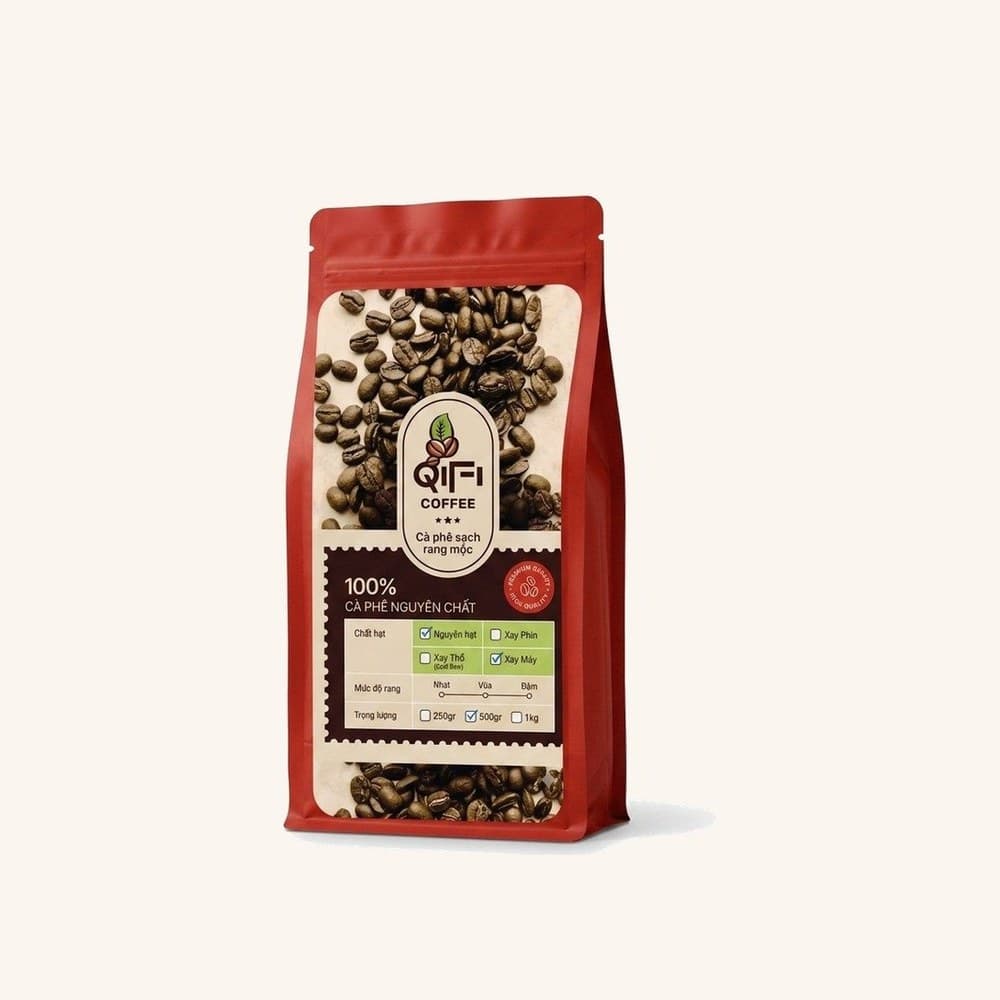
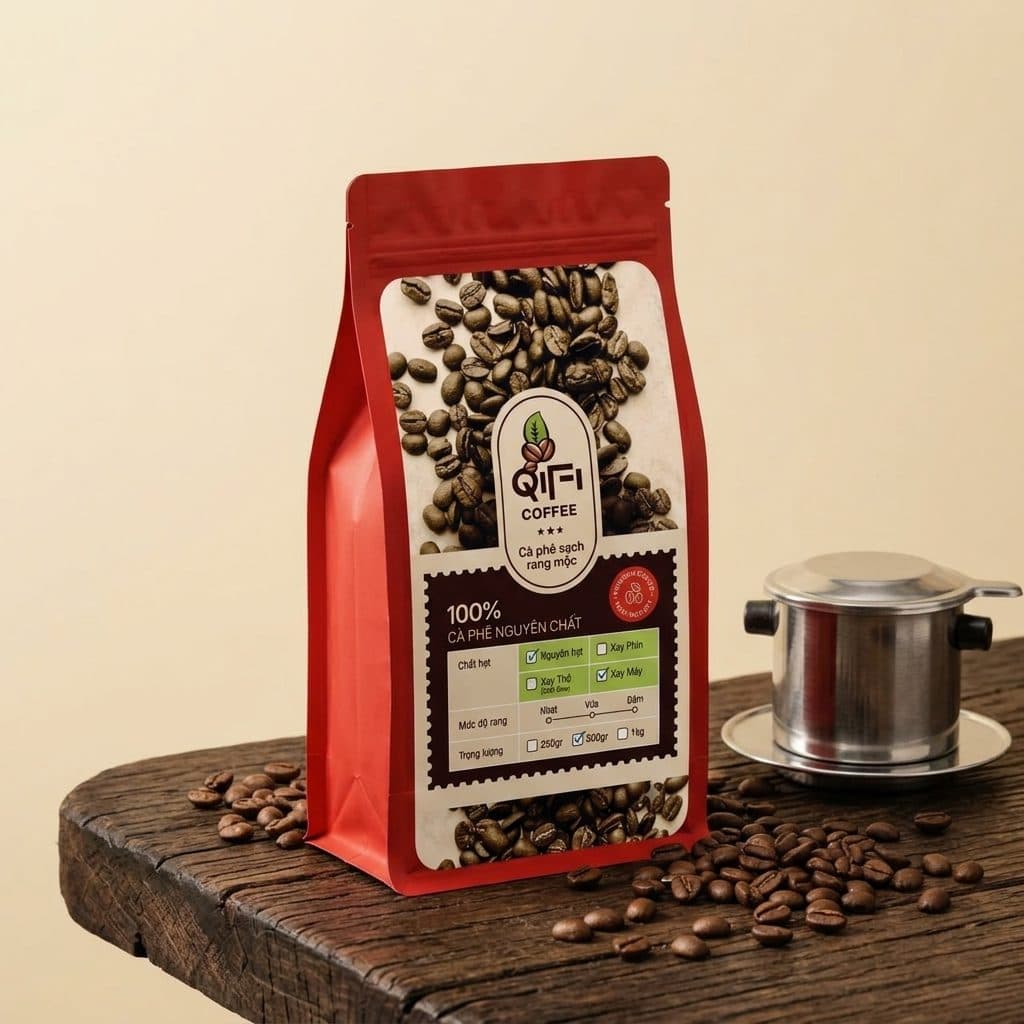
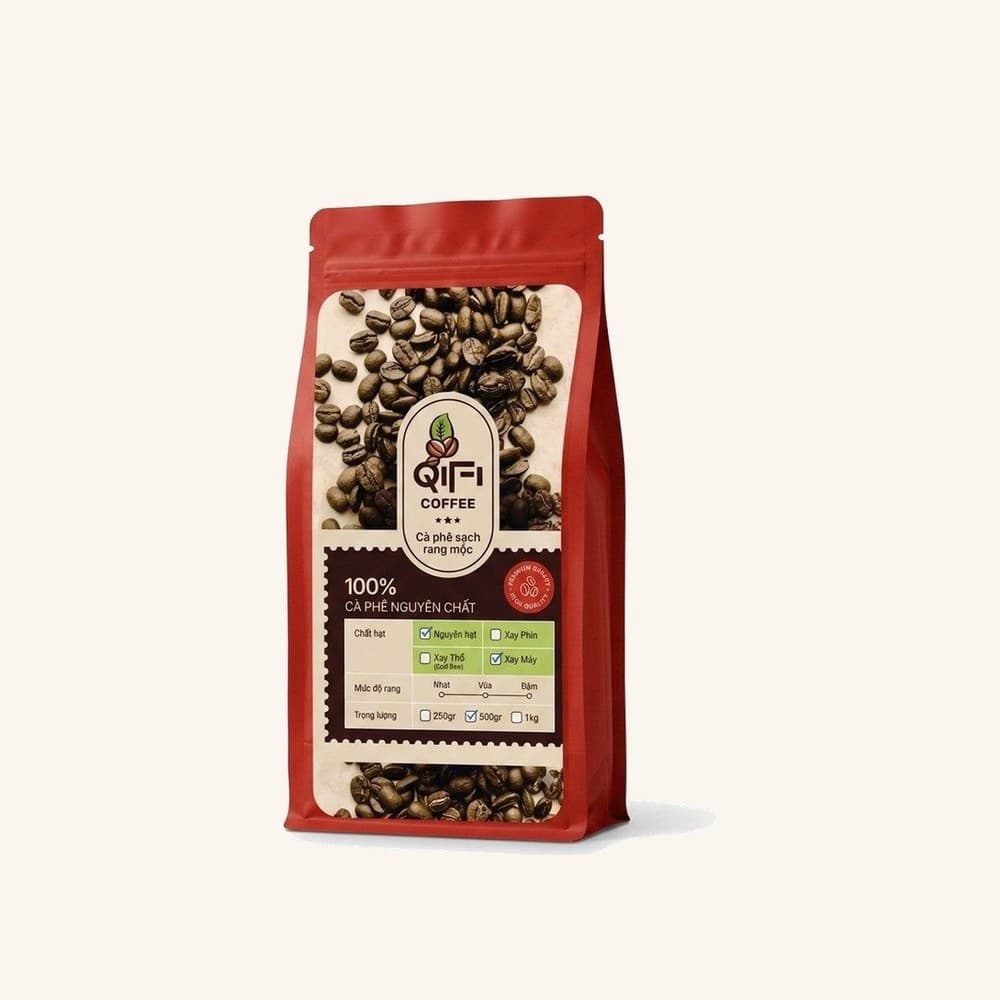
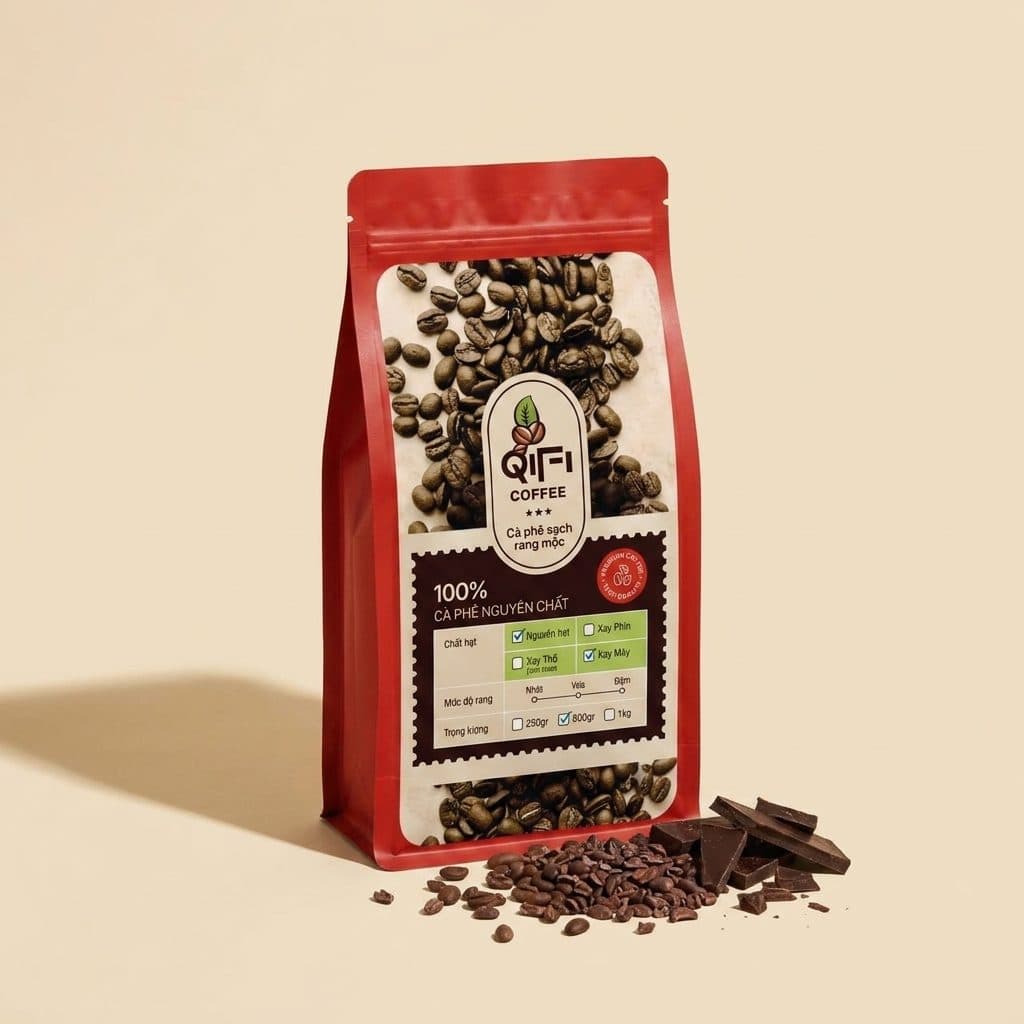
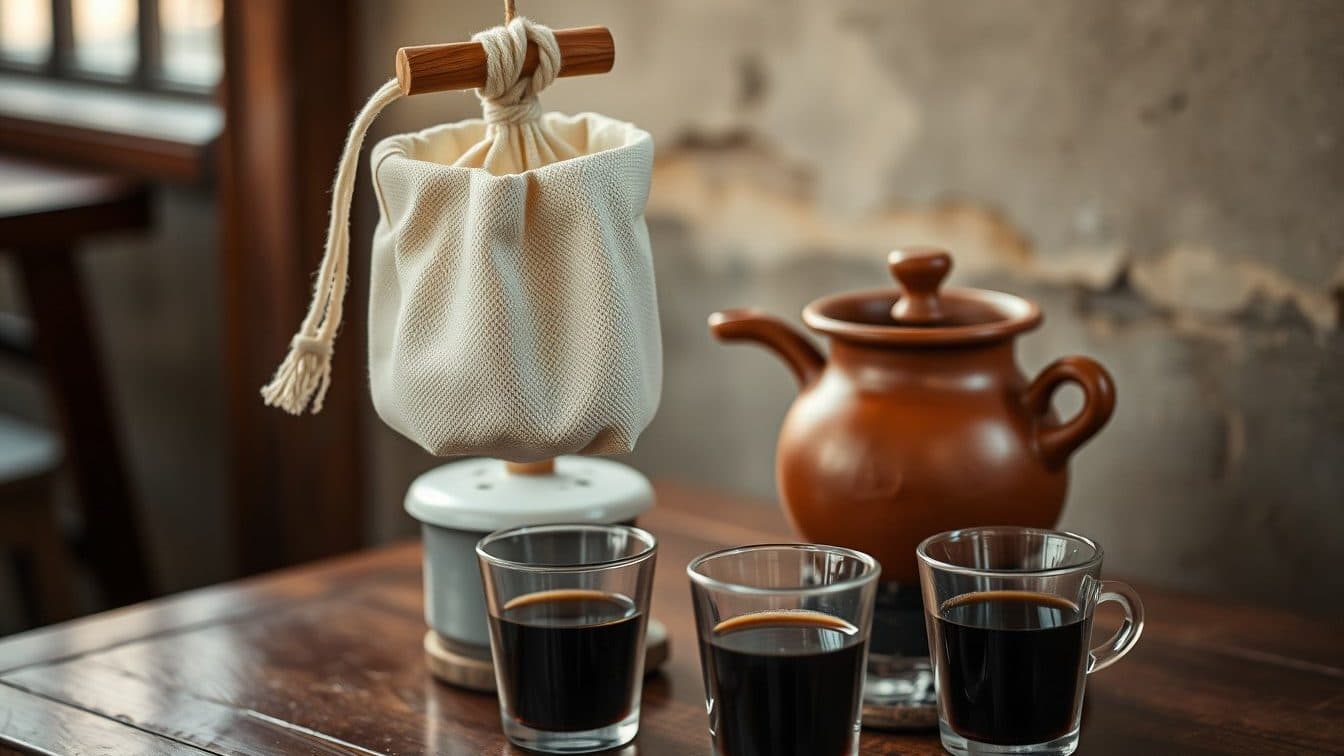
Sock coffee (cà phê vợt) is an old Saigon way of brewing coffee: the grounds go into a cloth bag sewn onto a wire ring with a handle (the "sock", or "vợt"), which is dipped into a pot of boiling water so the coffee steeps out. The cup comes out thick and round, different from a phin. This article uses QiFi's ĐẬM ground for the phin, 100% Đắk Lắk Robusta in a dark roast: an immersion brew needs a boldly bitter, non-acidic bean so the brew does not go thin over ice.
This article belongs to the series on the types of Vietnamese coffee. Below are the story of sock coffee, how the long-standing cafés brew it, and how to brew a pot at home.
Sock coffee in Saigon
According to Saigoneer, Cheo Leo café in alley 109 Nguyễn Thiện Thuật, District 3, was opened by Ngô Vinh in 1938. He learnt how to brew from Chinese coffee sellers in Saigon. The article describes how the café brews: water heated on a charcoal stove, coffee filtered through the sock twice, the second time using the same water that went through the first time; the finished coffee kept in clay pots to stay hot or cold; and the cloth socks replaced about every two weeks.
The newspaper Đại Đoàn Kết describes a few more cafés that still brew this way: one in an alley off Trường Sa street, Bình Thạnh, that has sold coffee for more than 60 years, and Ba Lù café near Phùng Hưng market, District 5, opened by a Chinese family around 1945, now in its third generation and still roasting its coffee over wood. According to the article, the sock is dipped into an earthenware pot of boiling water for about 2 minutes.
Each café tells its own founding year its own way, so this article does not call any of them "the oldest". What they share is the method: a cloth bag, a pot of boiling water, and coffee that steeps rather than drips.
How to brew sock coffee at home
The cafés do not publish their amounts. The amounts below are QiFi's suggestion for a small pot of about 3 glasses; adjust to taste.
Tools and ingredients (about 3 glasses)
| What you need | Amount |
|---|---|
| ĐẬM ground for the phin | 50g |
| Boiling water | 300ml |
| Cloth coffee sock (a cloth bag with a handle) | 1 |
| A small heatproof pot or kettle, plus 1 jug to catch the coffee | 2 |
| Condensed milk, ice (optional) | To taste |
A 500g bag of ĐẬM ground for the phin makes about 10 pots like this. For a bigger pot, multiply the coffee and water by the same number. Scald a new cloth sock in boiling water a few times before use to get rid of the cloth smell.
Step 1: The first steep
- Bring 300ml of water to the boil and turn off the heat.
- Put 50g of coffee in the sock and dip it into the pot of hot water.
- Steep for about 2 minutes, lifting it up and dipping it down now and then so the water soaks through evenly.
Step 2: The second filtering
- Lift the sock out and let the coffee drain into the pot.
- Hold the sock over the jug and pour the pot of coffee you just brewed through it once more. This is the "filter twice" step that Cheo Leo still does: the coffee is stronger and clearer.
Step 3: Pour into glasses
- Hot black: pour straight into the glass, about 80–100ml a glass.
- Iced black: pour into a glass full of ice; ĐẬM is bitter enough not to go thin.
- Iced milk: 20–25ml of condensed milk, stir it in, then add ice.
To keep the coffee hot for a long time like the cafés do, keep it in a clay pot or a vacuum flask.
Common mistakes
| Problem | Fix |
|---|---|
| The coffee is thin | Use more coffee or less water; steep 1 minute longer |
| The coffee is harsh and astringent | The water has been boiling too long; turn off the heat before dipping the sock, and steep for less time |
| Grounds get into the glass | The sock is old and the weave has loosened; replace it |
| A cloth smell | A new sock not scalded enough, or not dried after the last use |
Cleaning the sock: rinse it in hot water straight after brewing, with no soap (the cloth holds the smell), and hang it to dry somewhere airy. Like Cheo Leo, replace the sock when the cloth wears out.
How is sock coffee different from phin coffee?
| Sock coffee | Phin coffee | |
|---|---|---|
| Extraction | The grounds steep in hot water, then are filtered through cloth | Water drips through a pressed bed of grounds |
| One brew makes | A whole pot, several glasses | 1 glass per phin |
| Taste | Thick and round, with fewer fine grounds thanks to the cloth | Strong and sharper |
| Tools | Cloth sock, pot | Phin |
If several people at home drink coffee in the morning, one sock brew makes a whole pot. For a single glass, a phin is still easier; see how to brew phin coffee properly and iced milk coffee.
Which QiFi coffee for sock coffee?
| QiFi line | Blend | Good for sock coffee? |
|---|---|---|
| ĐẬM | 100% Robusta | Best match. Boldly bitter, full-bodied, suits steeping |
| NGUYÊN BẢN | Robusta and Arabica | Good; a little more aroma thanks to the Arabica |
| GIAO HÒA | Robusta, Culi and Arabica | Good if you drink it with milk; creamier and thicker |
| TỈNH | 100% Arabica | Not recommended; its bright acidity does not suit sock coffee |
ĐẬM is naturally roasted, with no butter and no flavourings: the aroma in the pot is the smell of roasted beans, true to the spirit of the cafés that brew with a sock.
Frequently asked questions
Where can I buy a coffee sock?
Cloth coffee socks are sold in markets and in shops for brewing equipment, usually as a "coffee sock" or "cloth filter bag with a handle". Choose a thick cloth with a fine weave.
Phin grind or coarse grind for sock coffee?
The phin grind suits a fine-weave cloth sock best: the coffee comes out strong in a 2-minute steep. A coarse grind needs a longer steep and gives a thinner coffee.
How long does sock coffee keep?
Drink it the same day. Once cool, keep it in the fridge, covered, and use it within 1–2 days for iced or milk coffee.