Home brewing
How to make a latte with a phin: strong phin coffee, milk heated to 50–60°C
A latte without an espresso machine: strong phin coffee, fresh milk heated to 50–60°C, then frothed in a jar, a French press or a handheld frother.
QiFi··6 min read

Contents
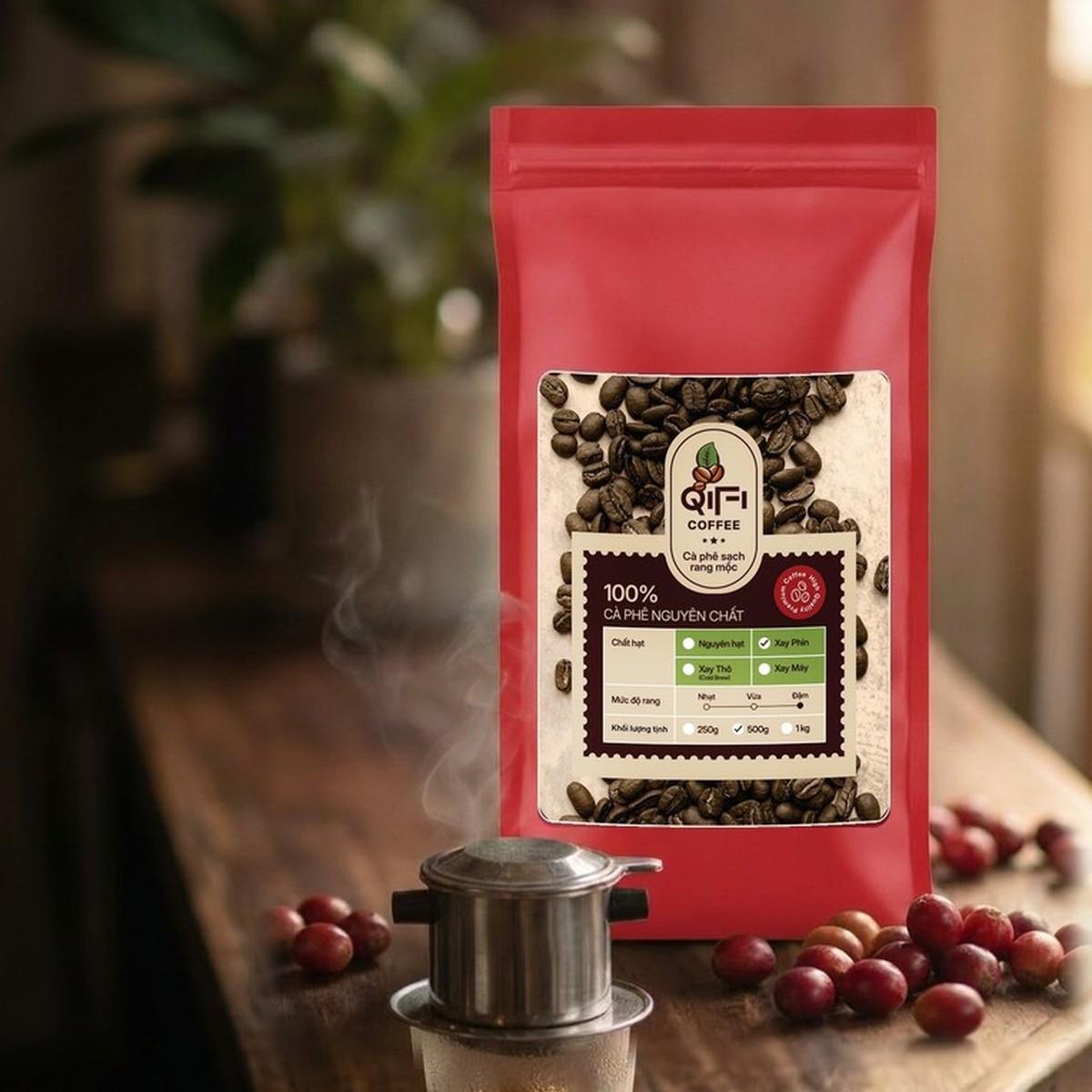
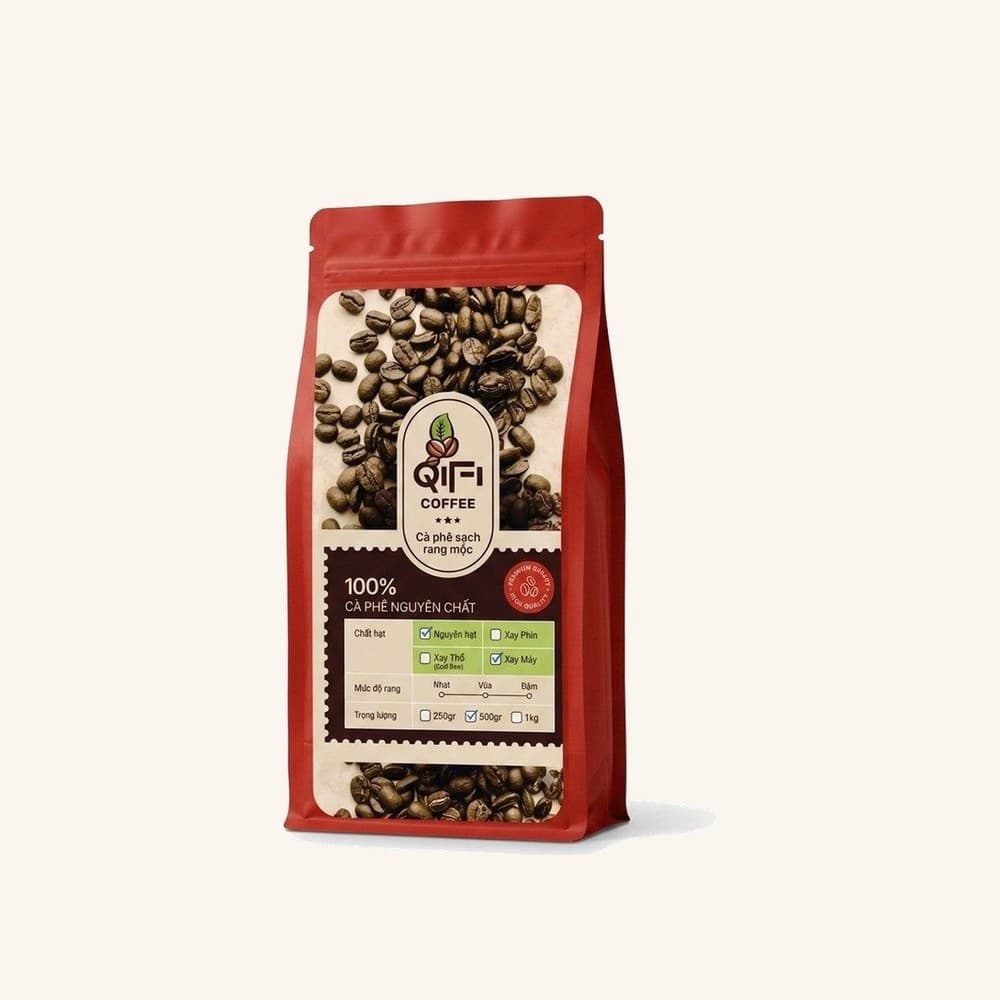
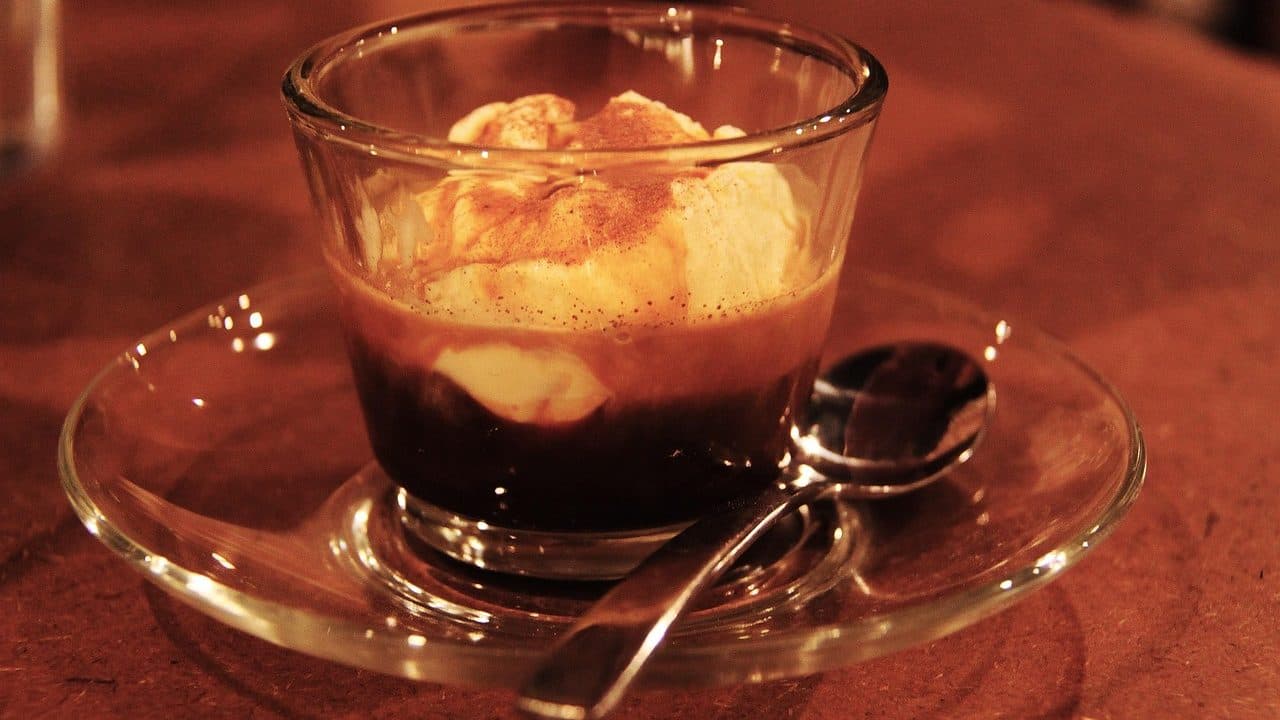
A latte is coffee with plenty of hot milk and a thin layer of milk foam on top. In a café the coffee is espresso; at home, a strong phin does the job without a machine. This recipe uses QiFi's ĐẬM ground for the phin, 100% Đắk Lắk Robusta in a dark roast: a latte has three times as much milk as coffee, so the coffee has to be bitter and full-bodied enough not to be washed out.
Below are the amounts for 1 glass, how to heat the milk to the right temperature, three ways to froth it without a steam wand, and the common mistakes.
What is a latte? How is it different from bạc xỉu and cà phê sữa?
The Vocabulary.com dictionary defines a latte as strong espresso topped with frothed, steamed milk. No organisation sets a standard coffee-to-milk ratio for a latte; figures like "1 part coffee, 3 parts milk" are a common way of making it, not a standard.
| Drink | Coffee | Milk | Served |
|---|---|---|---|
| Latte | Espresso or phin coffee | Hot fresh milk, with foam | Hot (or iced) |
| Bạc xỉu | A little phin coffee | Condensed milk thinned with hot water (old style), or with fresh milk added | Usually iced |
| Iced milk coffee | Strong phin coffee | Condensed milk | Iced |
In short: a latte uses fresh milk, not condensed milk, and what makes it is the hot milk with fine foam.
Phin latte recipe for 1 glass
The amounts below are QiFi's suggestion; for a stronger glass use less milk, for a softer one use more.
| Part | Ingredient | Amount |
|---|---|---|
| Coffee | ĐẬM ground for the phin | 20g |
| Hot water, 92–96°C | 80ml (gives about 40–50ml of coffee) | |
| Milk | Unsweetened fresh milk | 150ml |
| Optional | Sugar or condensed milk | 5–10g |
One 500g bag of ĐẬM ground for the phin makes about 25 glasses like this.
Step 1: Brew the phin
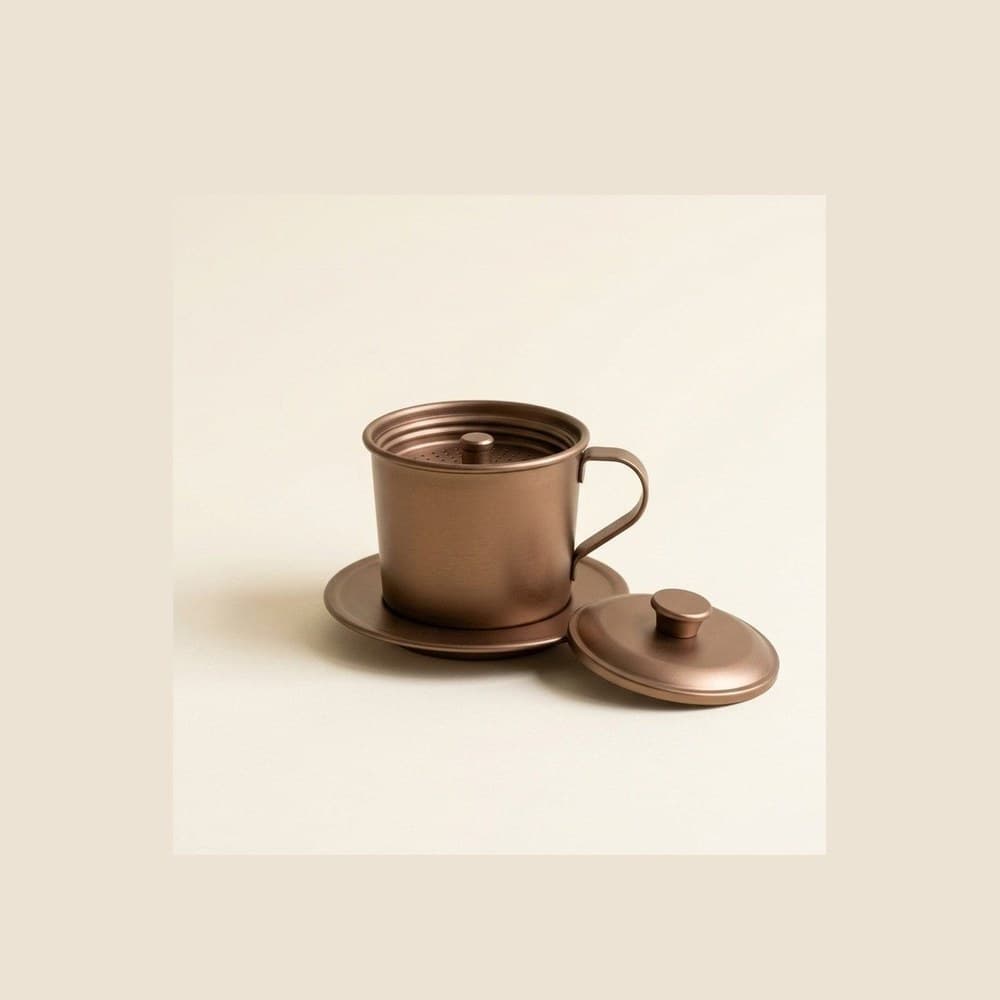
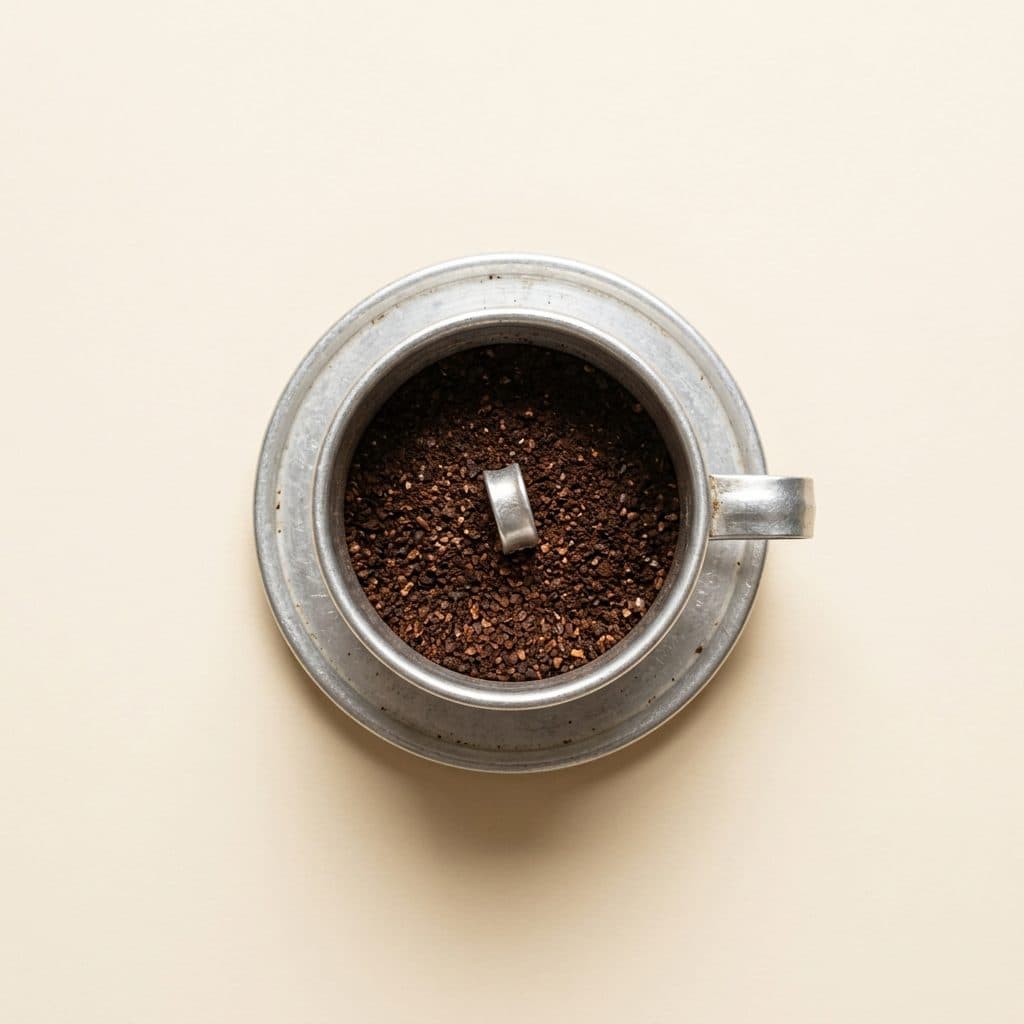
Brew 20g of ĐẬM with 80ml of water as in the phin brewing guide: bloom with 20ml of water for 2 minutes, pour the rest, wait 4–5 minutes. Let it drip straight into the cup you will drink from, and leave it while you make the milk.
Step 2: Heat the milk to 50–60°C
A study of milk for coffee in the International Dairy Journal (Klimanova et al., 2022) uses 50–60°C as the final temperature of frothed milk. Do not boil it: according to Tetra Pak's Dairy Processing Handbook, the whey proteins in milk start to denature above about 60–65°C, and milk held at 75°C for 20–60 seconds already starts to taste "cooked".
- Pour 150ml of milk into a small pan over low heat, stirring; or microwave it in rounds of 20–30 seconds.
- With a thermometer, stop at 55–60°C. Without one, stop when the milk just starts to steam, before it bubbles at the edge of the pan.
Step 3: Froth the milk, no steam wand needed
Pick one of three ways; each gives usable foam:
| Tool | How | Note |
|---|---|---|
| Glass jar with a lid | Fill half the jar with hot milk, close it tight, shake hard for 30–45 seconds | Hold it with a cloth; the jar is hot |
| French press | Fill less than a third of the press with hot milk, pump the plunger quickly 20–30 times | Short, fast strokes; stop when the foam nears the top |
| Handheld frother | Hold the head just under the surface, run for 20–30 seconds | Tilt the jug so the milk swirls |
When done, tap the bottom of the jug on the counter two or three times and swirl it to burst the large bubbles. Wait about 30 seconds for the foam to rise.
Step 4: Pour the milk into the coffee
- Tilt the cup and pour the hot milk from underneath the foam into the coffee first, from a few centimetres up.
- When the cup is nearly full, bring the jug close to the surface and pour slowly so the foam settles on top.
- If you like it sweet, stir the sugar or condensed milk into the coffee before pouring the milk.
For an iced latte: no need to heat the milk. Put ice in a glass, pour in 150ml of cold milk, then pour the phin coffee on top.
Which milk for a latte?
| Milk | How it foams | Source |
|---|---|---|
| Pasteurised fresh milk (chilled, short shelf life) | More consistent, longer-lasting foam than UHT milk | Santini et al., Food Chemistry, 2023 |
| UHT milk (shelf-stable) | Still froths, but the foam lasts less | Same source |
| Skim milk | Foam can be very stable, especially when frothed at 40–50°C | Huppertz, 2010; Kamath et al., 2008 |
| Whole milk | Richer to drink, but milk fat makes the foam less stable | Kamath et al., 2008 |
| Oat milk | The longest-lasting foam of the plant milks tested | Hassan et al., Soft Matter, 2024 |
| Rice milk | The weakest foam in the same test | Same source |
Most fresh milk sold in Vietnam is UHT. It still makes a good latte; if the foam collapses quickly, try chilled pasteurised milk instead.
Common mistakes
| Problem | Fix |
|---|---|
| Weak latte, tastes only of milk | The coffee is too thin; use 20g of coffee for 80ml of water, add no extra water, or cut the milk to 120ml |
| The milk tastes cooked | It got too hot; take it off the heat sooner, keep it under 60°C |
| Big bubbles that collapse fast | The jar was too full or not shaken long enough; tap the jug and swirl to burst large bubbles |
| No foam at all | Try pasteurised or skim milk; froth while the milk is still warm, not cold |
| The latte cools quickly | Rinse the cup with boiling water before brewing into it |
Which QiFi coffee for a latte?
| QiFi line | Beans | Good for a latte? |
|---|---|---|
| ĐẬM | 100% Robusta | Best. Boldly bitter and full-bodied, not washed out by the milk |
| ĐÁNH THỨC | Robusta and Arabica | Good; caramel notes go well with milk, a softer, more aromatic glass |
| TỈNH | 100% Arabica | Not with a phin; its bright acidity gets lost in the milk |
If you have an espresso machine, choose the espresso grind when you buy. And if you prefer the sweet Vietnamese milk coffees, try bạc xỉu or iced milk coffee; the other drinks are in the Vietnamese coffee series.
Frequently asked questions
Is a phin latte the same as a café latte?
Close, but not identical. Phin coffee is thinner than espresso and has no crema, so the glass is less syrupy. A strong coffee like ĐẬM and 40–50ml of coffee for 150ml of milk bring it as close as it gets.
How hot should the milk be?
About 50–60°C, per the International Dairy Journal study cited above. Hotter, and the milk starts to change taste; at around 75°C it tastes cooked.
Can I make a latte with condensed milk?
You can, but the glass ends up closer to bạc xỉu than to a latte. A latte uses fresh milk; for sweetness, add 5–10g of sugar or a little condensed milk to the coffee.
No French press or frother?
Use a glass jar with a lid: fill it halfway with hot milk, close it tight and shake hard for about 30–45 seconds. The jar needs room for the milk to expand.