Home brewing
How to make cold brew at home: the ratio, the steeping time, storage, and why cold brew is less sour and less bitter
Cold brew at home with 100g of coffee and 1 litre of water: the ratio, the steeping time, storage, and what research says about its bitterness.
QiFi··8 min read
Contents
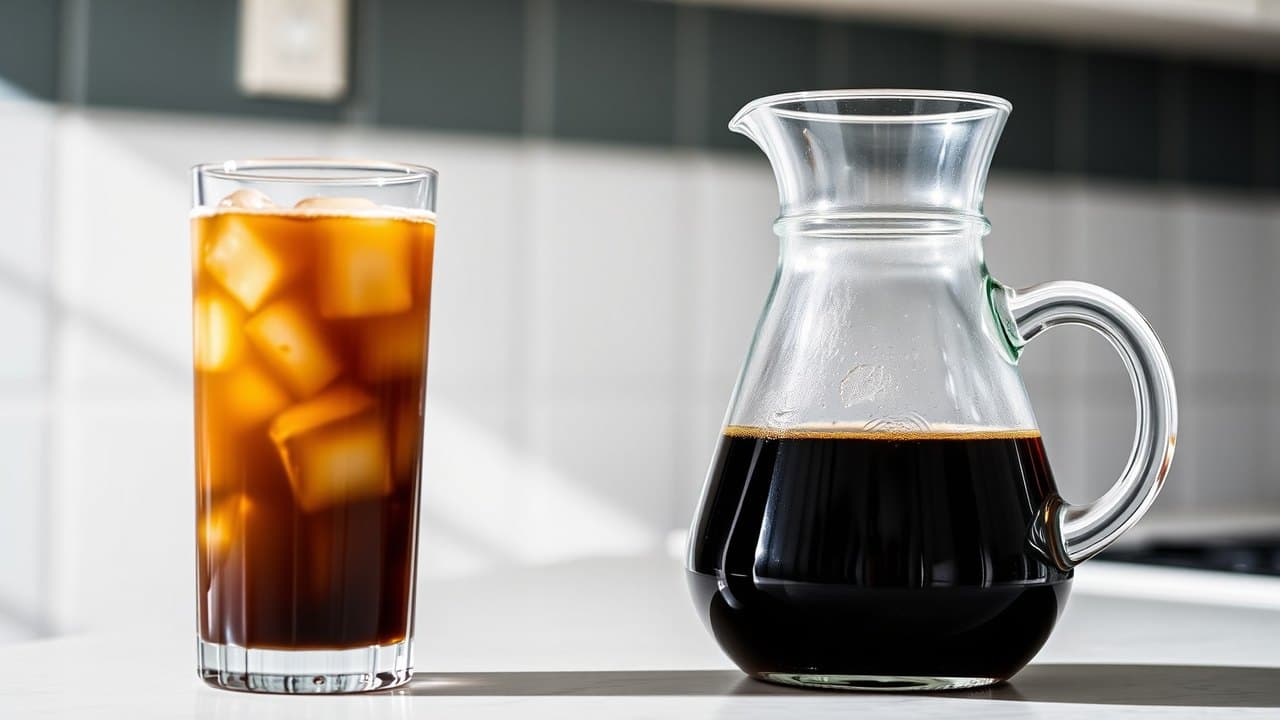
Cold brew is the laziest way to brew that still tastes great: no kettle, no watching the temperature, no standing there pouring. Put the grounds and water in a jar the night before, filter it the next morning, and you have coffee concentrate for several days. A glass of cold brew is smooth, sweet and cool, and for many people much easier to drink than hot-brewed coffee.
This article covers the recipe for cold brew at home, how to choose the ratio for black or for milk, how to store it, and a sourced answer to the most common question: is cold brew really less sour and less bitter?
How cold brew differs from iced coffee
Iced coffee is coffee brewed hot and then poured over ice. Cold brew never meets hot water at all: the grounds steep in cold or room-temperature water for many hours, and then the grounds are filtered out. Cold water extracts more slowly and more selectively than hot water, so cold brew tastes quite different, rather than just being hot coffee left to cool.
The cold brew recipe
| Amount | |
|---|---|
| TỈNH coffee, coarse ground for cold brew | 100g |
| Cool filtered water | 1 litre |
| Steeping time | about 12 hours, in the fridge |
| Makes | about 800–850ml of concentrate (the grounds hold back some of the water) |
- Put 100g of coarse-ground TỈNH in a jar and pour in 1 litre of cool filtered water.
- Stir gently so all the grounds are wet, with no dry patches floating on top.
- Close the lid, put it in the fridge and steep for about 12 hours. Make it in the evening and it is ready the next morning.
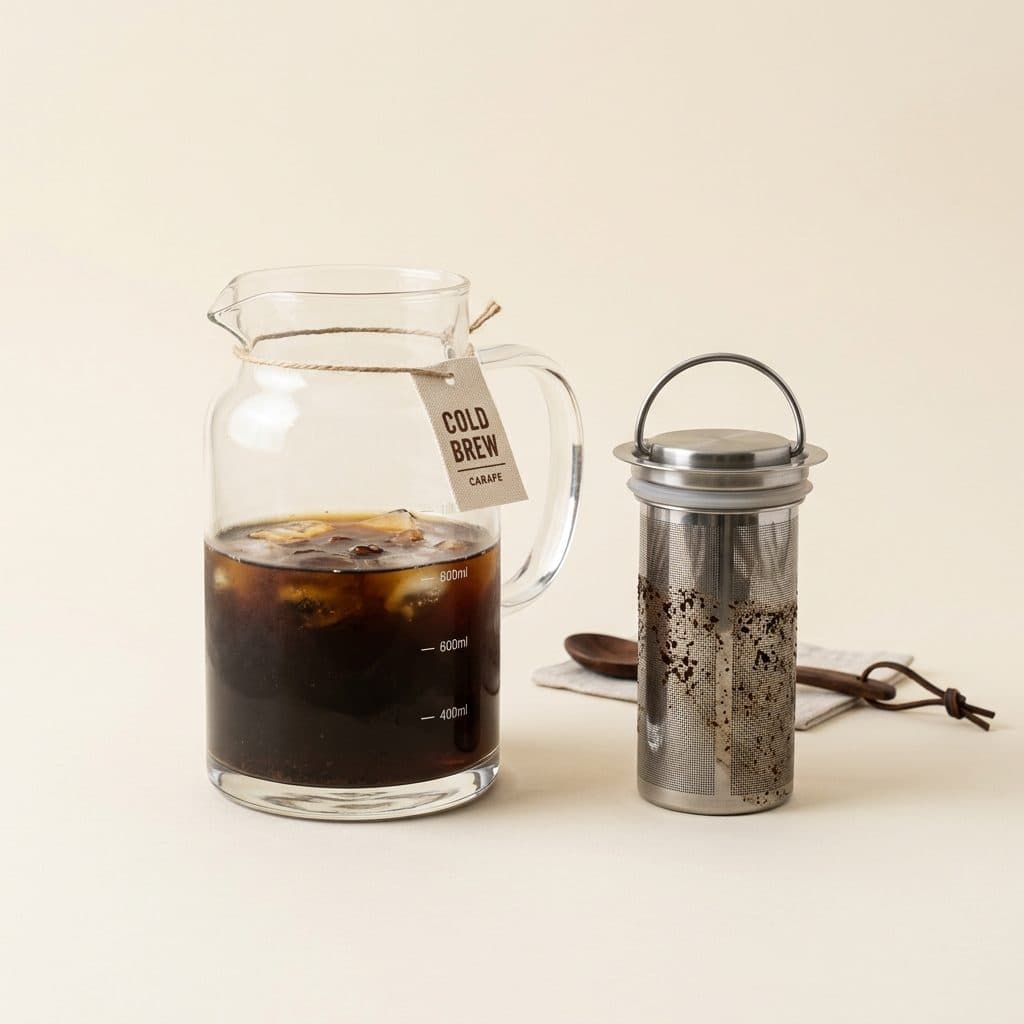
- Filter out the grounds. With a jar that has a filter core, just lift the core out; without one, filter through paper or cloth.
- Pour the concentrate into a clean bottle, close it tightly and keep it in the fridge.
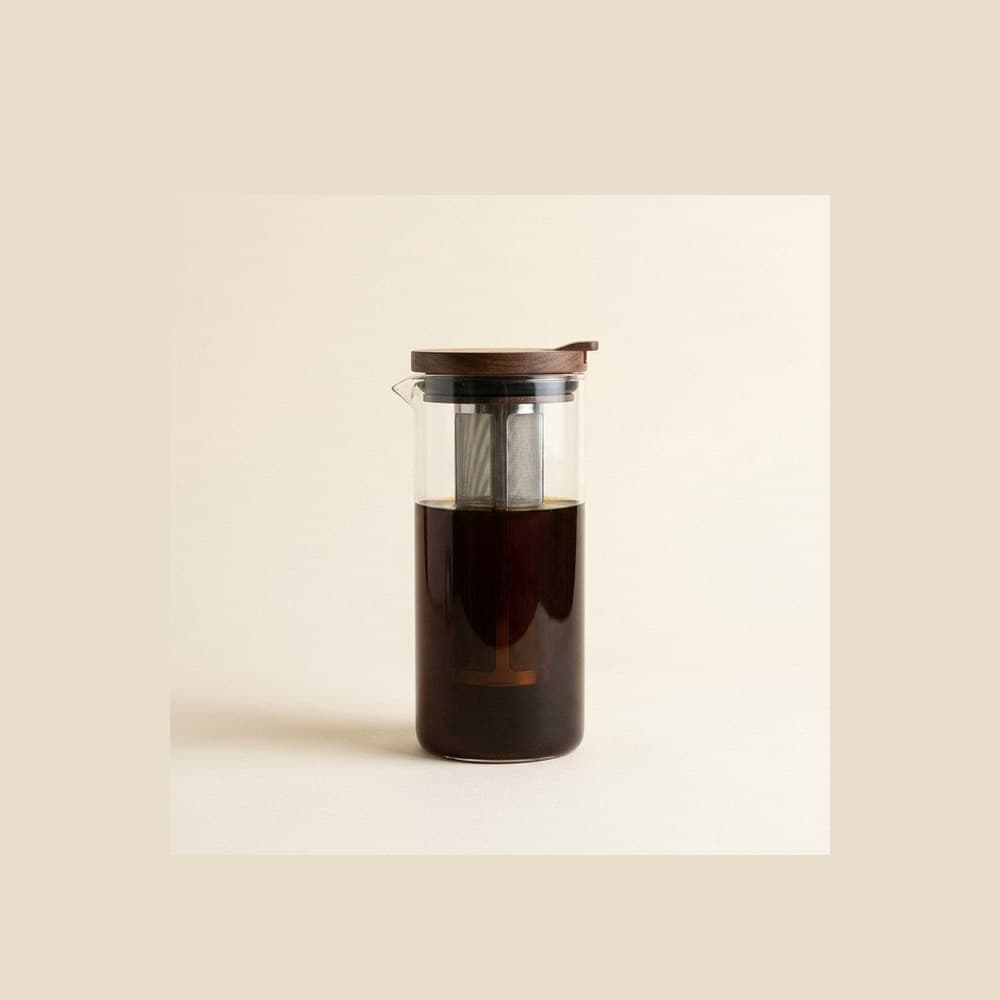
The 1-litre QiFi cold brew jar, in borosilicate glass with a fine-mesh 304 stainless steel filter core, is made for exactly this recipe: put 100g of grounds in the core, fill it with water, lift the core out 12 hours later, and you are done, with no extra filtering.
Why a coarse grind?
Cold brew steeps the grounds for many hours. Fine grounds over-extract, giving a cloudy glass with a lot of sediment and a muddy taste. Grounds as coarse as rock salt are just right for cold water to take the flavour out in 12 hours, and they are much easier to filter cleanly. When you buy TỈNH or another QiFi line, choose the coarse grind for cold brew and the grounds will already be the right size.
How long should it steep?
About 12 hours in the fridge is QiFi's mark. Less, around 8 hours, gives a thin glass that leans sour; much longer, past 18–20 hours, and it starts to taste woody and astringent. At room temperature it extracts faster, so shorten the time, but keeping the jar in the fridge is still tidier and cleaner.
The ratio: for black or for milk
The recipe of 100g to 1 litre (about 1:10) gives a cold brew concentrate, stronger than a ready-to-drink cup. When you drink it, mix the concentrate with water, ice or milk:
| How you drink it | How to mix it |
|---|---|
| Iced black | 1 part concentrate, 1 part water, plus ice |
| With fresh milk | 1 part concentrate, 1 part fresh milk, plus ice |
| With condensed milk | 100ml of concentrate with 15–20ml of condensed milk, plus ice |
| Strong, undiluted | Concentrate poured straight over ice; the melting ice thins it gradually |
The ratio is a matter of taste: 1:10 (100g to 1 litre) if you like it light and easy; 1:8 (125g to 1 litre) if you like it a little stronger and more wakeful, which also suits a lot of milk. The steeping time stays the same. For an even lighter glass, do not cut the coffee: just add more water when you drink it. How the cold brew ratio compares with a phin or a pour-over is in the ratios for brewing coffee by hand.
For a batch smaller or larger than 1 litre, scale everything in proportion: for every litre of water, 100g of coffee at 1:10 or 125g at 1:8, giving about 800–850ml of concentrate, enough for about 16 glasses of 100ml once mixed 1:1.
Cold brew concentrate is also a quick base for a morning glass of salt coffee: the concentrate replaces the phin brew, with the salted cream on top.
Why cold brew is less sour and less bitter
People often say cold brew is "low acid". Research shows that is half true.
The pH is almost the same. A study from Thomas Jefferson University published in Scientific Reports in 2018 brewed six light-roast Arabica coffees two ways, hot and cold, at the same coffee-to-water ratio. The pH of every sample was between 4.85 and 5.13, and the authors could not tell cold brew from hot-brewed coffee by pH alone.
But the total amount of acid is lower. The same study measured titratable acidity, the total amount of acid the water extracted, not just the part of it that sets the pH. For all six coffees, the cold brew sample had lower titratable acidity than the hot one. The authors cite earlier research showing that the sourness the tongue perceives follows this total acidity more closely than pH. In other words: cold brew is not "more alkaline", but cold water pulls out less acid, so the cup is less sour.
And tasters find it sweeter and less bitter. A study from Clemson University published in Food Science & Nutrition in 2024 had a panel of five expert coffee tasters compare the same coffee brewed cold and hot. The cold-extracted samples were scored clearly sweeter and less bitter than the hot ones, both on day one and after 42 days of storage.
The common reason behind both results is temperature. Many compounds in coffee only dissolve readily in hot water; in cold water they come out slowly or very little, including many acids and the compounds that contribute harsh bitterness. The result is that cold brew is chemically simpler: fewer layers of flavour than a hot brew, but smoother and sweeter.
One thing to be clear about: the 2018 study also found cold brew has lower antioxidant activity than hot-brewed coffee, and the authors stress that no study has shown cold brew to be gentler on the stomach. If coffee often upsets your stomach, read coffee jitters and stomach pain rather than just switching to cold brew.
Storing cold brew concentrate
- Filter out the grounds as soon as it has steeped. Left in the concentrate, they slowly make it astringent.
- Keep it in a clean glass bottle, tightly closed, in the fridge.
- Drink it within about 5–7 days. This is QiFi's recommendation for concentrate made at home. In the Clemson study the coffee was bottled under laboratory conditions, and what limited its shelf life was the taste fading day by day, not microbes. A home kitchen is not as clean as a lab, so drink it sooner.
- A strange sour smell, a fermented, boozy taste, or a film on top: throw it away, do not drink it.
Buy beans and grounds in amounts you will use within 2–3 weeks, because ground coffee loses its aroma very quickly once the bag is opened, as the research cited in tools for brewing coffee by hand shows. How to store opened beans and grounds is in how to store coffee.
Which coffee suits cold brew
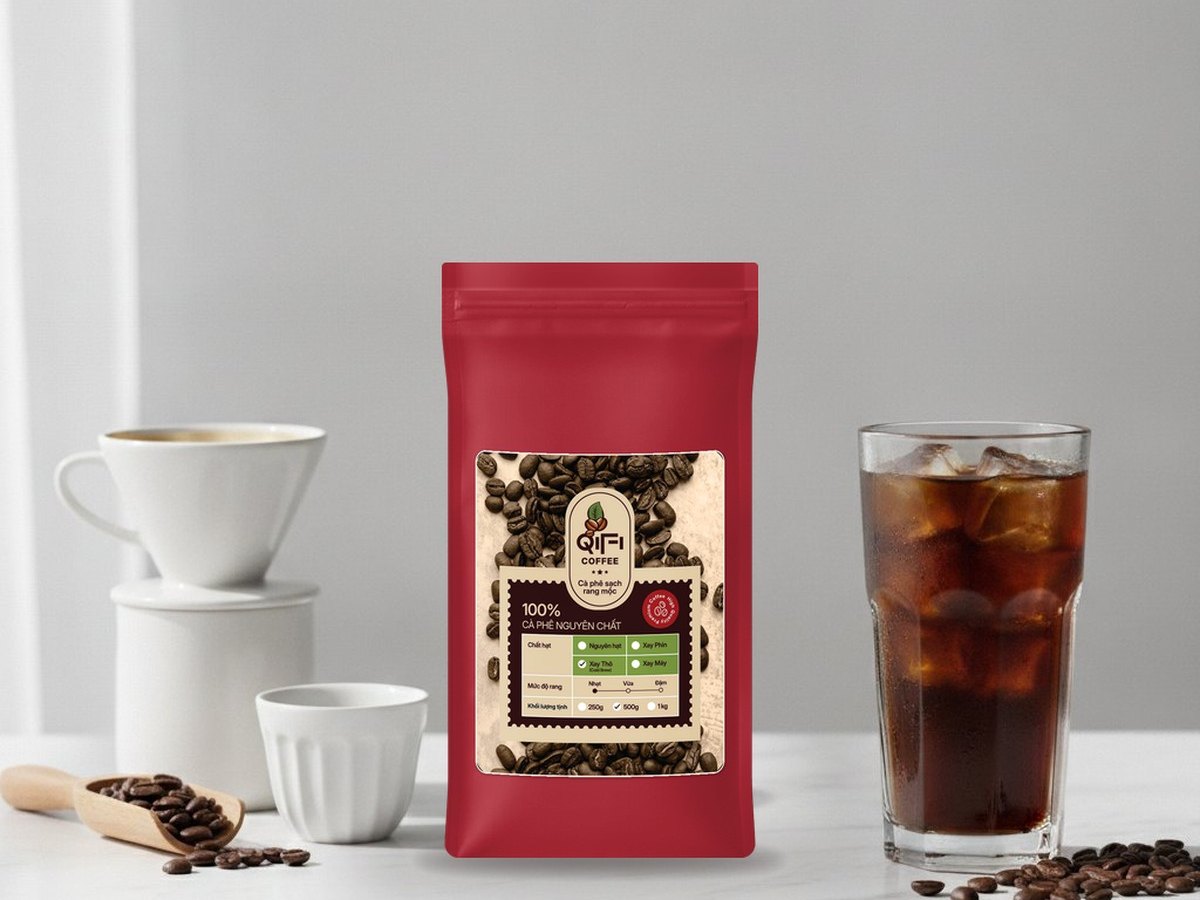
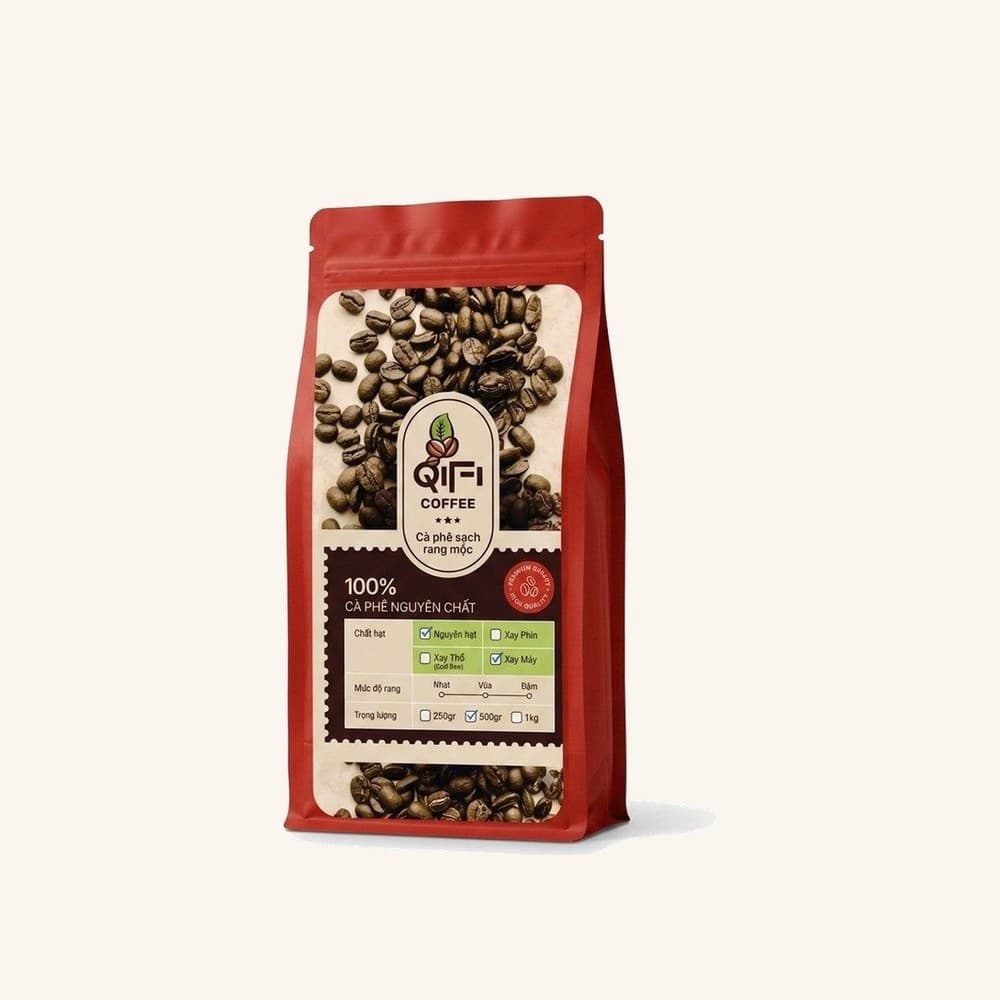
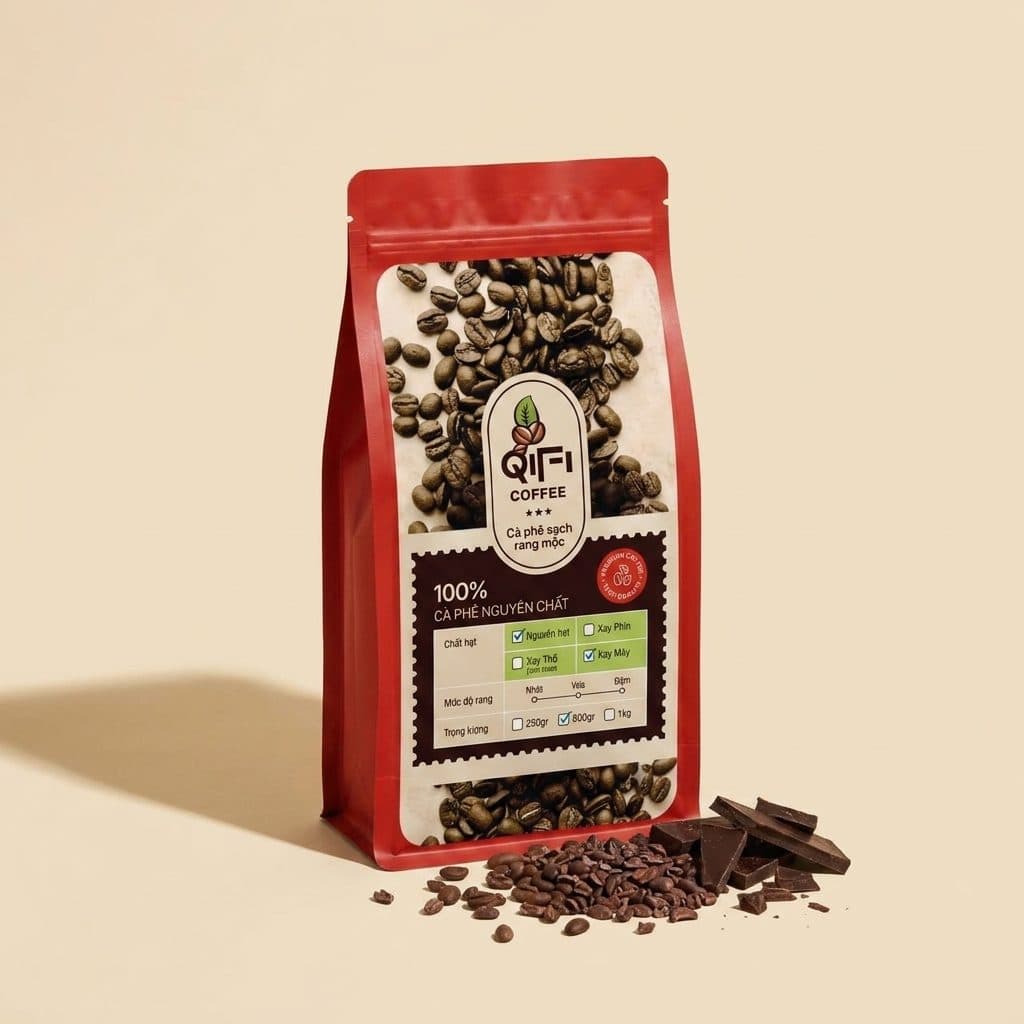
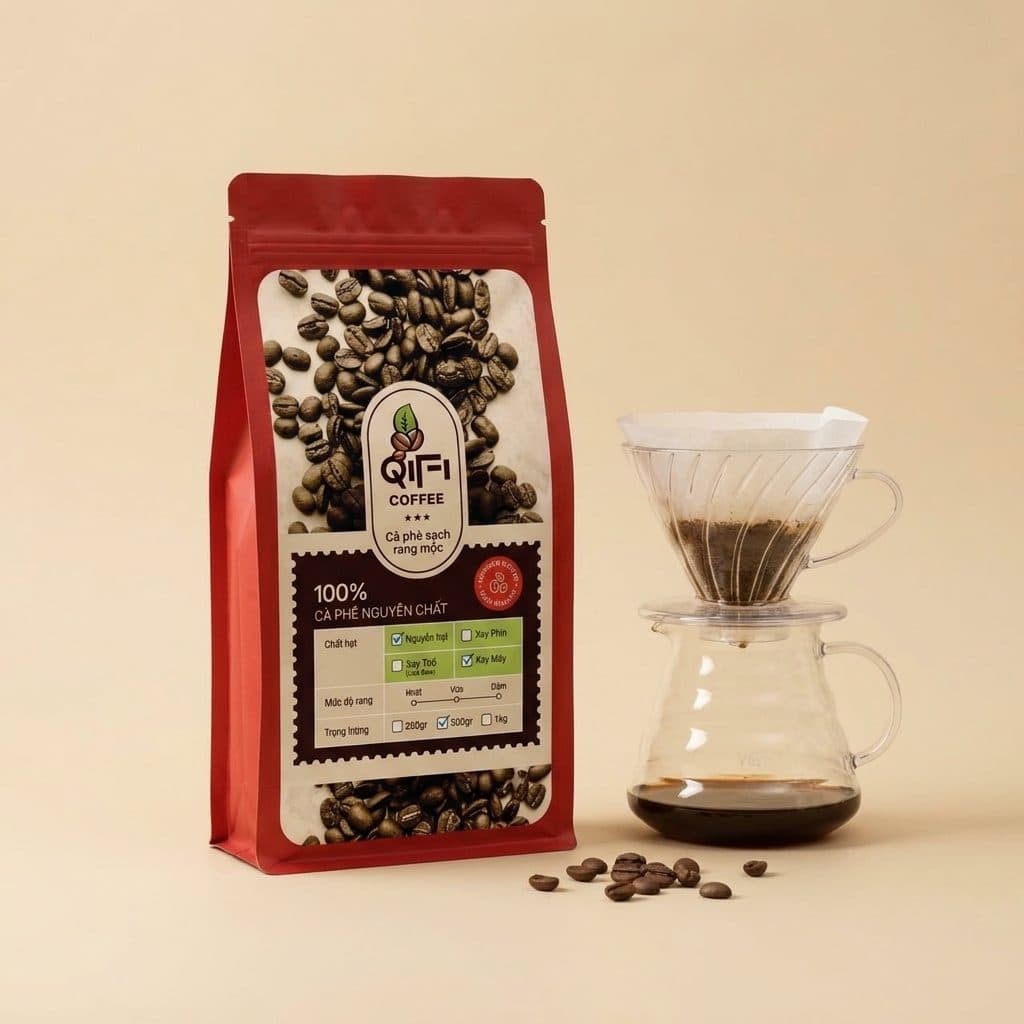
- TỈNH (100% Cầu Đất Arabica, light-medium roast): bright acidity, fruity notes, a honey-sweet finish. Cold steeping holds back the harshness and brings up the sweetness and fruit, so this is the QiFi line that suits cold brew best, especially black. TỈNH comes in a coarse grind for cold brew, in 250g, 500g and 1kg bags; a 500g bag is enough for five 1-litre jars with the recipe above.
- GIAO HÒA (Robusta, Culi and Arabica): deeply bitter, creamy, thick. Good if you like a strong, Vietnamese-style cold brew and often mix it with milk.
For a fragrant, less bitter cold brew to drink black, choose TỈNH; for a strong one to mix with milk, choose GIAO HÒA.
Cold brew also works in place of the phin brew in coffee yoghurt. The other Vietnamese coffee drinks are in the types of Vietnamese coffee.
Frequently asked questions
What ratio for cold brew?
About 100g of coarse grounds, such as TỈNH ground for cold brew, to 1 litre of water (1:10) if you like it light, or 125g (1:8) if you like it stronger and more wakeful; steep 12 hours in the fridge. This concentrate is strong, so mix it 1:1 with water or milk when you drink it.
How long does cold brew steep?
About 12 hours in the fridge. Under 8 hours is usually thin; over 18–20 hours easily tastes woody and astringent.
How long does cold brew keep?
Cold brew concentrate made at home is best drunk within about 5–7 days, kept in a clean glass bottle, tightly closed, in the fridge. If it smells strangely sour or tastes fermented, throw it away.
Is cold brew less acidic than hot coffee?
The pH is almost the same, but the total amount of acid extracted is lower, so cold brew usually tastes less sour. No study has shown cold brew to be gentler on the stomach.
Can I use phin-ground coffee for cold brew?
Yes, but the glass will be cloudier, with more sediment, and it over-extracts easily. If phin grounds are all you have, cut the steeping time to about 8 hours and filter through paper.