Home brewing
How to make Vietnamese coconut coffee at home: smooth blended ice, and how much coconut cream and condensed milk
Coconut coffee at home: coconut cream, condensed milk and ice blended into fine snow, strong phin coffee on top. The ratios, and how to keep it from separating.
QiFi··4 min read

Contents
Coconut coffee is a glass of rich, coconut-scented blended ice, sweet with condensed milk, followed by the bitterness of phin coffee poured over the top. Blended ice and coconut cream dilute coffee very quickly, so the brew has to be strong and creamy: this recipe uses QiFi's GIAO HÒA ground for the phin, Đắk Lắk Robusta, Culi and Cầu Đất Arabica, deeply bitter yet smooth and thick.
This article belongs to the series on the types of Vietnamese coffee. Below are the recipe for 1 glass, how to blend the ice so the coconut layer is as fine as snow, and the common mistakes.
The recipe for 1 glass of coconut coffee
| Part | Ingredient | Amount |
|---|---|---|
| Coffee | GIAO HÒA ground for the phin | 20g |
| Hot water at 92–96°C | 80ml (gives about 40–50ml of brew) | |
| Coconut ice | Coconut cream (canned or freshly pressed) | 60ml |
| Condensed milk | 30ml | |
| Unsweetened fresh milk (optional, for more creaminess) | 20ml | |
| Ice cubes | 1 full cup, about 150g |
A 500g bag of GIAO HÒA ground for the phin makes about 25 glasses like this. The coconut cream and condensed milk above are a starting point; every brand of coconut cream is a different thickness, so taste and adjust. For several glasses, multiply each line by the number of glasses.
Step 1: Brew the coffee
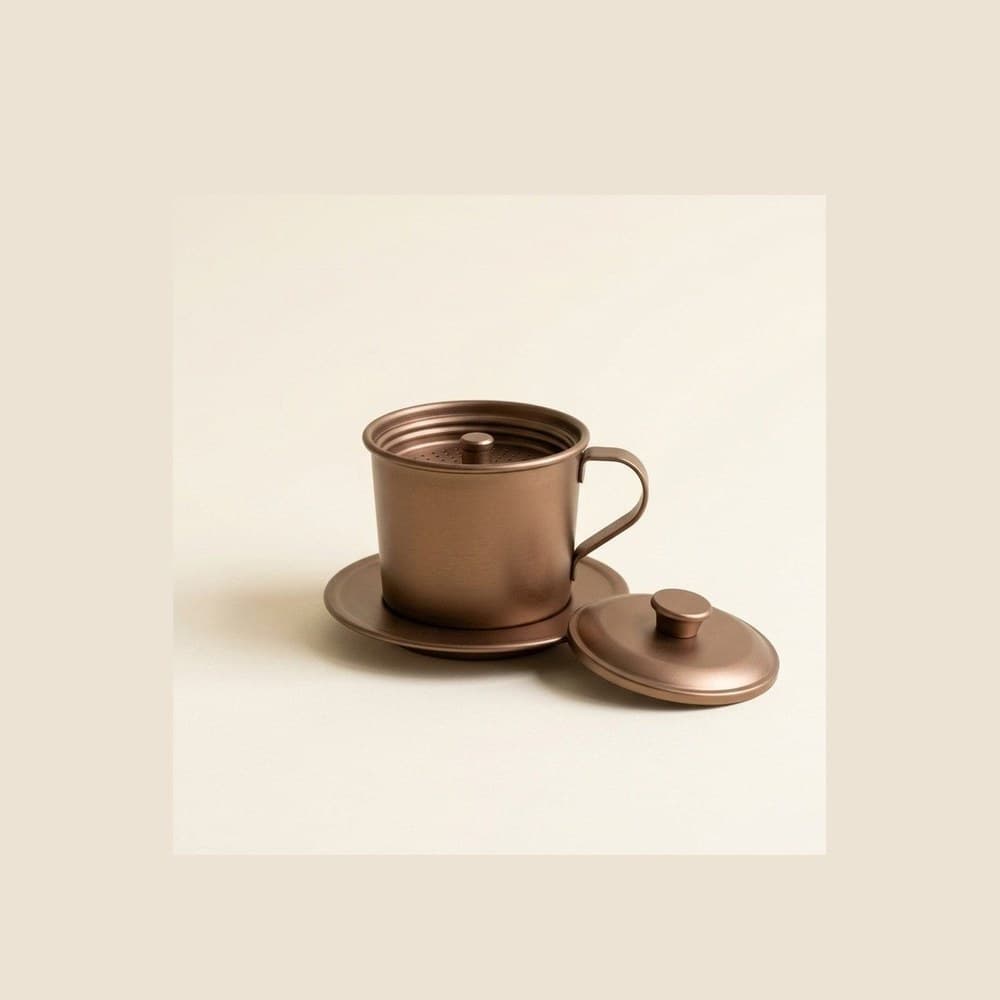
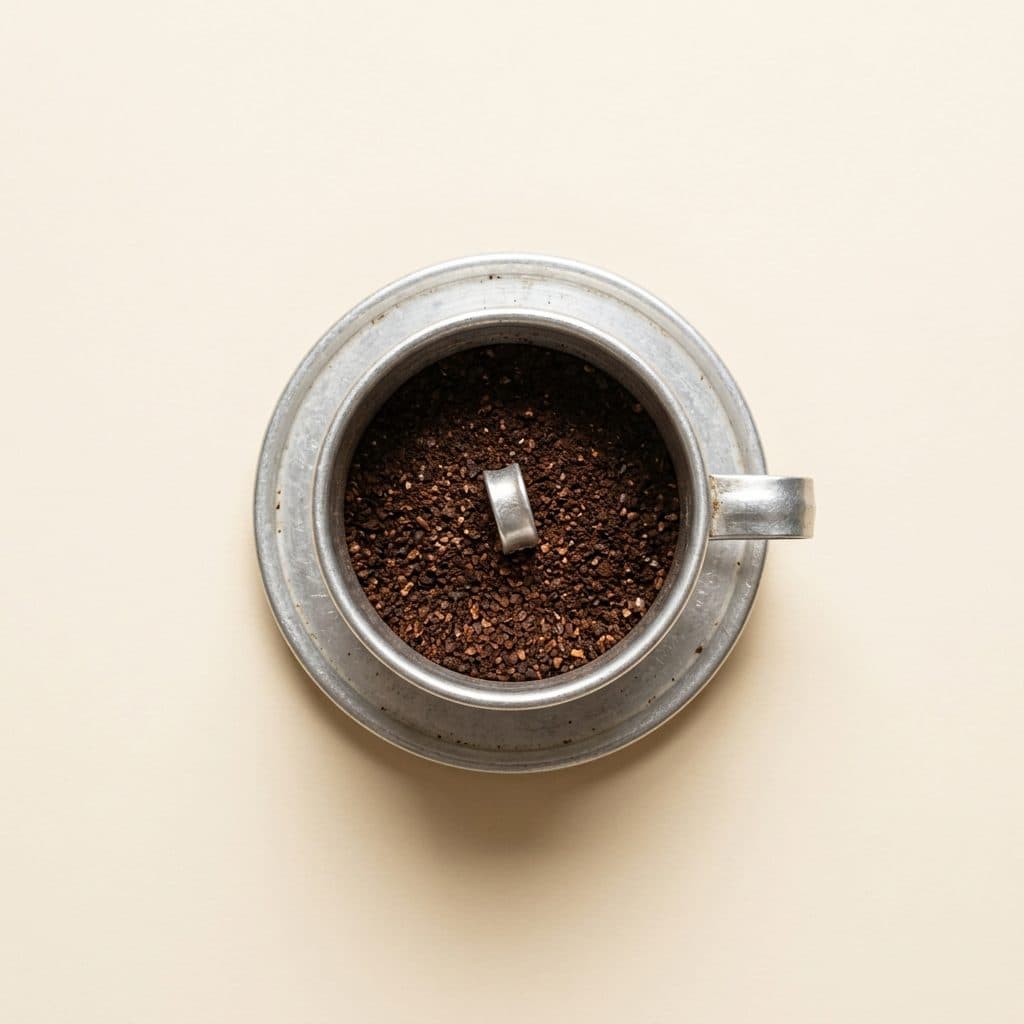
Brew 20g of GIAO HÒA with 80ml of water as in how to brew phin coffee properly: bloom with 20ml of water for 2 minutes, pour in the rest, wait 4–5 minutes. Let it cool a little, or brew it ahead and keep it in the fridge: hot coffee poured onto the blended ice melts the snow.
Step 2: Blend the ice with the coconut cream
- Put the coconut cream, condensed milk, fresh milk and ice in a blender.
- Blend on high for 30–45 seconds, until the mixture is smooth and thick like snow, with no large pieces of ice.
- If the blender strains and the ice stops moving, add 1–2 spoonfuls of fresh milk and keep blending.
Step 3: Finish the glass
- Spoon the coconut ice into the glass, leaving 2–3cm at the top.
- Slowly pour the coffee over the top. It seeps down in brown streaks.
- Sprinkle with a little dried coconut or crushed peanuts if you like.
How to drink it: with a spoon or a wide straw, stirring gently so the coffee and coconut mix. Drink it straight away, while the ice is still fine.
Common mistakes
| Problem | Fix |
|---|---|
| The ice separates or is lumpy | Not blended long enough, or too little fat; add more coconut cream and blend 15 seconds longer |
| The ice melts fast | The coffee is still hot; let it cool or brew it ahead |
| No coffee taste | The brew is too thin; use GIAO HÒA or ĐẬM, without extra water |
| Too sweet, too rich | Cut the condensed milk first, and only then the coconut cream |
Where does coconut coffee come from?
According to the tourism site vietnamtourism.com, coconut coffee became widely known in the early 2010s through the Cộng Cà Phê chain, with its pairing of Robusta coffee and blended coconut ice. This article does not claim who invented the first one, because no reliable source says so.
It is a young branch of iced milk coffee: the same strong phin brew and condensed milk, with coconut cream added and the ice cubes turned into blended ice. If you like coffee with a rich layer on top, try salt coffee and egg coffee too. Another rich blended drink, from Indonesia, is avocado coffee.
Which QiFi coffee for coconut coffee?
| QiFi line | Blend | Good for coconut coffee? |
|---|---|---|
| GIAO HÒA | Robusta, Culi and Arabica | Best match. Creamy and thick, goes with the coconut |
| ĐẬM | 100% Robusta | Very good if you want the coffee to stand out over the coconut |
| ĐỘC TÔN | Robusta, Culi and Arabica | Good; more fragrant, more gently bitter |
| TỈNH | 100% Arabica | Not recommended; its brightness is lost under the coconut |
GIAO HÒA is naturally roasted, with no butter and no flavourings, so the richness in the glass comes from the coconut and the Culi beans, not from butter in the roast.
Frequently asked questions
Fresh or canned coconut cream?
Either works. Canned coconut cream is thicker and more consistent, and blends smooth easily. Freshly pressed cream is more fragrant but thinner; use the first pressing (the thickest) and chill it before blending.
Can I make coconut coffee without a blender?
Yes, but you will not get the fine snow. Shake the coconut cream with the condensed milk until well mixed, pour it into a glass full of ice cubes, then pour the coffee on top. Or pour the coconut mixture into a tray, freeze it for 2–3 hours, then scrape it with a fork.
Can I use espresso for coconut coffee?
Yes. A double espresso replaces the phin brew. Choose a boldly bitter espresso grind such as GIAO HÒA or ĐẬM.